


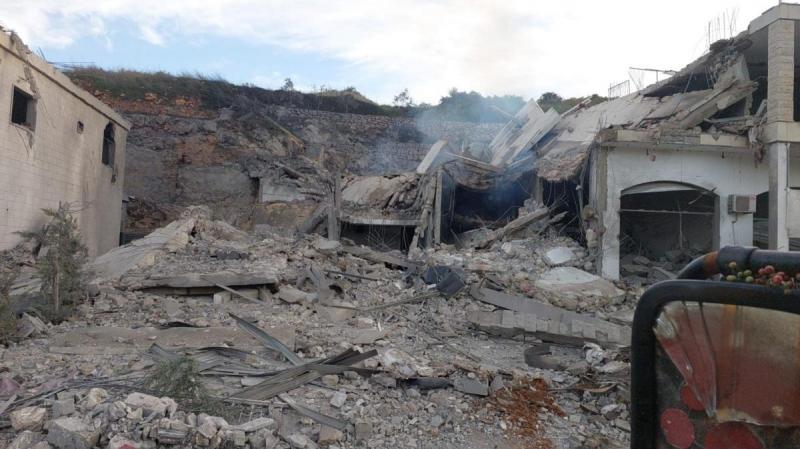
The Israeli military launched airstrikes in Nabatieh and two other raids on Mahmoudiyah and Sijod in southern Lebanon, as well as a series of strikes on the heights of Rayhan in Jezzine district. This escalation comes despite the ceasefire agreement coming into effect and ongoing international efforts to maintain calm on the Lebanese front.
An unmanned aircraft targeted a motorcycle in Deir al-Zahrani, reportedly killing one person.
In the early morning, the strikes targeted the town of Nabatieh al-Fawqa.
Israeli artillery shelling also reached the towns of Kfar Tibnit, Harouf, Kfar Rumman, Kfar Jouz, Habboush, Nabatieh al-Fawqa, and Mifdoun in southern Lebanon.
Additionally, reports indicate an advancement of Israeli military vehicles from Kfar Tibnit towards Ali al-Taher hill, with heavy artillery fire cover, accompanied by Apache helicopter gunfire targeting the surroundings.
This escalation marks one of the most significant breaches since the start of the ceasefire arrangements, which are part of broader regional understandings aimed at containing tension and creating favorable conditions for ongoing political pathways.
The Israeli strikes continue despite repeated calls from U.S. President Donald Trump and other world leaders to maintain calm and avoid actions that could undermine existing agreements.
Trump has emphasized on multiple occasions the importance of adhering to the ceasefire in Lebanon, arguing that any new escalation could hamper ongoing efforts to solidify stability in the region and support current negotiation tracks.
Various international parties have also called for restraint and the avoidance of military actions that might lead to a wider confrontation, considering the current sensitive stage and the intertwined regional issues involving Lebanon, Iran, and Israel.
The escalation occurs amidst ongoing U.S. and international efforts to secure the ceasefire and discuss long-term security and political arrangements on the Lebanese-Israeli border.
The continuation of mutual military operations, even if limited in scope, tests the agreement’s resilience, especially given each party's insistence on their right to respond to threats perceived to their security.