


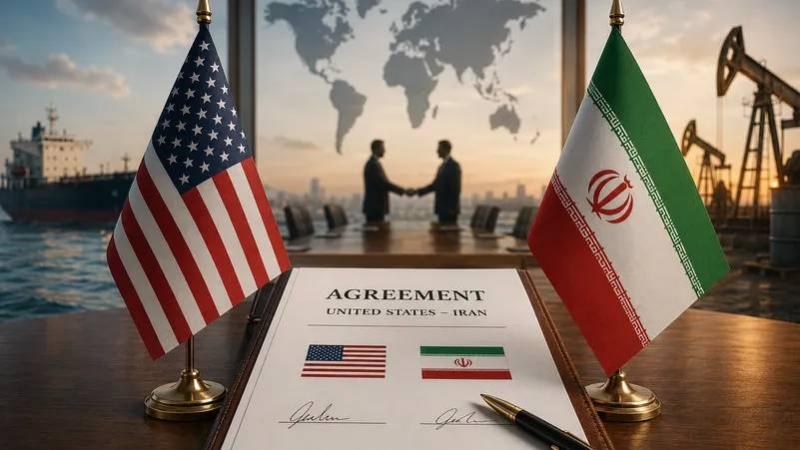
Despite American President Donald Trump's optimism about resolving all contentious issues with Iran within the upcoming 60-day negotiations, which can be extended as per the memorandum of understanding signed remotely last Wednesday, several complex disputes may hinder an agreement, according to observers.
Four major issues could potentially thwart the final deal. The most pressing among them seems to be Lebanon, as evidenced by warnings issued by Tehran yesterday, along with emerging tensions between Washington and Tel Aviv after Israeli ministers criticized the memorandum.
The Lebanon Front
Iran has raised its stakes by demanding any final agreement include full Israeli withdrawal from Lebanon, following the drafting of a clause in the agreement text asserting the need to respect Lebanon’s sovereignty and territorial integrity, according to the 'Times'.
This comes as Israeli Prime Minister Benjamin Netanyahu noted that he does not consider himself bound by the Washington-Tehran agreement and does not intend to withdraw forces from what he called the 'security zone in southern Lebanon.'
In the meantime, despite the declaration of a truce between Israel and Hezbollah last Friday, Israeli airstrikes continued on southern Lebanese villages and towns on Saturday.
Nuclear Program and Sanctions
The second contentious issue involves Iran’s nuclear program and the lifting of sanctions, which is technically complex.
The memorandum of understanding deferred discussions on enrichment levels and the fate of high-enriched uranium stockpiles to the upcoming technical talks.
The devil is in the details, such as the duration of enrichment suspension, whether 400 kilograms of enriched uranium will be shipped out or diluted domestically, and how inspections will be conducted at sites partially damaged by bombings.
Additionally, arranging for sanctions to be lifted corresponding to each nuclear step presents a complex challenge, compounded by internal U.S. complications, as Trump indicated he will refer any final agreement to Congress.
Because lifting principal American sanctions likely requires Congressional approval, the legislative process itself might become an obstacle, potentially derailing the agreement.
Moreover, Jeremy Banner, a former sanctions investigator at the U.S. Treasury Department now a partner at Hughes Hubbard & Reed, pointed out that 'the Revolutionary Guards control the entire oil sector’s strings, thus, all legal implications of dealing with them cannot be ignored when sanctions are lifted,' according to Reuters. He added that despite the temporary agreement allowing Iranian oil exports, legal risks remain for American companies due to the presence of the Iranian Revolutionary Guards.
Strait of Hormuz
The Strait of Hormuz issue could also become a stumbling block, according to 'The Times'. Iran’s demand for formal recognition of its administration or de facto control over this vital waterway, even without imposing transit fees, sets the stage for potential future incidents. Ships that do not notify the newly established 'Gulf Strait Authority' may face interception, and any such act could quickly escalate. Hence, risks remain high.
Facing these issues, it’s certain that the upcoming days could hold many surprises.
It should be noted that the technical talks, originally expected to start last Friday in Switzerland, were postponed amid escalating Israeli strikes on Lebanon, prompting intermediaries to push for their resumption.