


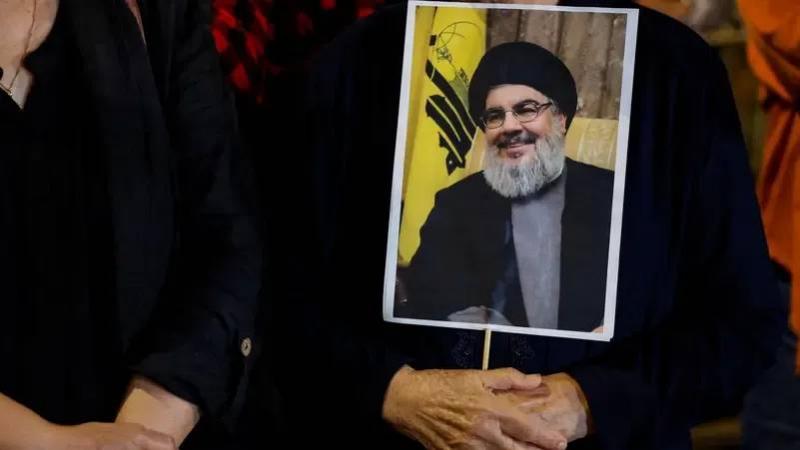
Two years after the assassination of former Hezbollah leader Hassan Nasrallah in a series of airstrikes on the party's security compound in Beirut's southern suburb, Israeli sources have unveiled new information about his residence and whereabouts.
An Israeli army colonel disclosed that Nasrallah wasn't always in hiding underground; he spent years living in an eighth-floor penthouse overlooking the suburbs, as reported by the 'Maariv' newspaper.
Colonel Reserve 'S', director of the Israeli army's target bank within the 'Nahalat Binyamin' unit of the air force, added that the 'common image of the former Hezbollah leader was inaccurate.'
'We Tracked His Apartments and Wife’s Residence'
The colonel confirmed that Israel 'had been monitoring Nasrallah for a very long time, identifying his apartments, his wife's residence, and emergency hiding places.'
However, the officer clarified that the Hezbollah leader 'did not spend most of his time in an underground shelter. There were periods when he lived in a penthouse apartment on the eighth floor of a residential building in the southern suburb. When he needed to hide, he used a special elevator prepared for him.'
Assassination Details
The colonel revealed that Israeli planes dropped 83 bombs during the assassination operation on September 27, 2024, the same number later used against his successor, Hashem Safi al-Din.
He said: 'On that day, Nasrallah had more fortified locations he could go to, but he chose the bunker where we assassinated him. It was a deep underground shelter located beneath a multi-story residential building.'
The attack lasted mere seconds, and the planes fired missiles to trap those inside and prevent their escape. He explained: 'Before the operation, I asked the commander of the Homefront Command's rescue unit how long it would take to reach a similar site of destruction; he replied: six hours. I then realized the Lebanese were less organized, so I wanted to prevent any rescue attempt for 12 hours. We wanted to ensure Nasrallah would die, either from direct injury or suffocation due to lack of oxygen.'
Moreover, the Israeli army did not only target the bunker but also destroyed the residential building above it. He continued: 'After the strike, we saw a motorcycle arrive at the scene, and individuals tried to enter through a nearby opening. They brought an excavator to rescue those trapped, so we attacked it. A second excavator came, which we also targeted. The third excavator never arrived.'
It is notable that during the 2024 clashes between Israel and Hezbollah, which launched what it called the 'Support Gaza War', Israeli aircraft conducted fierce air strikes on Beirut's southern suburbs, devastating entire areas, along with intense bombardments on the south and Beqaa regions as well.