


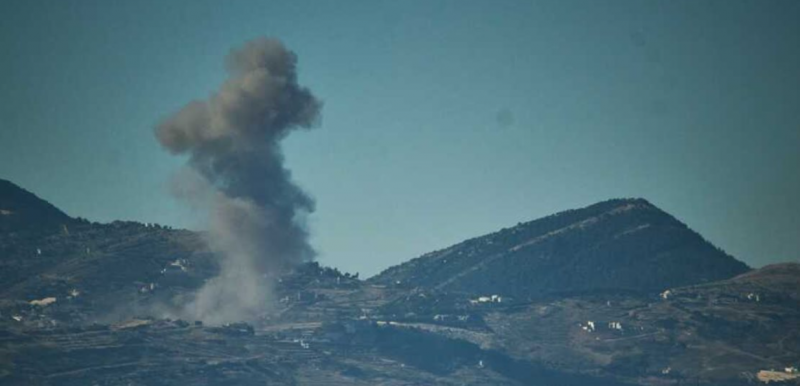
Israeli Channel 12 has reported that the Israeli government issued instructions to its military to cease fire in Lebanon following a day of escalating tensions. This directive came from Israeli Prime Minister Benjamin Netanyahu and Defense Minister Israel Katz, coordinated with the United States.
According to the Lebanese outlet "Lebanon24," these orders were communicated to on-ground forces. Concurrently, Iran announced the closure of the Strait of Hormuz to shipping, accusing Israel and the U.S. of violating ceasefire commitments. An Iranian Foreign Ministry spokesperson warned that the "comprehensive agreement is at risk" if parties do not adhere to their commitments.
The Iranian news agency "Fars" quoted a military source from the IRGC naval force saying that the Strait of Hormuz was "completely closed minutes ago." However, it remains unclear if the closure was fully enacted as no official confirmation has been received. In contrast, U.S. Vice President J.D. Vance stated there is no evidence of Iran closing the strait.
The U.S. military announced the strait remained open for commercial shipping, with 55 vessels transporting over 17 million barrels of oil crossing on June 20. U.S. forces continue operations in the area to ensure freedom of navigation and uphold agreements with Iran.
The IRGC described the closure as the "first step," warning of potential further actions against "the enemy" if attacks persist.
Additionally, an Iranian foreign ministry spokesperson announced a delegation's imminent departure to Switzerland to monitor the other parties' commitments and advance negotiations.
Meanwhile, the Iranian "Tasnim" agency, associated with the IRGC, called for the Strait of Hormuz's closure until Israel fully withdraws from southern Lebanon and halts future negotiations, citing increased Israeli strikes breaching the agreement.
In Lebanon, the Israeli military received directives to halt firing while maintaining positions along the "yellow line" without immediate withdrawal. If Hezbollah adheres to the ceasefire and refrains from attacks, Israeli forces are to cease offensive operations.
These directives followed a day after Netanyahu and Katz ordered increased attacks in Lebanon due to what they described as Hezbollah's ceasefire violations. Netanyahu emphasized Israel would not tolerate attacks on its soldiers or territory, vowing a "heavy price" for any breach. Katz affirmed the Israeli military's strong responses to any attacks on soldiers or civilians.
The report also noted U.S. President Donald Trump's recent pressure to facilitate a ceasefire between Israel and Hezbollah. In an "NBC" interview, Trump stated he urged Israel to agree to the ceasefire.
The ceasefire took effect following mediated understandings by the U.S. and Qatar, with Iran's assistance. However, Israel clarified that its military would continue operations in southern Lebanon's security zone to address threats, responding to any breach.
The ceasefire announcement coincided with Trump's administration's efforts to resume nuclear talks with Iran, as the U.S. conveyed to Tehran, according to "CNN," that Israel does not intend to escalate the conflict in Lebanon, aiming to prevent further escalation.