


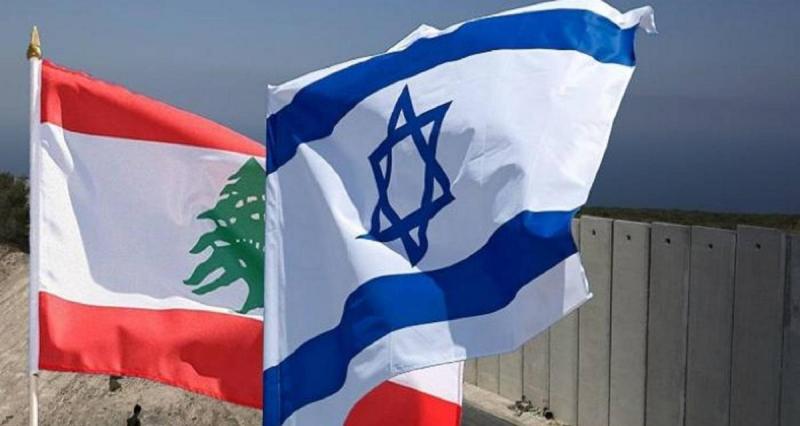
Lebanese negotiators, under US pressure, have secured an agreement from their Israeli counterparts for the first partial withdrawal of Israeli forces from occupied territories north of the Litani River. This is viewed as the initial step toward establishing 'model areas' devoid of any Hezbollah military presence.
Tensions were high during these negotiations, fueled by Israeli anger over a 'memorandum of understanding' reached between Donald Trump's administration and the Iranian regime. This was followed by pressure on Prime Minister Benjamin Netanyahu’s government to cease hostilities with Hezbollah and embark on intensive efforts for the withdrawal of Israeli forces from occupied Lebanese lands.
This Israeli fury was palpable in a statement by Israeli ambassador to Washington, Yehiel Leiter, at the start of the fifth round of talks at the US State Department. He remarked, “We are in a catastrophic situation,” pointing out the previous rounds of negotiations aimed at achieving a comprehensive peace, expelling Iran, dismantling Hezbollah, and ensuring peace and security for Lebanon and Israel. He warned that this process is at risk due to the 'memorandum.' Expressing doubt over the concept of avoiding conflict, he asserted Israel is not in a conflict with Lebanon, emphasizing, “The only issue is Hezbollah; it must be defeated and removed from the equation.” However, he noted, there is a risk that Hezbollah might feel emboldened. He questioned whether dismantling Hezbollah remains the foundation of these talks and reiterated Israel's commitment to acting against any immediate and emerging threats to its citizens and soldiers.
Aoun's Visit
Despite this backdrop, American mediators proceeded with their roadmap for the fifth round of direct talks, expected to conclude Thursday with an announcement setting the timetable for partial Israeli withdrawal by the week's end. This next round of talks may coincide with Lebanese President Joseph Aoun’s anticipated visit to Washington in mid-July.
President Trump has invited President Aoun to visit the White House, with US officials working on the arrangements for this visit.
Previous talks led to agreements on security arrangements and the deployment of the Lebanese army south of the Litani, but disagreements persisted over the conditions for Israeli withdrawal, Hezbollah's future armament, and the terms for lasting peace.
Efforts in the fifth round focused on solidifying a ceasefire agreement between Israel and Hezbollah, along with discussions on 'permanent security arrangements' to ensure Lebanese sovereignty and prevent any security threats to Israel along the internationally recognized border.
The round also coincided with extensive US diplomatic moves following the US-Iran 'memorandum of understanding,' which explicitly calls for an end to warfare on all fronts, especially the Lebanese-Israeli front.
Talks concentrated on resolving outstanding issues preventing the establishment of a permanent ceasefire, a primary objective for Lebanese negotiators emphasizing the need for complete Israeli withdrawal and an end to violations of Lebanese sovereignty, with binding mechanisms for monitoring ceasefire implementation with US assistance.
Conversely, Israeli negotiators insisted on security guarantees that include distancing Hezbollah fighters from areas south of the Litani, strengthening the Lebanese army's role there, and beginning disarmament of the Iranian-backed organization.
Security Arrangements
Diplomats disclosed the immediate goal of the round is 'not to reach a comprehensive peace treaty' but to solidify the ceasefire and establish mechanisms for security arrangements.
The US mediation team included senior State Department officials Dan Huller and Jay Mains, US Assistant Secretary of Defense for International Security Daniel Zimmerman, and US ambassadors to Lebanon and Israel, Michelle Issa and Mike Huckabee, respectively.
The Lebanese delegation was led by former ambassador Simon Karam, with participation from Lebanese ambassador to the US Nada Hamadeh Maawad, Deputy Ambassador Wissam Batrous, and military attaché Brigadier General Oliver Hakeem, among other senior officers.
The Israeli side included Deputy National Security Advisor Yossi Draznin, Prime Minister’s Office official Uri Reznik, and Ambassador Leiter.
A US official told Asharq Al-Awsat that both US Vice President JD Vance and Secretary of State Marco Rubio informed Aoun and Netanyahu that 'cementing the ceasefire and future talks' involves 'a monitoring mechanism through US Central Command (CENTCOM) to provide accurate, real-time information for decision-makers about hostilities in Lebanon'.
It remained unclear immediately whether this 'monitoring mechanism' would be part of the 'de-confliction cell' mentioned by Vance during the US-Iran talks in Switzerland.
Lebanon Secures Partial Withdrawal Amid Israeli 'Outrage'
Share