


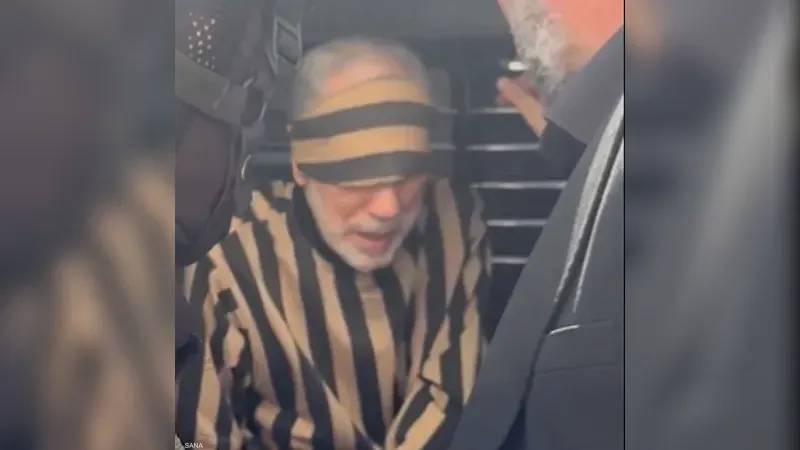
For years, Ahmed Badr al-Din Hassoun was known as the Mufti of the Syrian Republic, delivering speeches and statements that extended beyond religious discourse into politics and war. Today, those words have turned into mere public stances at mosques or on TV, now becoming part of an indictment under review by the Syrian judiciary.
With the commencement of his trial, the indictment doesn't only focus on Hassoun's statements. It also reopens files on prominent military, security, and political figures associated with the former Syrian regime, in a case that the prosecution sees as transcending the role of a religious leader to reveal a network of relations and positions that accompanied the years of war.
The prosecution accuses Hassoun of establishing extensive connections with pillars of the former regime beyond official frameworks. This includes former President Bashar al-Assad and Major General Ali Mamlouk, as well as senior army officers and militia leaders loyal to the regime, indicating these ties were not merely ceremonial but involved supportive political and media rhetoric.
Indictment of Bashar al-Assad
The former Syrian president heads the list of names in the indictment. The prosecution alleges that Hassoun's association with Assad transcended typical religious boundaries, turning into sustained political and media support throughout the conflict, which forms part of the facts the case relies upon.
Also named is Major General Ali Mamlouk, the former head of National Security Bureau and a highly influential figure during Assad's regime, often referred to as the 'black box' of the regime due to his oversight of security apparatus coordination and access to sensitive files.
The indictment indicates direct connections between Hassoun and Mamlouk within a network that included senior security and military officials, described by the prosecution as relationships extending beyond official duties.
Issam Zahreddine
The list also includes Major General Issam Zahreddine, a prominent leader of the Republican Guard during the Syrian war. The prosecution accuses Hassoun of publicly supporting him despite allegations against Zahreddine for committing violations during military operations, viewing this support as endorsement of figures accused of war crimes.
Qasem Soleimani
The fourth name is the former Iranian Quds Force commander, Qasem Soleimani, who played a critical role in overseeing Iranian military support to the Syrian regime. The indictment points to Hassoun’s praise for Soleimani and his endorsement of Iranian intervention in Syria, which the prosecution considers part of his support for individuals and entities accused of violations during the conflict.
The case doesn’t end with these relationships. The prosecution primarily focuses on the rhetoric Hassoun adopted during the war years. They argue his statements were not just political stances but included direct incitement to violence and support for committing violations.
According to the indictment, Hassoun delivered lectures to hundreds of officers and military personnel, urging them to continue fighting in support of the regime against its opponents. He made media statements deemed by the prosecution as inciting violence against civilians in areas outside regime control.
The indictment also cites statements urging residents of Aleppo's eastern neighborhoods to evacuate before military operations. Hassoun allegedly advocated for 'extermination and destruction' of any area launching shells toward regime-held zones, and threatened Idlib residents with death and displacement.
Furthermore, the prosecution accuses Hassoun of supporting the Russian and Iranian interventions in Syria, arguing his public positions provided political and media cover for the military operations during the conflict years.
While no verdict has been issued yet, the indictment indicates Ahmed Hassoun's trial not only examines his actions but resurrects an entire network of individuals, relationships, and statements that accompanied the Syrian war.