


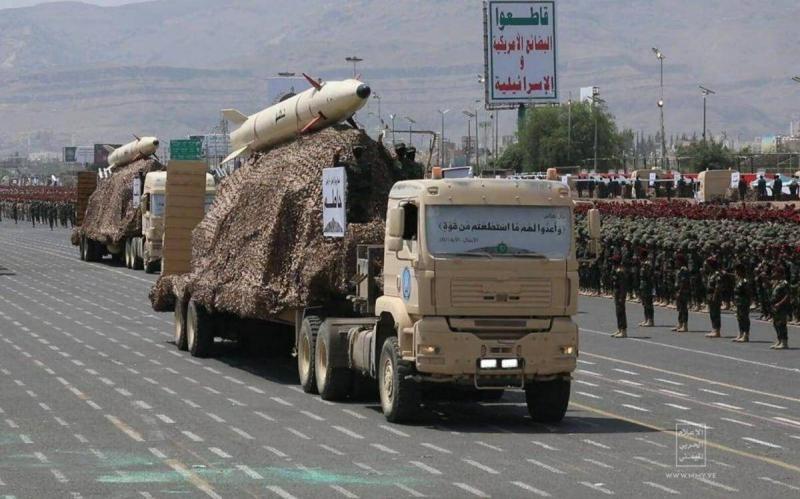
The Iranian Revolutionary Guard has claimed responsibility for striking American targets in the Gulf region in retaliation for U.S. military strikes within Iran, as reported by Iranian state television.
These developments follow a statement from U.S. Central Command (CENTCOM) announcing strikes on Iranian targets in response to a commercial ship attack in the Strait of Hormuz, attributed to Tehran.
The Revolutionary Guard issued a stern warning, stating "If aggression repeats, our response will be broader."
The U.S. military had launched a retaliatory strike against Iran on Friday following an Iranian drone assault that targeted a cargo ship in the Strait, with each side accusing the other of violating a ceasefire agreement.
CENTCOM indicated that their aircraft targeted Iranian missile and drone storage sites, as well as coastal radar locations. A U.S. official confirmed the operation had concluded.
Iran noted that an American strike hit near a dock in Sirik city in southern Iran, prompting Iranian naval forces to retaliate by striking U.S. military targets in the vicinity.
In a parallel development, Israel and Lebanon reached a framework agreement to cease hostilities involving Israel and the Iran-backed Lebanese group Hezbollah, although its implementation remains unclear as Hezbollah has stated non-compliance.
Tehran reaffirmed its control over the Strait of Hormuz and cautioned Gulf countries against siding with Washington following Thursday's cargo ship attack off Oman, which President Trump dubbed a violation of last week's agreement.
In their statement regarding the strike, CENTCOM denounced the Iranian attack on commercial vessels as a "flagrant violation of the ceasefire," describing the U.S. response as a "strong reaction to yesterday’s attack on a commercial ship crossing the Strait of Hormuz."
The U.S. military maintained its commitment to "providing necessary coordination and support to ensure the passage of commercial ships through the strait."
Vice President J.D. Vance emphasized America's adherence to the ceasefire agreement, often referred to as the memorandum of understanding.
Vance, once a critic of U.S. intervention in Iran, is now a key Trump administration figure in this conflict, tweeting, "Iran signed a ceasefire agreement. We honored it. If they have issues with the MoU, they can call us. But violence will be met with violence."
State media in Iran, citing an unnamed military source, reported that the U.S. strike targeted Sirik with explosive sounds heard in the port area.
The source mentioned warning shots were fired toward vessels that violated Strait of Hormuz regulations, with two warning missiles launched from the nearby Karban area towards the strategic waterway.
The Revolutionary Guard stated that Iranian naval forces countered by "striking U.S. military terrorist locations in the region," warning that further U.S. attacks would see broader retaliation.
The ceasefire agreement grants Iran sovereignty over maritime traffic through the strait.
The Guard claimed the U.S. sought to breach this commitment through various tensions, responding appropriately with a warning of wider-ranging retaliation if aggression persists.
The U.S. has yet to respond to the Iranian report of targeting American sites, a tactic Iran uses to undermine U.S. allies amid ongoing conflict.
Iranian National Security Committee head Ebrahim Azizi criticized Trump’s adherence to negotiation principles or ceasefire terms in light of the strikes.
In an Ex post, Azizi commented, "This reckless ceasefire violation will, as usual, lead to their regretful withdrawal."
In economic news, before the renewed violence, oil prices had dropped by about three percent on Friday, heading for sharp weekly losses due to reduced tanker traffic through the Strait of Hormuz, typically accounting for a fifth of global oil and natural gas supplies.
Fertilizer shipments through the strait resumed, easing fears of a spike in global food prices.
U.S. Secretary of State Marco Rubio, concluding a Gulf tour to reassure regional allies, released a joint statement with the Gulf Cooperation Council calling for "unconditional and unrestricted freedom of navigation" and no "attempts to impose control."
The Iranian Foreign Ministry argued that management of the strait should be jointly overseen by Iran and Oman. Meanwhile, Ali Akbar Velayati, a senior advisor to Iran’s Supreme Leader, warned Gulf allies of Washington to heed Tehran’s tolerance for their strategic survival.