


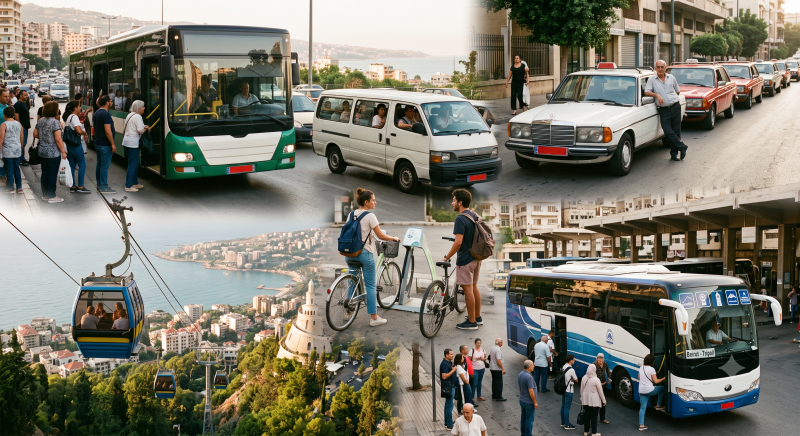
Getting around Lebanon without a car is quite feasible, even though the transportation infrastructure might not be as developed as in some other countries. The country offers a range of transport options that assist both locals and visitors to move between cities and tourist areas with relative ease.
Your choice of transport depends on your budget, distance, and the speed of travel you need, and often, combining different modes of transport during a trip can be beneficial.
Main Transport Methods in Lebanon:

Public Buses
Buses are among the cheapest means of transport in Lebanon and connect major cities such as Beirut, Tripoli, Sidon, and Zahle. However, they may not always be punctual, requiring some flexibility in planning.
Taxis
Taxis are widely used for transport within cities. You can hail one off the street or call directly, but keep in mind they might be more expensive compared to other options.
Smart Transport Apps
Transport apps have gained popularity in Lebanon, allowing easy car bookings via phone with upfront pricing. This method is often considered safer and more comfortable than traditional taxis.
Shared Taxis (Service Cars)
The 'service' system is common in Lebanon, where you share a ride with other passengers for a low fare. This is an economical and speedy choice within cities and for short inter-city trips.
Inter-City Travel
For travel between Lebanese cities, you can use minibuses or shared taxis departing from major stations. Special cars for inter-city travel are available by prior arrangement.
Walking Within Cities
In areas like downtown Beirut or tourist spots, walking is a great option given the relatively short distances and easy exploration opportunities.
Important Tips for Getting Around Lebanon
- Always agree on the taxi fare beforehand.
- Use transport apps when available.
- Keep some cash handy.
- Avoid peak hours in major cities.
- Ask locals for the best routes.
Conclusion
Traveling around Lebanon without a car can be relatively easy by relying on a mix of buses, taxis, smart apps, and shared services. Despite some challenges in transport organization, these options provide practical solutions for getting around cities and tourist areas.
Also Read: