


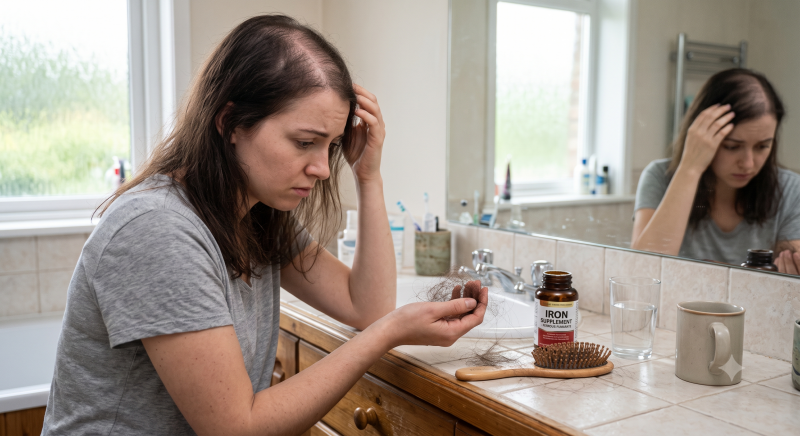
Iron is a crucial mineral necessary for the body's production of hemoglobin, the protein responsible for transporting oxygen to various organs and tissues, including the scalp and hair follicles.
When iron levels drop, hair follicles may not receive enough oxygen and nutrients, which adversely affects the hair growth cycle and increases the likelihood of hair loss.
Particularly, iron deficiency, specifically low ferritin stores, is a common cause of widespread hair loss, especially in women of childbearing age and those suffering from malnutrition or chronic blood loss. Evaluating iron levels is therefore a key step when investigating the reasons for hair loss.
How Does Iron Deficiency Lead to Hair Loss?
Hair goes through three stages: growth, transition, and shedding. When the body is iron-deficient, a larger proportion of hair follicles may enter the shedding phase rather than the growth phase, a condition known as Telogen Effluvium.
This deficiency can also reduce the ability of hair growth cells to divide and regenerate, leading to:
- Increased hair loss rate.
- Slower new hair growth.
- Weak and easily breakable hair.
- Decreased hair density over time.
Symptoms of Iron Deficiency That May Accompany Hair Loss
Hair loss is not the only symptom. It may also be accompanied by other signs such as:

Persistent Fatigue
Individuals feel low energy and exhaustion even after adequate sleep.
Pale Skin
The skin may appear pale due to low hemoglobin levels.
Dizziness and Headaches
Iron deficiency affects oxygen delivery to the brain, potentially causing dizziness or frequent headaches.
Brittle Nails
Nails may become weak and easily broken, and their shape may change in some cases.
Shortness of Breath
A person may experience shortness of breath during simple exertion due to reduced oxygen-carrying efficiency.
Who Is Most at Risk for Iron Deficiency?
The risk of iron deficiency is higher among:
- Women with heavy menstrual periods.
- Pregnant women due to increased bodily demands.
- Vegetarians who may not get enough iron sources.
- Individuals with absorption disorders.
- Those on strict diets.
Can Hair Grow Back After Treating Iron Deficiency?
In many cases, yes. If iron deficiency is the primary cause of hair loss, treating it can help restore the natural hair growth cycle. However, seeing improvements requires patience, as significant recovery from hair loss may take several months, with new hair growth beginning gradually after correcting iron levels.
How Is Iron Deficiency Diagnosed?
Symptoms alone are unreliable for diagnosis. Physicians usually request several tests, including:
- Complete Blood Count (CBC).
- Ferritin level measurement.
- Blood iron and transferrin saturation levels, if needed.
How Can Iron Deficiency Be Prevented?
To maintain good iron levels, it is advised to:
- Consume iron-rich foods such as red meat, liver, lentils, spinach, and legumes.
- Include vitamin C sources with meals to enhance iron absorption.
- Avoid drinking tea or coffee immediately after iron-rich meals.
- Use iron supplements only under medical supervision.
Iron Deficiency and Cold Extremities
How Much Vitamin D Do You Need Daily Based on Age and Gender?
The Best 7 Foods for Stronger Bones as You Age