


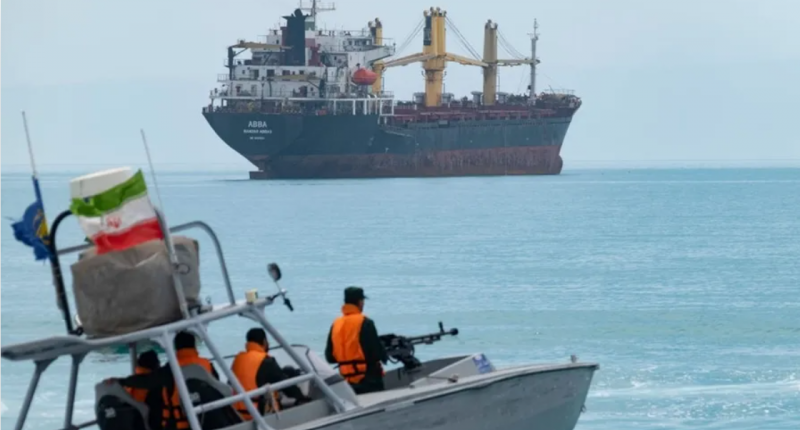
Political analysts have revealed that the escalating tensions between Iran and the United States around the Strait of Hormuz are presenting a critical challenge to the ceasefire agreement. Iran's leverage over maritime navigation and its intent to maintain influence over one of the world’s key economic corridors are central to this challenge.
The New York Times, in a detailed article by Erica Solomon, head of its Iran and Iraq bureau, reports that recent four-day hostilities between Iran and the US in the Strait have jeopardized a newly established ceasefire. This comes amid efforts by both parties to end ongoing hostilities, as tensions heighten over this vital strategic maritime thoroughfare.
The article indicates that this escalation comes at a sensitive time, with the region attempting a shift from military confrontation to negotiation. Yet, recent developments have reshuffled strategic calculations, with analysts suggesting broader implications for Iran's influence over a vital economic waterway.
According to the New York Times, Iran's latest maneuvers, though risky, are viewed as a 'necessary gamble' by Tehran to preserve a critical bargaining chip: its ability to disrupt shipping through the Strait of Hormuz, a passageway for a substantial volume of global oil and gas exports.
Experts contend that this maritime influence is now a mainstay in Iran's strategic arsenal against the US, whether at the negotiating table or in potential military escalations.
Simultaneously, the New York Times notes that Iran's maneuvers coincide with significant international movements, such as Oman and the UN's International Maritime Organization's announcement of a new route through Oman's territorial waters. Analysts see this as a threat to Iran's core strategy of directly impacting Strait traffic.
The paper quotes Ali Vaez, Iran program director at the International Crisis Group, asserting Iran's need for its maritime leverage under any scenario.
Uncertainty looms over future US-Iran negotiations, as both sides appear locked in a strategic stalemate with the Strait as a central bargaining chip.
Analysts believe Iran wants to leverage its control over the Strait to gain relief from long-standing economic sanctions as part of any new nuclear deal, possibly sacrificing enriched uranium stocks, despite Tehran's insistence on peaceful nuclear intent.
Iran's long-held nuclear development was a strategic deterrent against Western pressure. Now, its ability to impact global commerce through the Strait introduces a new dimension to its deterrence capabilities.
Further arrangements without Iran's oversight may weaken its negotiating stance, prompting Tehran to resist shifts in maritime governance.【soft-break】
Iran views unilateral developments, like a newly designated maritime route bypassing it, as violations of standing agreements, leading to retaliatory actions around commercial navigation/sites.
Analysts highlight a shift towards integrating limited military escalation with diplomacy by Iranian leaders, signaling readiness to negotiate while retaining the capacity to escalate when necessary.
This ‘escalate-to-negotiate’ approach denotes a broader strategy evolution within Iran, reflecting a greater willingness among political elites to take calculated risks, both militarily and diplomatically. The perception of this stage as a strategic opportunity correlates with hesitations from the US to reengage militarily due to domestic and electoral pressures.
In contrast, the Trump administration faces its own challenges, balancing internal opposition to warfare against the threat posed to global energy markets by lingering tensions in the Strait, making temporary de-escalation appealing.
The New York Times concludes that both sides have significant incentives to maintain open negotiations. Iran aims to alleviate sanctions and regain frozen assets, while the US seeks to avert a new energy crisis or large-scale conflict. However, ongoing field tensions may delay peace efforts, hindering resolution of key issues.
Strait of Hormuz Tensions: Iran's Strategic Leverage in US Talks
Share