


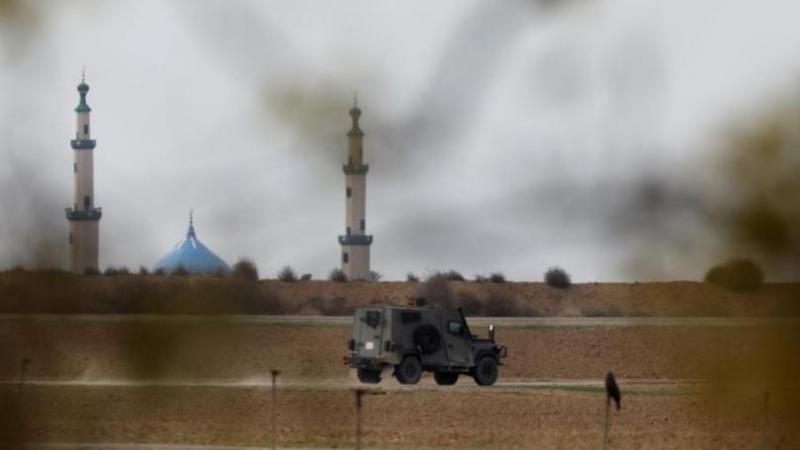
The Israeli military on Wednesday installed gates, effectively isolating the newly established security belt within Lebanese territory from the rest of Lebanon, marking the first significant move since 2000. This action is reinforced by Israeli Defense Minister Yisrael Katz's declaration that the army will not withdraw from southern Lebanon.
The gates were moved to the border fence following the military's withdrawal from southern Lebanon in 2000 and fortified in 2018 with concrete walls along much of the border. However, these gates were opened as the Israeli army began penetrating into Lebanese territory in October 2024 during the expanded war with Hezbollah, extending control areas up to 10 kilometers deep since the latest conflict in April.
Despite Lebanon and Israel engaging in U.S.-brokered direct negotiations for Israel's withdrawal from southern Lebanon, "Israel imposes a fait accompli in the south," by closing the newly established border gates, indicating plans for a prolonged presence in Lebanese territories, security sources in southern Lebanon told Asharq Al-Awsat. They noted that this move "means encircling the remaining Lebanese residents in three Christian villages in the Bint Jbeil district, isolating them from the rest of Lebanon," and obliging UNIFIL forces in southern Litani to traverse these gates, requiring yet to be defined coordination between UNIFIL and the Israeli side.
Separation of Borders from Interior
Local media reported on Wednesday that Israeli forces have fixed boundary gates along the demarcation line between the "Yellow Zone," designated by Israeli forces last April, and villages outside it deep into Lebanese territory.
Hezbollah's Al-Manar TV stated that a crossing gate was established at an Israeli position along the Iskandaronah road on the Lebanese coast, about 10 kilometers from the border with Israel, and another near Reve De La Mer Hotel in Naqoura.
This location is on the northern entrance of the border town with Israel, from which pathways lead to border villages east of Naqoura, effectively isolating the area starting at this point.
Local media reported that Israeli forces bulldozed roads during the war, especially the road from the Hamoul region, Naqoura's first village, to Aita al-Shaab village, cutting ancient trees on both sides of the road.
Fire Buffer Zone
Alongside these actions, Israel continues targeting Lebanese depth, suggesting a fire buffer zone imposition. An Israeli drone dropped three sound bombs on the town of Yater, while artillery shelling targeted the outskirts of Bint Jbeil, accompanied by machine gun sweeps along the road from Kunin to Bint Jbeil.
Israeli forces fired at a vehicle near the Ibel al-Saqi spring, hitting it several times with no casualties reported.
According to Lebanon's official National News Agency, Israeli forces demolished several homes in Bint Jbeil district's towns, including Beit Yahun and Hadatha, as well as a similar explosion in the town of Tiri within the same district.
No Withdrawal from Lebanon
These measures accompany Israel's resolve not to withdraw from Lebanon, as Defense Minister Yisrael Katz affirmed on Wednesday that forces will remain in "security zones" in Lebanon, Syria, and Gaza, without a set withdrawal timeline. At a memorial ceremony for soldiers killed in the 2006 Lebanon war, Katz said: "The Israeli army will stay in security zones in Lebanon, Syria, and Gaza indefinitely to protect our residents and towns from jihadist elements." He added: "We will not withdraw from security zones."
On Tuesday, Israeli Prime Minister Benjamin Netanyahu reiterated that troops will remain in Lebanon as long as Iran-backed Hezbollah threatens northern Israel's residents. Israeli leaders insist that the army will not withdraw until Hezbollah is disarmed in Lebanon.
Delaying the Start of the Trial Area
Amid negotiations with Lebanon to establish model zones starting from trial areas, Israeli Broadcasting Authority reported that Tel Aviv postponed the trial phase of withdrawal from southern Lebanon, demanding immediate action from the Lebanese army against Hezbollah.
The Broadcasting Authority cited informed sources as saying the trial phase is postponed until an agreement on a joint oversight mechanism between the Lebanese and Israeli armies overseeing the implementation of the framework agreement's security annex signed last Friday in Washington is reached.
According to the Israeli authority, the oversight mechanism will coordinate efforts to disarm Hezbollah, not merely investigate ceasefire violations. It noted that Israeli forces will not withdraw until "clear criteria are set, obligating the Lebanese army to actively and immediately move against Hezbollah."
Israel Seals Security Belt With Gates, Increasing Siege on Southern Lebanon
Share