


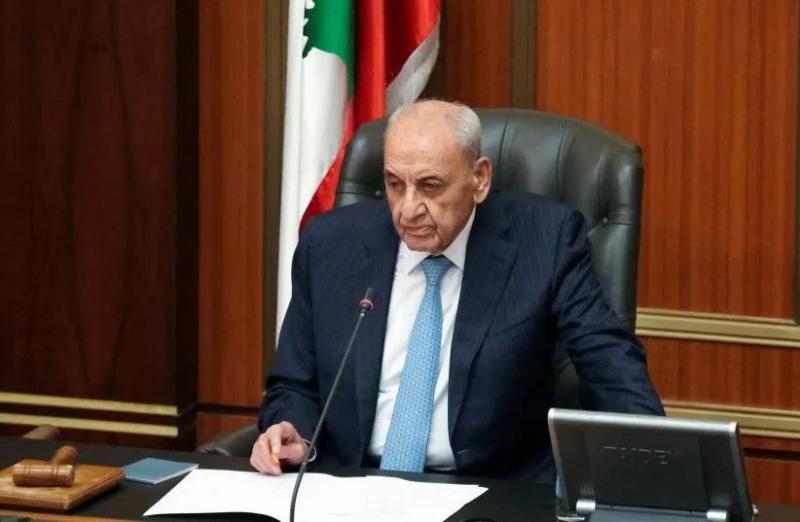
The framework agreement signed in Washington between Lebanon and Israel quickly escalated into a critical internal test, opening a severe divide that threatened to shift the confrontation from a political arena to the streets. With the nation on the brink of a wide political and institutional rupture, Parliament Speaker Nabih Berri stepped forward to stabilize the situation, aiming to prevent the discord from transforming into internal strife that could destabilize the government and institutions.
From the outset, Berri adopted the slogan "No to Sectarian Strife," prioritizing national harmony above all considerations, emphasizing that disagreements, regardless of their scale, should remain within institutions rather than spill onto the streets. From this stance, he dismissed calls for the government's resignation or boycott, advocating for dialogue and political solutions to avoid an uncontrolled descent.
In an interview with "Al-Diyar," Berri addressed various aspects of the crisis, from settlement opportunities to weapon issues, expressing his vision for the framework agreement and the needed Arab and international roles to assist Lebanon out of its crisis.
Regarding resolving the crisis following the framework agreement, Berri stressed the importance of safeguarding internal stability and avoiding sectarian strife as top priorities. He asserted that the door to a settlement remains open and expressed his readiness to find solutions if the other party is equally inclined. "If there's willingness for a settlement, I'm prepared for it; nobody wants the country to hit a dead end," he said.
On what a possible settlement might look like, Berri reiterated his opposition to direct negotiations from the beginning, criticizing the agreement as "an agreement of discord" that was unfair to Lebanon. He pointed to an agreement he championed on November 27, 2024, as a different model that led to a full Hezbollah withdrawal from South Litani without direct talks.
Before reaching the framework agreement, Berri revealed discussions with the President, where he advocated for Israeli withdrawal based on districts rather than zones, as this would offer a clearer, more serious execution approach. He noted that Baabda agreed to this approach, yet the framework surprisingly adopted the zones principle instead.
On the demands for expanded international requirements beyond the South Litani region, Berri noted readiness for Hezbollah's withdrawal from South Litani, alongside a full Israeli retreat. Regarding weapons north of Litani, he affirmed they should be under the Lebanese state's purview not only north of Litani but throughout Lebanon, making the state the sole reference point.
Berri accused Israel of attempting to drag the Lebanese army into a confrontation with the resistance, warning that it's their true objective. However, he affirmed this wouldn't occur as Lebanese recognize the peril of internal discord and neither the army nor the resistance will serve Israeli aims.
Berri described the framework agreement, upon reading, as an "agreement of discord," leading him to swiftly oppose allowing the country to slip into division, reaffirming: "No to discord, no to the streets." He emphasized that protecting internal stability and keeping political disagreements from spilling into the streets remains a defense for national peace.
When asked if he had any message for the President, Berri simply stated that he currently has no message to convey.
Regarding solutions to the crisis, Berri reiterated the need for an international umbrella to help reach a settlement, suggesting this umbrella should include the United States, Saudi Arabia, and Iran, as he believes these countries are critical to any viable settlement.
He welcomed ongoing Arab and international communications, particularly Egyptian and Qatari initiatives, supporting any efforts that aim to assist Lebanon through its crisis and prevent division.
Berri concluded by emphasizing that his stance has remained unchanged since the crisis's onset: national unity protection, preventing sectarian conflict, and maintaining institutions are the absolute priorities in this critical period, as Lebanon's stability, in his view, is the foundation for any upcoming political settlement.