


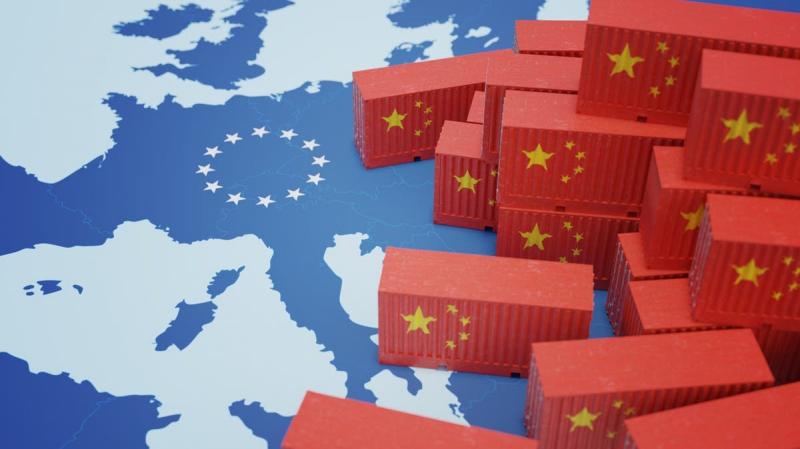
Bloomberg has revealed that the European Union's efforts to recalibrate its trade and economic relations with China are faltering due to a lack of political consensus among member states on adopting stricter measures against Beijing, despite growing concerns over the expanding trade gap and increased EU dependency on the Chinese economy.
According to the report, while EU nations agree that China's economic dominance poses a growing challenge, they remain divided on the appropriate ways to address the trade deficit, which has exceeded 360 billion euros, as well as methods to bolster European industries' competitiveness against government-backed Chinese companies.
The report noted that some EU leaders advocate for granting the European Commission broader powers to employ more assertive trade tools, whereas others call for continued dialogue with Beijing to avoid a potential trade confrontation with far-reaching economic repercussions.
Observers suggest that Europe's significant reliance on China for strategic sectors such as rare minerals and semiconductors limits its ability to take escalatory steps, amidst fears of Chinese retaliations that could impact European supply chains and industries.
For its part, the European Commission affirmed that its strategy prioritizes dialogue, risk mitigation, and diversifying economic partnerships, as it aims to rebalance trade relations with China.
Conversely, China's Ministry of Commerce announced an agreement with the EU to enhance trade and investment consultation mechanisms through regular ministerial meetings, in an attempt to contain disputes and reach resolutions ahead of the targeted deadline in October.
Despite ongoing discussions, estimates indicate that the EU remains hesitant to resort to tougher measures, reflecting its desire to avoid an open trade war with China while grappling with increasing economic and industrial challenges.