


The tension between the United States and Iran has entered a more dangerous phase following significant US military strikes targeting a wide array of Iranian military capabilities in the Hormuz Strait. This comes in response to attacks on three commercial vessels.
According to a senior US official, quoted by Axios, these strikes were reported to be four to five times larger in scope and power compared to previous US attacks conducted about ten days ago.
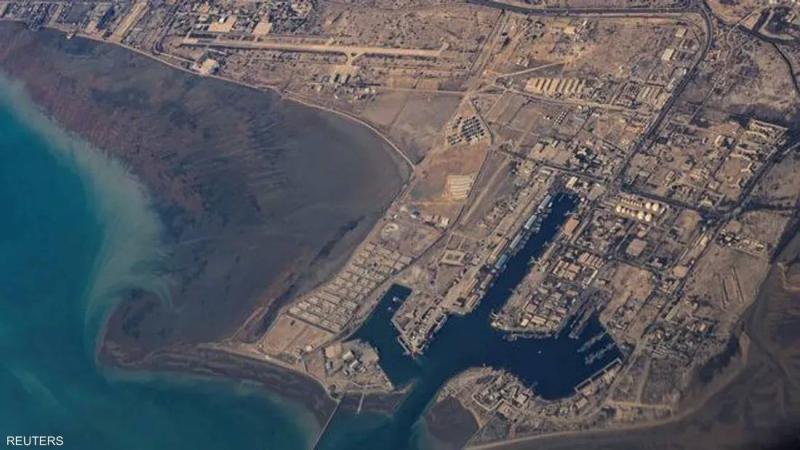
The targets included Iranian air defense systems, coastal surveillance systems, surface-to-air missiles, anti-ship cruise missile launch sites, as well as drone launch sites and port facilities.
The map of targets reveals a notable expansion in the nature of the American operation, extending beyond individual assault sites to include coastal surveillance and air defense capabilities, anti-ship missiles, drones, and related port infrastructure.
The attacks coincided with reports of explosions in several southern regions of Iran, affecting Qeshm Island, Bandar Abbas, and the coastal city of Sirik.
Iranian television reported hearing six explosions on Qeshm Island and seven in Sirik, with media reports indicating projectiles landing on commercial and fishing docks.
The latest round launched after three separate attacks on commercial vessels in the Hormuz Strait on Monday and Tuesday, breaking a brief period of calm and bringing navigation security back to the forefront of the US-Iran standoff.
US Central Command (CENTCOM) stated that the strikes were a response to Iranian attacks targeting three commercial vessels as they transited the strait. The operation aims to impose "high costs" on Tehran for targeting civilian-led ships in an international waterway.
The US military described the Iranian movements as "unjustified and dangerous," considering them a clear violation of the ceasefire.
Among the attacked vessels was the Qatari gas carrier "Al-Ruqaya," which caught fire in its engine room, prompting measures to evacuate crew members.
Qatar held Iran "fully legally responsible" for the attack and summoned the Iranian envoy in protest, a significant move given Doha's role in mediating between Washington and Tehran.
Security sources in the maritime sector reported damage to a Saudi-flagged crude oil tanker off the coast of Oman, while the UK Maritime Trade Operations reported attacks on tankers in the region.
In contrast, Iran denied the accusations against it, questioning the attribution of responsibility for the ship attacks to them.
With the widened scope of US strikes, Iran's Ministry of Foreign Affairs announced Tehran would respond "decisively," accusing Washington of violating existing bilateral understandings.
The Iranian foreign ministry warned of the consequences of what it termed a breach by the US, affirming that Iran would take steps to safeguard its interests and national security.
The US pressure wasn't limited to military might as the Treasury Department recently revoked sanctions waivers allowing Iran to sell oil, adding an economic dimension to the ongoing confrontation.
These waivers had been part of the de-escalation agreements between both sides, and their revocation signals Washington's retraction of one of Tehran's significant economic concessions.
Iran condemned this decision, stating it conflicted with the terms of the memorandum of understanding.
Amid rising military tensions, the risk level in one of the world's most crucial marine corridors has escalated.
The US Navy-led Combined Maritime Forces (CMF) increased the threat level for transiting the Strait of Hormuz from "high" to "severe," warning of the potential for "deliberate hostile actions" under the current conditions.
The increased threat level reflects growing concerns that commercial vessels may become direct targets in the conflict, especially after the recent series of attacks.
These risks are magnified given the strategic location of the Strait of Hormuz in the global energy supply chain, which channeled about 20% of the world's oil and gas supplies before the conflict erupted.
Shipping traffic has improved recently, although it remains below pre-conflict levels.
Data from Kpler showed only about 16 ships managed to cross the strait on Tuesday, marking the lowest number in roughly three weeks, in contrast to the daily average of about 125 ships pre-conflict.
Financial markets have quickly reacted to the new strikes and the potential widening of the conflict.
US oil prices surged by about 3% in early trading, continuing gains from the previous session amid intensifying fears of a ceasefire breakdown and disrupted supplies via the Hormuz Strait.
West Texas Intermediate crude rose above $72 a barrel, as concerns grew that a new Iranian retaliation could further disrupt shipping operations.
Shipping costs also increased with the renewed security risks, while vessel traffic remains below pre-conflict levels.
This new round comes after a brief period of calm following agreements aimed at restoring safe passage through the strait and paving the way for broader negotiations between Washington and Tehran.
However, the attacks on vessels, the revocation of oil waivers, expanded US strikes, and Iran's threat of a decisive response have put these agreements to their toughest test since de-escalation began.
The situation is further complicated by the fact that the US and Iran have not yet succeeded in turning the ceasefire into a permanent agreement, amid ongoing disputes over Iran's nuclear program, the future of the Hormuz Strait, and regional security arrangements.
With US strikes up to five times more powerful than before, Iran's threat to retaliate, commercial ships under attack, and maritime threat levels at "severe," the Strait of Hormuz is once again emerging as the most dangerous flashpoint between Washington and Tehran.
Whether this round remains within the confines of mutual deterrence or spirals into a new cycle of warfare will largely depend on Iran's next response and the scale of the potential US retaliation.