


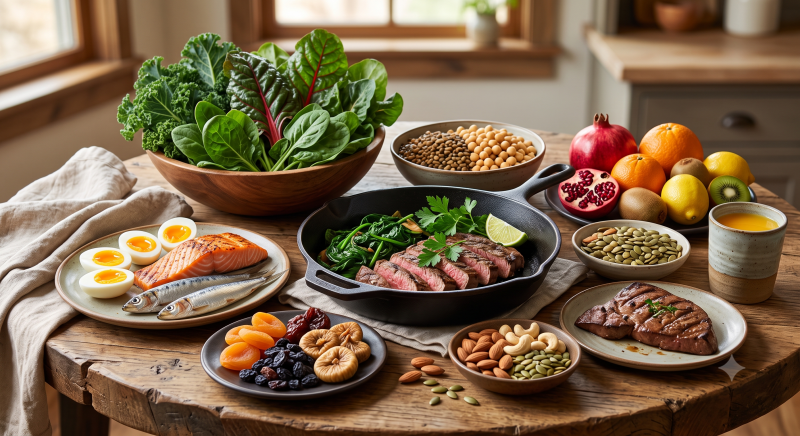
Anemia occurs when the number of red blood cells or hemoglobin levels drop. Hemoglobin is the protein responsible for transferring oxygen throughout the body. Iron deficiency is one of the most common causes of anemia. Therefore, a nutrient-rich diet is crucial for maintaining healthy blood.
The body requires various nutrients to produce red blood cells, including iron, vitamin B12, folic acid, and protein. Selecting the right foods can improve anemia, especially when combined with appropriate medical treatment if necessary.
Top Foods to Treat Anemia:
Liver
Liver is a rich source of iron and also contains vitamin B12 and folic acid, which are essential for red blood cell production.
It can be a beneficial dietary option for those with iron deficiency, but it should be consumed in moderation as part of a balanced diet.
Red Meat
Red meats are excellent sources of heme iron, a type of iron that the body absorbs more easily than the iron in plant sources.
Including meats like beef and lamb in your diet can supply the necessary iron and protein to support hemoglobin production.
Fish and Seafood
Certain types of fish and seafood are rich in iron and vitamin B12, both crucial for blood health.
Fish such as sardines, tuna, and shellfish are dietary choices that can help prevent deficiencies associated with anemia.
Eggs
Eggs are packed with important nutrients, including protein and various vitamins and minerals that support overall health.
They can be part of a diet for those needing to improve their nutrition while treating anemia.
Lentils
Lentils are a well-known plant-based source of iron, containing protein, fiber, and other essential nutrients.
The absorption of iron from lentils can be enhanced by consuming them with vitamin C sources like lemon juice or fresh vegetables.
Beans
Beans are rich in iron and plant-based protein, making them useful for those suffering from iron deficiency.
They can be easily integrated into daily meals in various ways.
Spinach
Spinach and green leafy vegetables contain iron and folic acid, important for red blood cell production.
They should be consumed with a variety of meals along with vitamin C sources to enhance iron absorption.
Watercress
Watercress is a nutrient-dense vegetable with iron and vitamins that support overall health.
It can be added to salads and daily meals as part of a balanced diet.
Nuts and Seeds
Nuts and seeds provide iron and vital minerals and are suitable as snacks or meal additions.
Pumpkin seeds, sesame seeds, and almonds are notable options offering diverse nutrients.
Oranges and Vitamin C-rich Fruits
While fruits aren’t significant iron sources, they play a key role in improving the body's iron absorption.
Fruits rich in vitamin C like oranges, kiwi, strawberries, and guavas enhance the body's ability to utilize dietary iron.
Dates
Dates contain a variety of minerals and nutrients, including iron, making them a health-supportive dietary addition.
However, they should be part of a diverse diet and not solely relied upon for anemia treatment.
Foods That Aid Iron Absorption?
Consuming vitamin C-rich foods alongside iron sources enhances its absorption. For example, adding lemon to meals or having citrus fruits after meals can be beneficial.
It's also advisable to avoid consuming tea and coffee immediately after iron-rich meals as they may hinder absorption.
See Also: