


Skin varies from person to person in terms of oil production, hydration levels, and sensitivity to external factors. As a result, there are no skincare products or cosmetics that suit everyone in the same way. Therefore, identifying your skin type is the first step towards achieving healthy, balanced skin.
Dermatologists emphasize that many skin issues, such as acne, dryness, or excessive shine, may stem from using products unsuitable for your skin type. Determining your skin type before purchasing products can lead to better results and minimize the potential for skin irritation.
Why is it important to know your skin type?
Identifying your skin type helps in:
- Selecting the appropriate cleanser.
- Using a moisturizer that truly benefits your skin.
- Choosing the right sunscreen.
- Reducing the appearance of acne and blackheads.
- Protecting the skin from dryness or irritation.
- Building a more effective skincare routine.
How to easily determine your skin type at home
Wash your face thoroughly
Start by washing your face with a gentle cleanser to remove oils and impurities. Then gently pat your skin dry with a clean towel without rubbing.
Wait 30 to 60 minutes
Allow your skin to return to its natural state by refraining from applying any creams, serums, toners, or makeup for an hour after cleansing.
Examine your skin in the mirror
About an hour later, examine your skin closely and observe whether it’s shiny, tight, balanced, or shows signs of redness.
How to identify your skin type
Oily skin
If your face appears shiny all over, especially on the forehead, nose, cheeks, and chin, you likely have oily skin. It is often characterized by:
- Large pores.
- Excess oil production.
- Frequent appearance of pimples and blackheads.
- Less stability for makeup.
Dry skin
If your skin feels tight or rough after washing, with some flakiness in certain areas, it likely indicates dry skin. It is also characterized by:
- Lack of natural oils.
- Rough texture.
- Dullness at times.
- Faster appearance of fine lines.
Combination skin
Combination skin is the most common type, where the forehead, nose, and chin are oily, while the cheeks are normal or dry. It's recommended to use different products for different areas to achieve balance.
Normal skin
If your skin feels smooth and balanced, without excessive shine or obvious dryness, it is likely normal. It is characterized by:
- Even tone.
- Small pores.
- Smooth texture.
- Few skin issues.
Sensitive skin
Sensitive skin can be dry, oily, or combination but reacts quickly to fragrances, cosmetics, or climatic changes. Common symptoms include:
- Redness.
- Itching.
- Burning sensation.
- Irritation after using some products.
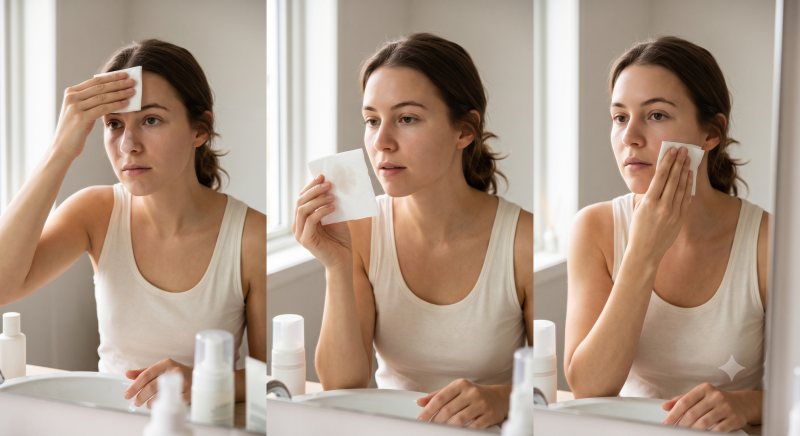
Tissue Test
If unsure about your skin type, use a clean tissue and gently press it against your face an hour after washing.
- If the tissue is soaked with oil from all areas, the skin is oily.
- If there's oil in the T-zone (nose and forehead) only, the skin is combination.
- If there is no oil and a feeling of dryness, the skin is dry.
- If oil is scant and balanced, the skin is normal.
Mistakes that prevent you from knowing your skin type
Applying creams before testing
Any product applied to the skin can temporarily alter its nature and lead to inaccurate results.
Washing your face multiple times
Repeated washing strips natural oils, making the skin appear drier than it is.
Relying solely on appearance
Shininess might result from heat or humidity rather than oiliness, so tests should be conducted under normal conditions.
Ignoring seasonal changes
Skin nature might change between summer and winter, so it's beneficial to reassess your skin type with significant seasonal changes.
See also: