


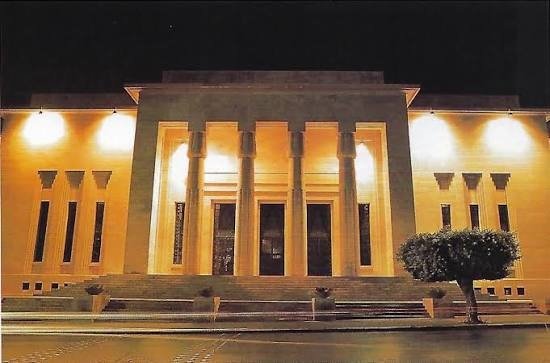
The National Museum of Beirut stands as one of Lebanon's foremost cultural and historical institutions, housing an extensive collection that spans various epochs—from prehistoric times to the Islamic era.
The museum is renowned for its diverse collections, which include statues, inscriptions, sarcophagi, coins, jewelry, and mosaics.
These artifacts illustrate Lebanon's historical significance as a cultural bridge in the Eastern Mediterranean, revealing insights into the religious, social, artistic, and economic lives of civilizations that once thrived in this region.
Highlights of the National Museum of Beirut's Collection:
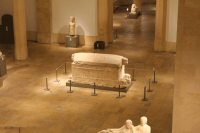
Ahiram Sarcophagus
The Ahiram Sarcophagus, originating from the Phoenician city of Byblos, is among the most celebrated pieces in the museum. Its Phoenician inscriptions are pivotal in understanding the evolution of the alphabet—affecting the history of writing substantially—and demonstrate the artistic and cultural advancements achieved by Byblos during the Phoenician era.
Phoenician Anthropoid Sarcophagi
The museum also boasts a selection of Phoenician Anthropoid Sarcophagi. These human-shaped coffins reflect diverse artistic styles from the region and the ancient world, shedding light on the funerary practices of the Phoenicians and showcasing cultural interactions between ancient Lebanon and neighboring civilizations.
Astarte Statues
The Astarte Statues are integral to understanding Phoenician religious beliefs. These sculptures highlight the goddess's importance in Phoenician spiritual life and manifest the ancients' artistic skill, balancing symbolism with aesthetic beauty.
Phoenician Bronze Figurines
The museum's collection includes small bronze statuettes from the Phoenician civilization, with origins traced to archaeological sites like Byblos. These figurines are noted for their precision and provide insights into the religious and artistic practices during the ancient Phoenician era.
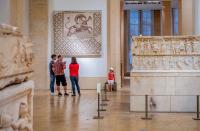
Roman and Byzantine Mosaics
Mosaics stand as a highlight of the museum, with pieces dating back to the Roman and Byzantine periods. These works are distinguished by intricate details that portray mythological, floral, or geometric scenes, revealing the flourishing state of arts in Lebanese cities at the time.
Roman Statues and Sculptures
The institution is home to numerous Roman statues and sculptures, reflecting the Roman Empire's influence on ancient Lebanese cities like Beirut, Tyre, and Byblos. These artifacts are characterized by their realistic style, with meticulous details in facial and bodily features.
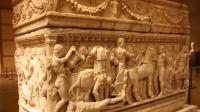
Achilles Sarcophagus
The Achilles Sarcophagus is a notable piece from the Roman period, with carvings related to Greek mythology. It illustrates the spread of Greco-Roman culture in Lebanon's coastal cities during that era.
Ancient Jewelry
The museum showcases a collection of jewelry from various historical periods, including gold and gemstones, reflecting the craftsmanship of ancient artisans and indicating the wealth and trade activity in ancient Lebanese cities.
Ancient Coins
The museum's coin collection is pivotal for studying the economic and political history of the region, spanning the Phoenician, Roman, Byzantine, and Islamic periods. These coins are instrumental, carrying symbols and inscriptions that help identify the rulers and systems governing Lebanon through ages.
What Do These Artifacts Reveal About Lebanon’s History?
The acquisitions of the National Museum of Beirut go beyond artistic endeavors; they serve as historical documents facilitating the comprehension of Lebanese societal development over millennia.
The Phoenician sarcophagi underscore the significance of ancient coastal cities, while Roman sculptures and mosaics exhibit the prosperity of Lebanese cities during the Roman era. Islamic pieces indicate the continued cultural importance of the region in subsequent periods.
See also: National Museum of Beirut Operating Hours
Everything You Need to Know About the National Museum of Beirut