


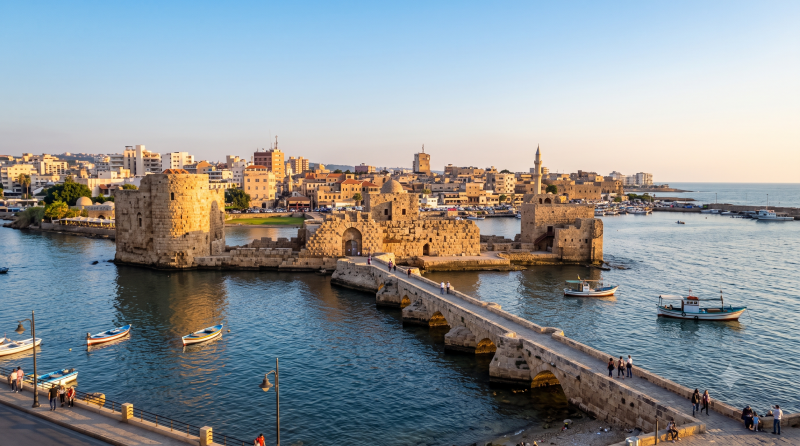
Sidon holds a prominent place among Lebanon's historic cities, known for its connection to the region since Phoenician times. The remnants of successive civilizations remain present in its old neighborhoods and landmarks.
Located on the Mediterranean coast, about 35 kilometers south of Beirut, Sidon's significance isn't confined to its ancient history. Today, it blends vibrant markets, heritage buildings, and cultural and religious sites, amplified by its coastal setting.
Key Highlights about Sidon:
1. One of the Oldest Phoenician Cities
Sidon is deeply rooted in ancient Phoenician history, being one of the most notable cities connected to Phoenician civilization on the Eastern Mediterranean coast. Its maritime location facilitated its development as a center for trade and maritime activities through various historical periods.
2. Situated on the Mediterranean Coast
Sidon is geographically important due to its Mediterranean coastal location in southern Lebanon, approximately 35 to 40 kilometers south of Beirut, making it easily accessible from the capital.
3. The Famous Sidon Sea Castle
The Sea Castle is one of Sidon's most famous landmarks. Built in 1228 AD on a small rocky island during the Crusader period, it stands where an ancient Phoenician temple once lay, offering a unique view of the coast and old town.
4. Rich Heritage in the Old Market
Sidon's old market, characterized by stone pathways and arches, features shops selling traditional products, foods, and crafts, reflecting daily life and local heritage.
5. Soap Making Part of the City's Identity
Sidon has a long history of traditional soap making, showcased in the Soap Museum located in the old city. The museum preserves the history and techniques of soap making using olive oil.
6. Ottoman Architecture in Debbané Palace
Debbané Palace, an important heritage building within Sidon's old market, was constructed in the 18th century. It features architectural elements reflecting Arab-Ottoman style.
7. Khan el-Franj: A Commercial Hub
This historic khan is linked to commercial activity, built under Prince Fakhreddine II to encourage trade with European traders, featuring a courtyard and stone arches.
8. A Blend of Religious Landmarks
The old city includes historic mosques and churches that reflect Sidon's religious and cultural diversity. Notable landmarks include the Omari Mosque and St. Nicholas Greek Orthodox Cathedral.
9. A Destination for Heritage and Local Cuisine
Sidon's old markets offer a glimpse into Lebanese street food, with shops serving dishes like falafel and traditional pastries, contributing to its culinary reputation.
10. Merging History with Coastal Life
Sidon's allure lies in its historic buildings, markets, and seaside ambiance, combining maritime charm with rich history, making it a standout destination on Lebanon's coast.
Why Sidon Deserves a Visit
Sidon's charm lies in its ability to offer a diverse experience without crossing vast distances. The old city houses the sea castle, heritage market, Soap Museum, Debbané Palace, and Khan el-Franj, while the seaside adds a unique touch. Maintaining parts of its ancient urban fabric grants visitors a tangible historical experience.