


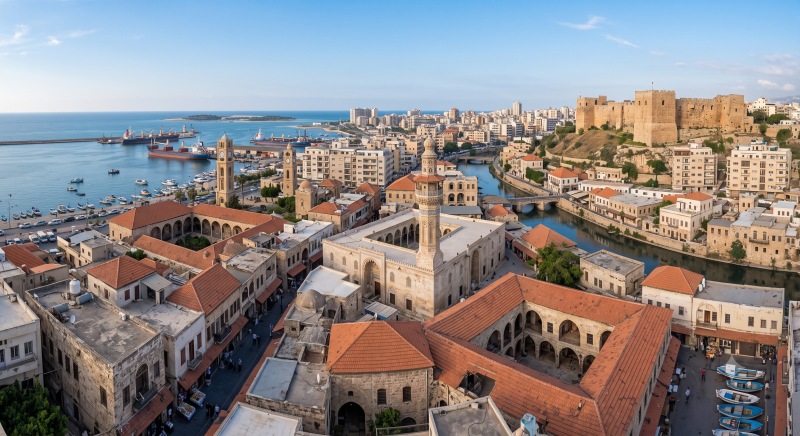
Tripoli is a prominent historical city in northern Lebanon, known for its extensive architectural heritage dating back to various historical periods. Many of its landmarks are concentrated in the old city where markets, khans, mosques, and ancient baths intermingle within an urban fabric that reflects the city's long history.
Tripoli is also renowned for its confectionery industry, popular cuisine, and traditional crafts, making a visit to its markets a journey through history and a taste of local gastronomy.
Main Attractions of Tripoli:
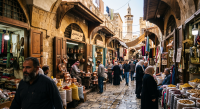
1. The Old Markets
Tripoli is famous for its old markets, characterized by narrow alleys, stone buildings, and shops specializing in crafts and traditional products.
Markets like the coppersmiths’ market, the goldsmiths' market, and the perfumers' market highlight the city's historic commercial and artisan role.
2. Tripoli Citadel
The famous Tripoli Citadel, also known as the Citadel of Raymond de Saint-Gilles, overlooks the city and the Abu Ali River and dates back to the Crusader era with subsequent modifications in later periods. It offers expansive views of the old city and its surroundings.
3. Baklava and Tripolitan Sweets
Tripoli boasts a wide reputation for its sweet-making, especially for eastern sweets like baklava, znoud el-sit, safouf, and cheese-based confections, often incorporating nuts and sugar syrup.
Sweet shops are prevalent in the old markets, and visiting them is essential for many tourists to experience the city.
4. Mamluk Baths
Tripoli houses several historic baths dating back to the Mamluk era, serving social roles alongside their primary function.
Famous baths include Hammam Al-Noori and Hammam Al-Abed, featuring stone domes and traditional architectural elements that depict daily life in past eras.
5. Historic Mosques
The old city of Tripoli contains many historic mosques, underscoring the city's religious and urban significance. Notable ones include the Great Mansouri Mosque and the Al-Taynal Mosque.
The Great Mansouri Mosque is centrally located, while the Al-Taynal Mosque is a distinguished Mamluk landmark with intricate architectural details.
6. Soap Making and Traditional Crafts
Tripoli retains traditional crafts like soap making, and the production of copper, wood products, and handcrafted items that remain present in the old city markets.
These crafts lend the markets a unique character, allowing visitors to watch artisans at work and purchase traditional products.
7. Popular Cuisine
Tripoli is known for its diverse popular cuisine, associated with Lebanese and northern dishes, including manakish, falafel, kibbeh, and dishes based on meat and grains. The city is also famous for sweets, making food a central experience when visiting the old markets and neighborhoods.
8. The Port and Palm Islands
Tripoli is also linked to the coastal port area west of the city, featuring a seaside front and islands offshore, notably the Palm Islands.
The Palm Islands Nature Reserve is a major environmental site, home to bird and marine life species, adding a natural aspect to Tripoli's historical attractions.
What Sets Tripoli Apart from Other Lebanese Cities?
Tripoli’s uniqueness lies in the blend of elements rarely found together; the old city showcases clear layers of Mamluk, Ottoman, and Crusader history along with markets, crafts, restaurants, and sweet shops. Simultaneously, the port area and nearby islands provide a distinctive coastal and natural dimension.
These aspects make Tripoli an enticing destination for those wishing to explore Lebanese heritage away from traditional tourist paths, particularly as the old city allows transitions between historical landmarks and popular markets over relatively short distances.
Check Also: