


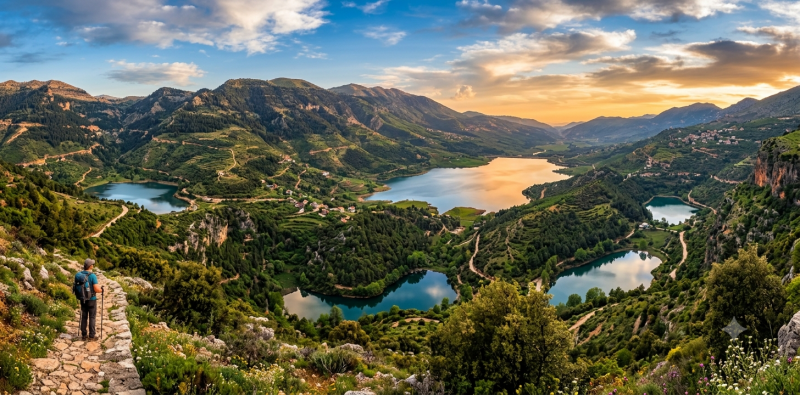
Despite its small size, Lebanon boasts a remarkable natural diversity, featuring mountains, forests, springs, rivers, lakes, and mountain ponds. These destinations vary from region to region; some require hiking to reach, while others are easily accessible for walking or cycling.
Lebanese lakes offer diverse experiences year-round. Some become swimming and relaxation spots in summer, while others take on a distinctive winter charm with snow accumulation and cold temperatures. Here are seven standout lakes and natural water destinations in Lebanon worth exploring.
7 Natural Lakes in Lebanon
1. Shwan Lake – Mount Moses
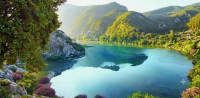
Located in the Ibrahim River Valley within the Mount Moussa Biosphere Reserve, Shwan Lake is a famous natural spot for adventure and mountain trekking enthusiasts in Lebanon.
The lake is known for its turquoise waters surrounded by trees and forests, offering a natural view far from urban settings. Access requires a nature walk, making the journey a central part of the experience rather than just a means to reach the lake.
In summer, nature lovers visit to enjoy the waters and relax amidst the trees, while others explore the surrounding trails and capture photos of the mountainous scenery.
Main activities: Hiking, swimming, photography, and relaxation in nature.
2. Oyoun Orgosh Lakes – Beqaa and North
Oyoun Orgosh, a mountain destination in Lebanon, consists of lakes and water ponds located in a high-altitude area between the mountains.
The region is characterized by cold water and mountainous nature, with water sources influenced by springs and snow during cold seasons. The altitude provides refreshing weather in summer, attracting those seeking mountain climates away from coastal heat.
The surrounding area features popular dining spots, making it ideal for families and groups wishing to combine nature with traditional Lebanese cuisine.
Main activities: Walking, sitting near water, photography, and dining at mountain restaurants.
3. Yammouneh Lake – Beqaa
Situated in Beqaa, Yammouneh Lake is in a mountainous area rich in springs and water, known for its lush nature and tranquility compared to crowded tourist towns.
Surrounding springs feed the region with water, while the surrounding agricultural plains and mountains give the scene a unique rural charm. Yammouneh is perfect for nature lovers, photography, and enjoying serene surroundings.
The area is also ecologically significant, home to several species and plants related to the local environment, offering visitors a chance to explore one of Beqaa's notable natural areas.
Main activities: Walking, photography, nature exploration, and enjoying mountain views.
4. Taanayel Lake – Central Beqaa
Unlike many mountainous lakes, Taanayel Lake is located in a green agricultural setting in Beqaa, offering a peaceful atmosphere suitable for family outings.
The lake is surrounded by green spaces, walking paths, and tall trees, making it an ideal getaway from noise. Known for its natural diversity and bird presence, it offers photographers a good opportunity for wildlife observation.
Visitors enjoy walking, cycling, and the surrounding agricultural landscapes, while horse-drawn carriages add a rural touch to the experience.
Main activities: Walking, cycling, photography, bird watching, and family outings.
5. Ayoun El Samak Lake – Dinnieh and Akkar
Known for its natural beauty, Ayoun El Samak in North Lebanon features mountainous terrain combining water, rocky slopes, and green spaces, sourced from springs and waterfalls, especially when water levels are high.
The surrounding mountains provide an ideal backdrop for photography and nature enthusiasts. It's also perfect for outdoor adventures, exploring natural paths, and enjoying views away from the city.
Main activities: Hiking, photography, exploring waterfalls, and enjoying nature walks.
6. Aaqoura Lakes – Jbeil
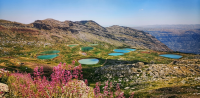
In the heights of Jbeil, a group of mountain lakes and ponds creates a varying natural scene in Aaqoura, surrounded by orchards and elevations. Nature lovers and adventurers visit to explore nearby natural sites, like the Batara Gorge Waterfall.
The area offers seasonal activities, from hiking and camping to paddle boating and horseback riding. The high vantage points make it perfect for photography and watching sunsets.
Main activities: Hiking, camping, horseback riding, paddle boating, and photography.
7. Kornayel and Baruk Lakes – Upper Metn
Located in Upper Metn, Kornayel and Baruk Lakes are set within pine forested mountains, known for their calm atmosphere away from Beirut's hustle. The area's beauty shines in summer and fall when green landscapes blend with mountains and misty views.
Surrounding areas provide hiking and walking paths, making it a suitable destination for families and camping enthusiasts seeking outdoor experiences in mountain settings.
Main activities: Hiking, camping, nature walks, photography, and enjoying nature.
Best Time to Visit Natural Lakes in Lebanon
The best time to visit Lebanese lakes varies based on location and desired activities. Spring and summer are ideal for exploring most mountain areas, offering more suitable walking paths and moderate temperatures.
In fall, some areas showcase unique natural colors, particularly those surrounded by forests. Conversely, some trails might become challenging during winter due to snow and rain, so checking the road and path conditions is advised before setting out.
Tips Before Visiting Lebanese Lakes
Some lakes and mountain areas require long-distance walking, so it's best to wear appropriate hiking shoes and carry sufficient water and food, especially where services are scarce.
Visitors are advised not to litter and to keep the lakes and paths clean, as these areas are sensitive ecosystems. It's also important to check the weather before the trip, especially when heading to higher areas.
In conclusion, Lebanon's natural lakes showcase the country's beauty beyond beaches and historical cities, extending to mountains, forests, springs, and water ponds, offering diverse experiences for nature and adventure lovers.
Preserving these sites is a shared responsibility between visitors and local communities, ensuring Lebanon's lakes and springs remain beautiful natural destinations for future generations.
See also
What will Nancy Ajram's Net Worth be in 2026?
Best Photography Spots on Hamra Street
Famous Divorce Cases Among Arab Artists