


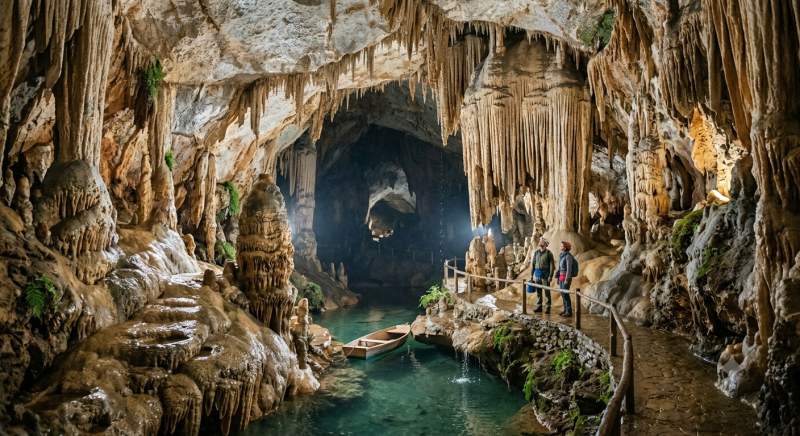
Lebanon's caves offer visitors a chance to discover a different side of the country's nature, beyond its beaches, cities, and open mountains.
Over long geological periods, water has shaped underground cavities and passages, resulting in numerous grottos varying in size, nature, and accessibility.
Among the must-visit caves in Lebanon, you’ll find popular tourist sites and grottos ideal for adventurers and exploration enthusiasts.
Some caves provide organized trails for visitors, while others require guides and proper equipment, making it important to understand each location before planning a visit.
Notable Caves in Lebanon:
1. Jeita Grotto
One of Lebanon’s most famous natural attractions, Jeita Grotto, consists of two interconnected limestone caves stretching about 6 kilometers into the mountain.
The upper cave is noted for its grand stalactite and stalagmite formations, while the lower cave contains an underground river, part of which can be explored by boat when water conditions permit.
Its organization and accessibility make it perfect for families and first-time visitors.
2. Afqa Grotto
Linked to the mountainous region where the Abraham River originates, Afqa Grotto features a natural setting combining a cave, watercourse, waterfall, and rocky slopes.
It's a well-known destination in Keserwan for nature lovers, and visitors can explore both the grotto and the surrounding natural landscape. The Lebanese Caves Club lists Afqa as one of the most explored caves in Lebanon.
3. Qadisha Grotto
Located in the Bsharri area, Qadisha Grotto boasts natural formations of stalactites and stalagmites and is associated with the Qadisha River's source. Extending about 778 meters, it offers a unique experience for cave and nature enthusiasts in one of North Lebanon's most distinguished mountain areas.
4. Roueiss Cave
In the ‘Aqoura region, Roueiss Cave is an adventurous alternative to traditional tourist caves.
Discovered by Lebanese speleologists, its passages stretch about 6 kilometers across three levels and include an underground river and large halls.
Lacking lighting or tourist paths, a visit requires proper equipment and a specialized guide.
5. Zahlan Cave
Located in the Dinnieh area, Zahlan Cave is famed for its limestone formations, shaped over long geological periods. It consists of several parts and hosts stalactite and stalagmite formations covering sections of the walls and ceilings.
Artifacts inside suggest ancient human use, adding historical intrigue to its natural value.
6. Nabaa el Shatawie Cave
Explored by the Lebanese Caves Club, Nabaa el Shatawie is among the natural grottos to discover in Lebanon's mountainous regions.
Visiting differs from equipped tourist caves, typically requiring specialized caving expeditions and environmental activities, making it important not to enter without knowledge of the path and a specialized guide.
Which Cave is Best to Visit in Lebanon?
The best cave depends on the experience sought by the visitor. Jeita Grotto remains the top choice for families and visitors seeking an organized tourist experience, while Qadisha Grotto offers a different natural experience in northern Lebanon.
Meanwhile, Afqa, Roueiss, Zahlan, and some other grottos are better suited for nature and adventure enthusiasts, with entry possibilities and arrangements needing verification beforehand.
Important Tips Before Visiting Caves
Cave conditions vary by location, so they shouldn’t all be treated as open tourist attractions. Some are outfitted with paths and guides, while natural caves require expertise, equipment, and a guide.
Visits are best avoided during heavy rain or high water levels, and exploring unknown passages alone is discouraged. Suitable footwear, lighting, and clothing ensure safer experiences where exploration is allowed.
Also see:
Saifi Village Guide in Beirut, The Story of Mar Nicolas Stairs in Beirut