


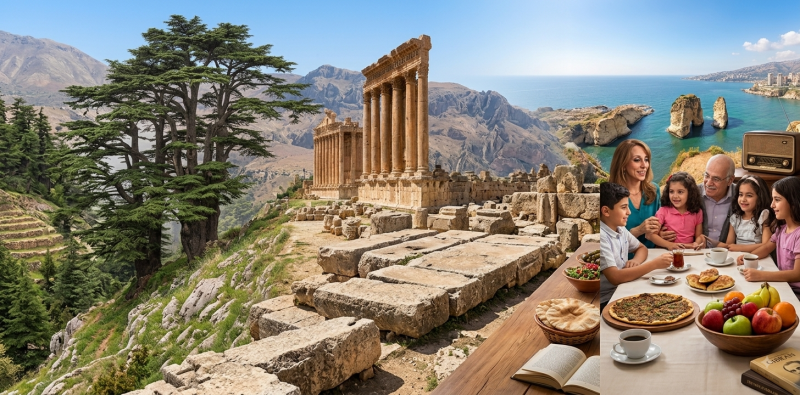
Lebanon, known for its exceptional diversity, combines history, culture, nature, art, and cuisine. Despite its small size, it has witnessed numerous civilizations that have left behind cities and archaeological sites now part of the world heritage.
The global Lebanese diaspora has also played a significant role in spreading Lebanese culture, cuisine, and arts worldwide, making certain Lebanese symbols recognized beyond the region—be it cedars, cuisine, fashion, or music.
10 Things Lebanon is Famous for Globally
1. Lebanese Cuisine and Mezza
Lebanese cuisine leads as one of the elements associated with Lebanon globally. Lebanese restaurants have spread to many countries, and dishes like tabbouleh, hummus, fattoush, kibbeh, and grill have become well-known Middle Eastern cuisine worldwide.
The Lebanese table is marked by the concept of mezza, offering a wide range of small dishes instead of a single main dish. These dishes include fresh vegetables, herbs, olive oil, lemon, tahini, grains, and meats.
Mezza provides a social experience as much as a culinary one, with family or friends sharing dishes at the table. This method of dining has become one of the main characteristics through which visitors discover Lebanese culture.
2. Cedar Forests: The Symbol at the Heart of the Lebanese Flag
No natural symbol is more closely associated with Lebanon than the Lebanese cedar. This iconic tree appears in the center of the Lebanese flag and has been intertwined with the country's history and culture for millennia.
Several Lebanese mountain regions host historic cedar forests, like the Cedars of God in Bsharri, a major natural and tourist symbol in the country. In ancient civilizations, the cedar was more than a tree; its valuable wood was used for building ships and other structures. It is frequently mentioned in historical and religious texts.
Today, cedar forests symbolize nature preservation and heritage, attracting visitors for the mountains, snow, and landscapes.
3. Haute Couture and Lebanese Designers
Lebanese fashion designers have a prominent presence in the fashion world, especially in haute couture, evening gowns, and wedding dresses. Elie Saab stands out globally, with designs worn by international celebrities on grand occasions.
Zuhair Murad also shines in the haute couture world, alongside other Lebanese designers like Georges Hobeika and Rabih Kayrouz. The Lebanese fashion school is recognized for its emphasis on embroidery, intricate details, luxurious fabrics, and feminine designs, securing a place for Lebanese designers at global fashion weeks and events.
As a result, Lebanese fashion has become a global phenomenon, not just a local one.
4. Worldwide Lebanese Diaspora and Entrepreneurship
The Lebanese diaspora is a significant social and cultural phenomenon linked to the country's history, with large communities settling worldwide, especially in Latin America, Africa, North America, Australia, and Europe.
This diaspora facilitated a vast network of economic and cultural ties between Lebanon and various countries. Lebanese people have excelled in trade, medicine, engineering, politics, arts, and entrepreneurship.
Additionally, expatriates played a crucial role in sharing Lebanese culture with the societies they integrated into, including its food, music, and social customs. Thus, the Lebanese diaspora is an essential part of Lebanon's image abroad, going beyond mere migration.
5. Phoenician and Roman Ruins and Historical Cities
Lebanon boasts a rich archaeological heritage from multiple civilizations, notably the Phoenicians and Romans. Byblos, Tyre, and Baalbek are key sites reflecting this historical diversity.
Byblos, historically known as Biblos, is one of the oldest continuously inhabited cities in the world, tied to Phoenician history and the development of writing and the alphabet. Tyre, a historic coastal city in the south, was a major Phoenician city and a prominent trade and maritime center in antiquity.
Baalbek is one of the region's greatest Roman archaeological testimonies, featuring a vast complex with famous Roman temples, including the Temple of Jupiter and the Temple of Bacchus. Several Lebanese sites' inclusion on the UNESCO World Heritage list has solidified this historical heritage's international presence.
6. Nightlife and Urban Culture in Beirut
Beirut has long been associated with vibrant cultural and artistic life, known for its restaurants, cafes, bars, and art spaces. The nightlife in the capital is diverse, offering venues that combine Arabic music with modern Western styles, alongside restaurants and cafes in various Beirut neighborhoods.
Beirut's nightlife is inseparable from the broader cultural scene, encompassing music, art, theatre, design, and festivals. Despite the challenging times faced by Lebanon, Beirut has maintained a part of its image as a lively cultural and social city, distinguishing it from many towns in the region.
7. Mountains and Sea in a Small Space
Lebanon is geographically distinguished by its easy transition between coastal and mountainous areas. With a Mediterranean coastline and rapidly rising mountain ranges from the coast, Lebanon offers diverse tourist experiences on the same day.
In winter, skiing is possible in mountainous areas like Faqra and The Cedars, while in warmer seasons, beaches and coastal cities offer enjoyment. This diversity extends beyond sports to climate, scenery, and tourist activities. In a relatively short journey, one can move from cold mountainous settings to warmer coastal cities. Hence, the phrase 'mountains and sea in one day' succinctly captures the uniqueness of Lebanese geography.
8. Gibran Khalil Gibran and Lebanese Literature
Lebanese literature has made a significant impact beyond the region, with Gibran Khalil Gibran being a leading name associated with Lebanese literature globally. Born in the town of Bsharri in northern Lebanon and later migrating to the United States, Gibran became one of the most prominent authors and poets with worldwide reach. His book, 'The Prophet,' is his most famous work, translated into many languages and widely spread across the globe.
The Lebanese literary presence isn't limited to Gibran, as Lebanese authors and thinkers have excelled in Arabic and Francophone literature, including Amin Maalouf, who won the Goncourt Prize and was elected to the French Academy. Thus, literature has become one of the channels carrying Lebanon's image and culture to a global audience beyond the Arab world.
9. Fairuz and the Rahbani Brothers
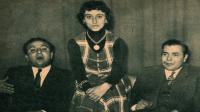
Discussing Lebanese culture is incomplete without mentioning Fairuz, one of the most famous voices in Arab music history. The artistic collaboration between Fairuz and the Rahbani brothers, Assi and Mansour, formed a distinctive musical and theatrical school blending poetry, music, and theatre, drawing elements from Lebanese and Arab heritage.
Fairuz's influence surpasses Lebanon and the Arab world, with concerts in major international venues, including theatres in Paris, London, and more. Over the decades, Fairuz's songs have become part of the cultural memory of various Arab generations, associating her voice with Lebanon's image in the Arab and global imagination.
10. Education and the Medical Sector
Historically, Lebanon has been known for educational and medical institutions with regional presence. This contributed to Beirut's image as an educational and medical hub in the region, with the American University of Beirut (AUB) and Saint Joseph University (USJ) being among the prominent educational institutions playing a role in higher education and scientific research in Lebanon and the region.
Lebanon also hosts specialized hospitals and medical centers, attracting patients from different Arab countries over extended periods. Despite recent economic challenges faced by these sectors, Lebanese expertise in medicine, education, and engineering continues to have a significant presence within and beyond Lebanon.
What Makes Lebanon's Image Unique Globally?
What stands out about Lebanon's international image is its reliance not on a single factor. A tourist might know Lebanon through its cuisine, while a history enthusiast may associate it with Baalbek, Byblos, and Tyre. Others might recognize it through fashion, Fairuz's music, or Gibran's writings.
In addition, Lebanon combines an ancient historical legacy with a vibrant modern culture, blending past and present in its cities, restaurants, music, architecture, fashion, and even daily life.
The global Lebanese diaspora has also helped enhance this image, as emigrants carried language, food, customs, and music, establishing cultural and economic bridges with new communities.
In conclusion, Lebanon exerts cultural and touristic influence beyond its geographic size. From Lebanese cuisine and mezza to the cedar tree, from haute couture to Phoenician and Roman cities, numerous elements have forged Lebanon's presence beyond its borders.
Hence, Lebanon's global fame is not tied to a single landmark or personality but a diverse mix of history, culture, art, cuisine, nature, and the Lebanese people. These elements have firmly planted Lebanon's name in both Arab and international memories.
See Also
7 Lebanese Dishes Tourists Love