


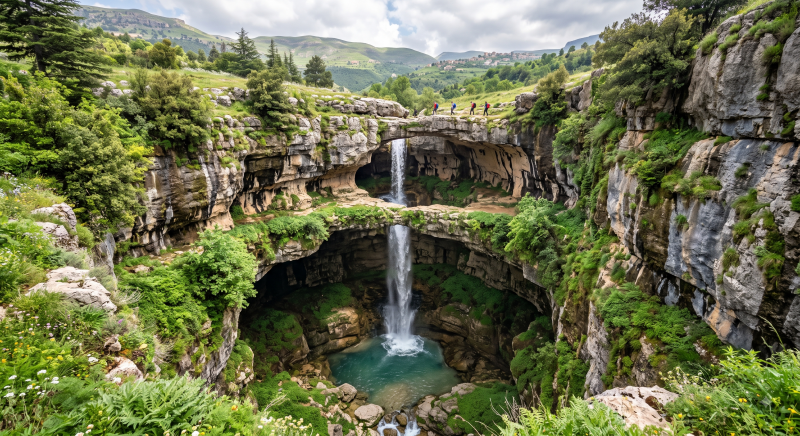
Lebanon, despite its small size, boasts a striking natural diversity, with springs, rivers, and valleys dotting its mountainous regions.
Some of these waterways transform into waterfalls that flow powerfully during rainy seasons and snowmelt, offering an escape to nature away from the city's hustle.
The waterfalls of Lebanon are sought after by hiking enthusiasts, photographers, and adventurers. Visiting these falls can be combined with exploring nearby towns and villages. Here are five waterfalls you should add to your travel list.
Lebanon's Must-See Waterfalls:
1. Baatara Gorge Waterfall
The Baatara Gorge Waterfall in Tannourine is one of Lebanon's most famous natural landmarks, known for its deep rocky chasm and unique natural formations. It's also known as the Cave of the Three Bridges or the Three Bridges Sinkhole.
Water streams from upper Tannourine, Laqlouq, and Balaa flow into the natural abyss, with stone bridges above creating a striking landscape. The chasm reaches a depth of about 255 meters, according to Lebanese tourist sources.
The site is ideal for photography and nature views right after rains when water flow is at its peak.
2. Jezzine Waterfall
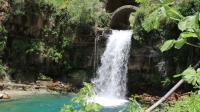
The Jezzine Waterfall is among Lebanon's most famous southern waterfalls. Situated nearly in the heart of Jezzine city, it offers easy access for visitors.
The waterfall stands out with its significant height and water cascading through rocks. The surrounding area provides stunning views of the mountainous landscape. Water flow is optimal in winter and early spring as rains and snowmelt peak.
The city visit can be combined with exploring local restaurants and cafes, making Jezzine Falls a well-rounded destination.
3. Afqa Waterfall
Afqa Waterfall, situated in the Afqa region, is linked to the Ibrahim River, historically known as Adonis River. The river emerges from a massive rocky crevice, giving the waterfall a distinct natural character.
Afqa’s significance extends beyond its natural allure, intertwining with the region’s history and ancient Phoenician legends, making it a spot that melds nature and history. Lebanese tourism sources highlight it among the country's prominent waterfalls and natural sites.
The site becomes even more impressive during the rainy season, when water visibly flows over the rock face.
4. Yahshoush Waterfalls
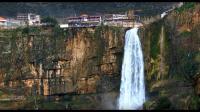
The Yahshoush Waterfalls in Keserwan offer a distinct experience for nature and hiking lovers, nestled in a mountainous area surrounded by rocks, trees, and flowing water.
The location is ideal for a day outdoors, with access to waterfall areas via hiking trails. It ranks as a top adventure spot in Lebanon for exploring and trekking.
Visitors should wear appropriate hiking shoes as some trails may be rocky or slippery, especially post-rain.
5. Kfarhelda Waterfall
The Kfarhelda Waterfall in Batroun is a prominent natural site in northern Lebanon, set amidst flowing waters, mountain views, and greenery.
It provides a perfect natural setting for a visit, and can be combined with exploring the surrounding areas and villages. Kfarhelda ranks alongside other notable Lebanese waterfalls like Afqa, Yahshoush, and Baatara Gorge.
A visit is best when water levels are high, making certain times of the year preferable for witnessing the falls in full flow.
Best Time to Visit Lebanese Waterfalls
Water flow varies among waterfalls depending on rainfall and snowmelt. However, spring is one of the best seasons for observing many Lebanese waterfalls in good flow.
The period following heavy rains can also be optimal, though caution is advised as rocks and paths may become slippery during these conditions.
In summer, some waterfalls see reduced flow, though many sites remain perfect for hiking and enjoying the surroundings even with less water.
Tips Before Visiting the Waterfalls
Before heading to any waterfall, check the weather and road conditions, particularly if your visit includes long hikes.
Wear suitable walking shoes and bring ample water. Avoid getting too close to rocky edges or swimming in undesignated areas.
Preserve natural site cleanliness and refrain from leaving trash behind as these areas' beauty relies heavily on maintaining their natural state.
See also: