


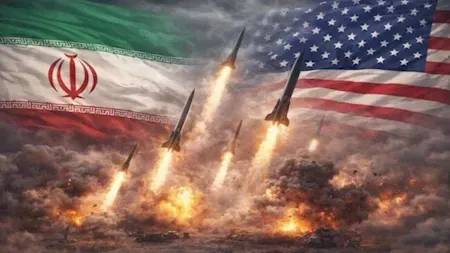
An Iranian senior official announced on Monday that Tehran is transitioning its policy from defense to a "full offensive" approach amidst stalled efforts to reach an agreement that would end its conflict with the United States, hinting at potential military action to break the American naval blockade if diplomatic efforts fail.
According to a Reuters report, the official stated that Iranian institutions have been instructed to prepare for potential escalation in the Strait of Hormuz and the wider region, emphasizing Tehran's readiness to make what it calls "tough decisions" and proceed with them.
He added that Iran might launch a "timely and precise" military strike to break the American naval blockade imposed on it if political efforts to settle the dispute are unsuccessful.
The comments come as negotiations to halt the conflict and resume oil tanker movement through the Strait of Hormuz have hit a deadlock, with no clear signs of Washington and Tehran moving towards ending the confrontation, which began on February 28.
The timing of the statements is crucial, as it coincides with the Monday deadline that Iran and the United States were supposed to reach a final agreement based on a memorandum of understanding signed on June 17 to end the war.
The memorandum granted both parties a 60-day period, extendable by mutual consent, to reach an agreement addressing broader issues, chiefly the future of Iran's nuclear program and arrangements for ceasing military operations.
However, the understanding quickly faced sharp disagreements, especially regarding control over the Strait of Hormuz and the mechanism for managing shipping passage.
Tehran insisted on an interpretation that Article 5 of the memorandum grants it the right to manage the strait, an interpretation rejected by Washington, before hostilities resumed following Iran's interception of ships it claimed were attempting unauthorized passage.
On July 7, U.S. President Donald Trump declared the memorandum "terminated," while Tehran continued accusing Washington of not adhering to its commitments.
According to the Iranian official, Tehran has given the United States a new deadline of just a few weeks to implement all agreement provisions, considering their implementation a prerequisite to entering further negotiations.
Mediators will reportedly communicate Tehran's deadline details to Washington and regional countries, presenting the upcoming weeks as a new test between resuming negotiations or escalating tensions.
This development has coincided with heightened rhetoric between the sides in recent days, with Trump warning Americans of continued high fuel prices due to the conflict, linking price drops to resolving the standoff with Iran.
The U.S. president went further by stating that he would declare, after "defeating Iran," that the Strait of Hormuz is an "American zone," comments likely to exacerbate the dispute over the strategic maritime passage's future.
Trump reiterated his stance on Iran's nuclear program on Monday, stating on his "Truth Social" platform that his primary goal has always been and remains to prevent Iran from acquiring a nuclear weapon "in any shape or form."
The escalation places the Strait of Hormuz again at the confrontation's heart, as disagreements now go beyond the nuclear issue or conditions for ending the war and involve control over the management of one of the world's most critical energy corridors.
With Tehran threatening to shift to a "full offensive" strategy and hinting at military action to break the blockade, while Washington remains firm on Hormuz and the nuclear program, the likelihood of the confrontation entering a more dangerous phase increases if Tehran's new deadline passes without diplomatic breakthroughs.