


By Editor-in-Chief Ibrahim Rayhan.
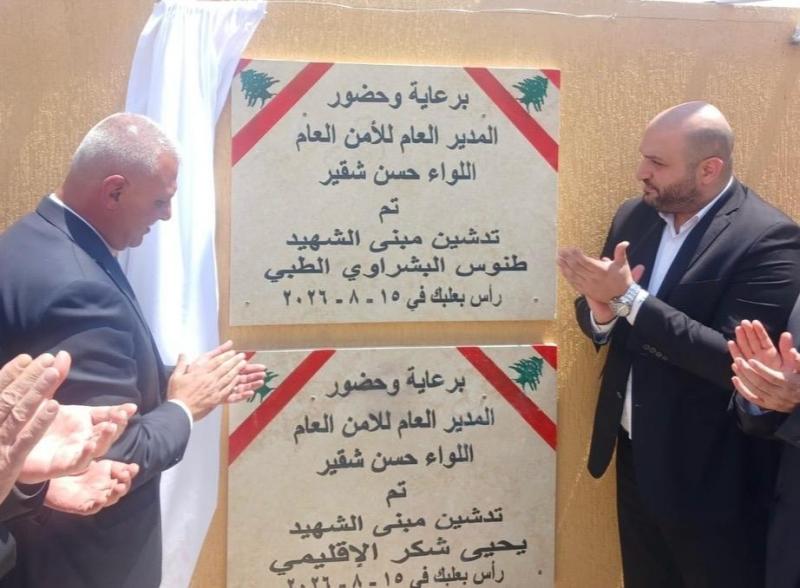
Those observing Major General Hassan Shukair's actions are well aware that he does not engage in ceremonial ribbon-cutting for mere publicity. In the realm of journalism, we always inquire about the "what's next." Post-event, for the Director General of Public Security, it's not about the title but the meaning. When the "Tannous Bashrawi Medical Building" was inaugurated in Ras Baalbek, it wasn't just about a building being added to an institution but about a new philosophy of the "state" in regions long plagued by neglect.
The pressing question among observers today is: What is Hassan Shukair’s next step?
The answer doesn't lie in political speculations but in the roadmap he silently crafts. It is the transition of security from its traditional narrow concept, restricted to cells, patrols, and investigations, to a broader, more humane security: the security of health, dignity, and social resilience.
In the Bekaa Valley, as elsewhere, Shukair understands that citizen security begins with a healthcare and social safety network that shields them from the indignity of need, ensuring them that state institutions have not abandoned them in critical times.
Behind this performance lies a remarkable dynamic. Shukair does not operate as a solo performer but conducts a harmonious orchestra that relies on "the men of the shadows" skilled at working away from media noise. Notably, this includes the imprint of consultant Brigadier General Amer El-Mais, consistently offering balanced insights and firm stances that put expertise at the service of the institution and the people. This aligns with the diligent fieldwork led by Major Ahmad El-Mais, the head of national security in the Bekaa, reinforcing the presence of the state as a daily safeguard for the region's inhabitants.
Shukair's next step is to turn this initiative into a replicable model: for every border point or security center to become both a protective wall for people and a hand healing their wounds. It is a sincere attempt to restore the lost trust between citizens and institutions.
In times of collapse, Hassan Shukair and his team choose to build. In times of noise, they choose silence. However, the undeniable truth in the history of administration and politics is that projects crafted to serve the people are those that speak the loudest and write the next chapter in the book of state institutions.