


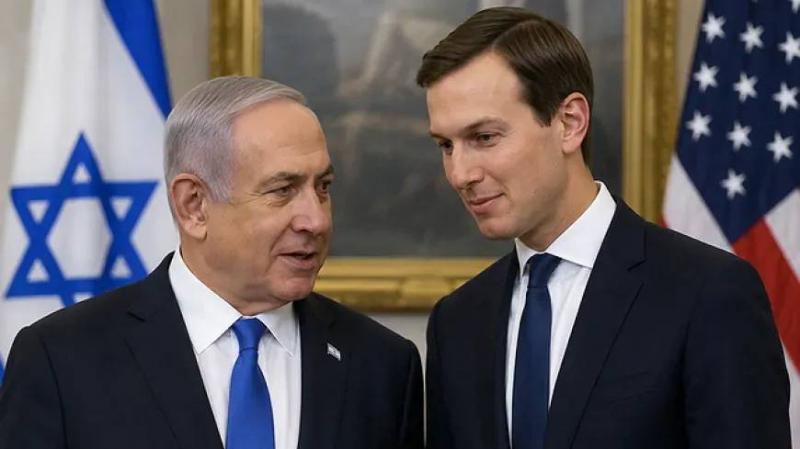
On Monday, the office of Israeli Prime Minister Benjamin Netanyahu unveiled details of an extensive eight-hour meeting with U.S. envoy Jared Kushner, attended by representatives from the Peace Council. The encounter comes amid U.S. pressures to advance a ceasefire plan in Gaza and overcome disagreements about the sequence of its implementation.
The meeting was described by Netanyahu's office as “constructive and deep,” announcing the establishment of two working groups focused on issues related to the Gaza Strip, where disarming Hamas remains a significant point of contention in the negotiations.
The first group is tasked with the disarmament and demilitarization of Gaza, a step that Israel insists must happen swiftly before commencing reconstruction efforts.
The second group will address issues regarding sewage, the provision of clean water, and public health concerns for Gaza's residents—issues that Netanyahu's office mentioned also impact the Israeli population.
Throughout the lengthy meeting, Kushner urged Netanyahu to advance the ceasefire plan, which is backed by U.S. President Donald Trump, and to avoid creating obstacles to its execution, as reported by Sky News Arabia.
A critical element of the negotiations focuses on the mechanism for disarming Hamas. Israel insists on handing over and destroying the weapons under U.S. supervision and ties any progress on other issues, mainly reconstruction, to this action.
Currently, Israel rejects withdrawing from what it refers to as the “yellow line” and insists on maintaining the freedom to conduct military operations against Hamas, complicating future military deployment negotiations in Gaza.
There is a noted disagreement between Washington and Tel Aviv about the required sequence of steps for implementing the plan. The U.S. Administration, according to circulated information, prefers a gradual and reciprocal path with simultaneous commitments from all parties, while Israel demands disarmament to precede any significant military withdrawal.
Sources from CNN revealed that during his meeting with Kushner and Peace Council Director Nikolay Mladenov, Netanyahu proposed that Hamas should commence its commitments before Israel proceeds with its further actions.
Netanyahu is also facing domestic political pressure ahead of the Israeli elections scheduled for October, particularly from right-wing factions opposing concessions or wide withdrawals before Hamas disarmament.
On the other hand, Israeli security assessments indicate that Hamas is in a difficult situation and is seeking an agreement to emerge from the current crisis. However, Israel believes that the movement has not yet abandoned its core goals.
The Netanyahu-Kushner meeting followed a day after U.S. envoy meetings in Cairo, which included a rare interaction with Hamas officials, as part of efforts to push forward Trump's Gaza plan.
A diplomatic source noted that Khalil al-Hayya, the head of Hamas's political bureau, participated in some mediator meetings with Kushner and Mladenov in Cairo, signaling intensified indirect communication among involved parties.
Swift movements between Cairo and Israel suggest an American attempt to close gaps on the next phase in Gaza, yet the question of “who goes first?” continues to be a major sticking point: Washington promotes gradual and reciprocal steps, while Israel insists on disarmament before a wide withdrawal and the start of reconstruction.