


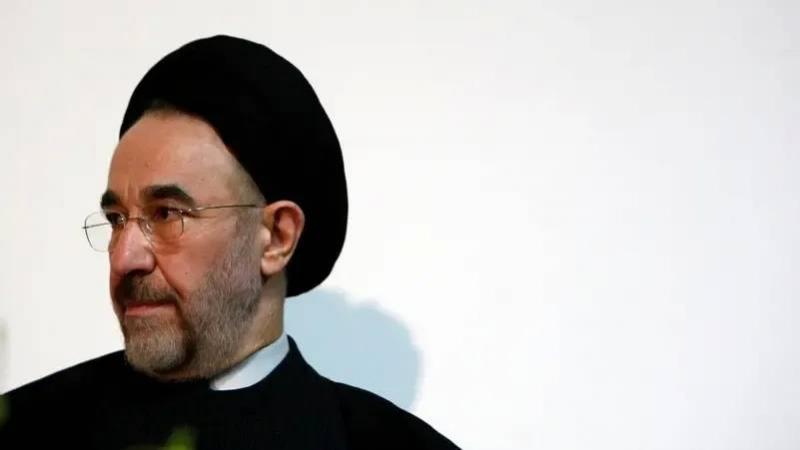
Former Iranian President Mohammad Khatami emphasized the significance of the memorandum of understanding with the United States, calling it an "exceptional opportunity" for Tehran and warning that neglecting it could result in major problems for the country.
Khatami described the agreement as "unprecedented", noting that "since World War II, no document signed by a U.S. president has granted such extensive privileges to the other party."
In a video message, he expressed support for any efforts that could end the war, lift the imposed restrictions on Iran, and pave the way for a better future for the country.
Regarding the domestic situation amid the war, he remarked that "public participation is gradually declining due to misinformation and incorrect slogans."
"No Talks with Iran"
U.S. President Donald Trump earlier stated on Tuesday that "there are no ongoing or planned talks or negotiations with Iran."
Trump also mentioned on his "Truth Social" account that the naval blockade on Iranian ports remains fully operational.
Regarding the Strait of Hormuz, he noted that it "is open and functioning normally, with all naval mines either removed or detonated," as he described.
In contrast, Iranian Parliament Speaker Mohammad Bagher Ghalibaf, in a speech broadcast on state television, declared that the "Strait of Hormuz will not be opened unless the United States fulfills its commitments laid out in the provisional memorandum, including lifting the blockade, releasing frozen Iranian funds, lifting oil sanctions, ending threats, and halting military operations on all fronts, as promised by Washington."
Ghalibaf later reiterated on his "X" account that intensifying American pressure on Tehran will not extract concessions that were not part of the original agreement.
Complex Issues
Since the outbreak of war, Iran's threats to shipping have paralyzed navigation in the crucial Strait of Hormuz, with Iran demanding prior permission for ships wishing to pass and attempting to impose "service charges", a move rejected by Washington and other regional parties.
Meanwhile, the United States has imposed a naval blockade on all Iranian ports, preventing entry or exit of ships, thanks to the presence of American aircraft carriers in the region.
It was anticipated that both sides would reach a broader agreement on several complex issues, primarily the Iranian nuclear dossier and Hormuz management, within 60 days following the signing of the memorandum in June.
However, talks ended before they began on July 7, with the deadline passing on Monday without progress, amid escalating statements and verbal sparring between Tehran and Washington.