


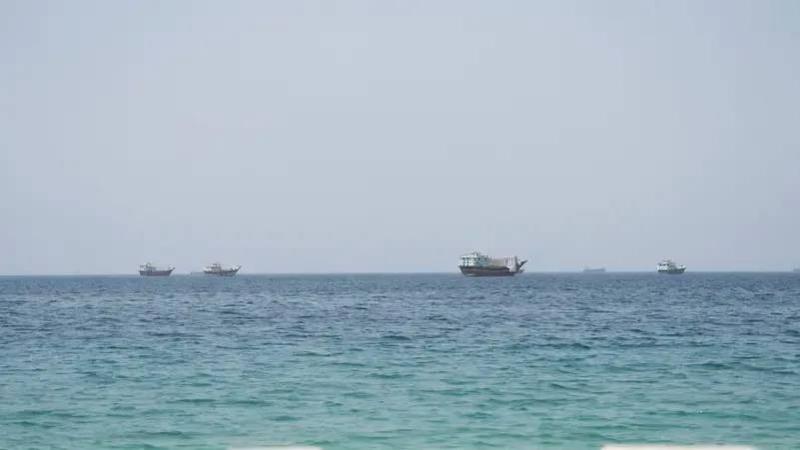
Data released on Wednesday highlights a slowdown in shipping through the Strait of Hormuz as most shipowners avoid this crucial waterway due to the lack of clear indications of its reopening, following a blockade during the Iran war.
According to figures from "Kpler," six vessels carrying commodities passed through the strait on Tuesday, down from nine on Monday and below the 10-day average of 11 vessels.
The data indicated that vessels entering the strait included an empty supertanker sailing along the Omani side, alongside two oil tankers—one medium-sized and the other smaller.
Exiting the strait were two medium-sized fuel tankers and a large "Post Panamax" ship.
On Tuesday, U.S. President Donald Trump stated that Washington is not holding talks with Iran, asserting that the Strait of Hormuz is "open," a comment that contrasts with earlier Iranian claims that the strait remains closed to maritime traffic.
Before the war, the strait facilitated the passage of five global shipments of crude oil and liquefied natural gas.
Tracking company "Vortexa" and a shipping intermediary reported that two major Chinese shipping companies, which handled half of China's Middle East oil imports before the war, decided to keep their tankers away from the Hormuz and Bab al-Mandab straits since late July, as security concerns restricted oil shipments to the world's largest importer.
In the Bab al-Mandab Strait in the Red Sea, "Kpler" data showed 30 vessels carrying commodities passed through earlier this week, up from 19 vessels the previous week.