


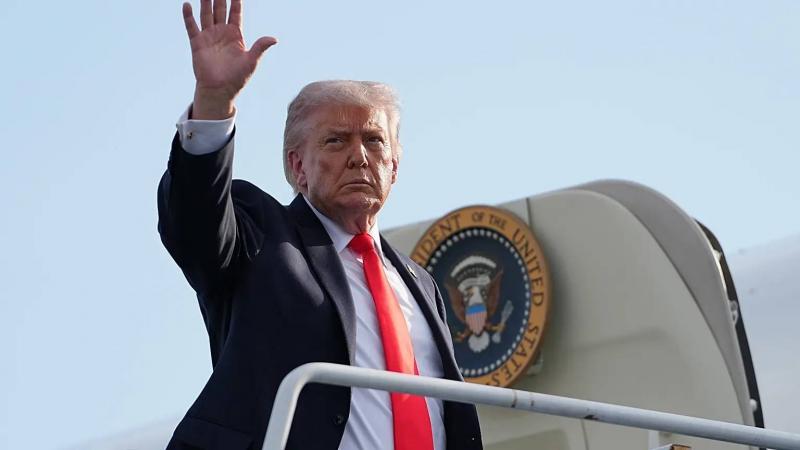
In a stark message aimed at the United States, General Mohammad Reza Naqdi, a senior advisor to Iran’s Supreme Leader and high-ranking figure in the Revolutionary Guards, has invoked the Iran-Iraq War as a crucial lesson. He emphasized that Iran's key takeaway from that conflict is the imperative to maintain a strong deterrent to prevent future attacks.
During a televised interview, Naqdi drew parallels between U.S. President Donald Trump and Iraq’s late President Saddam Hussein, warning that ending any confrontation without ensuring adequate deterrence could allow adversaries to regroup and mount further aggression.
Naqdi highlighted that during the Iran-Iraq War, which spanned from 1980 to 1988, Iran fought steadfastly to reach a point where further attacks could be effectively deterred. He noted that while Iran had opportunities to seek settlements after reaching international borders, Tehran was not convinced it had secured sufficient deterrence power.
According to Naqdi, engaging in peace talks before solidifying deterrence would have allowed the opposition to reorganize and rearm, potentially launching a new assault. He stressed that, whether through diplomatic or military means, the ultimate aim must be to ensure no repeated aggression against Iran.
Citing the final days of the Iran-Iraq War and Operation Mersad, Naqdi argued that developments during that period showed perceptions of Iranian weakness could prompt renewed attacks.
Operation Mersad, which took place in July 1988, was among the last significant ground battles of the conflict. The People’s Mujahedin of Iran, with Iraqi support, launched an offensive into Iran, prompting an Iranian counter-offensive that halted their advance. This operation occurred mere weeks before the ceasefire between Iran and Iraq was enacted on August 20, 1988.
The Iran-Iraq War, which began in September 1980, lasted roughly eight years, culminating in a ceasefire in August 1988. It remains one of the longest and deadliest conflicts in modern Middle Eastern history.
In his reflections on current tensions, Naqdi asserted that any party contemplating an attack on Iran must recognize the high cost of such an action. The absence of such a cost, he warned, could pave the way for future confrontations.