


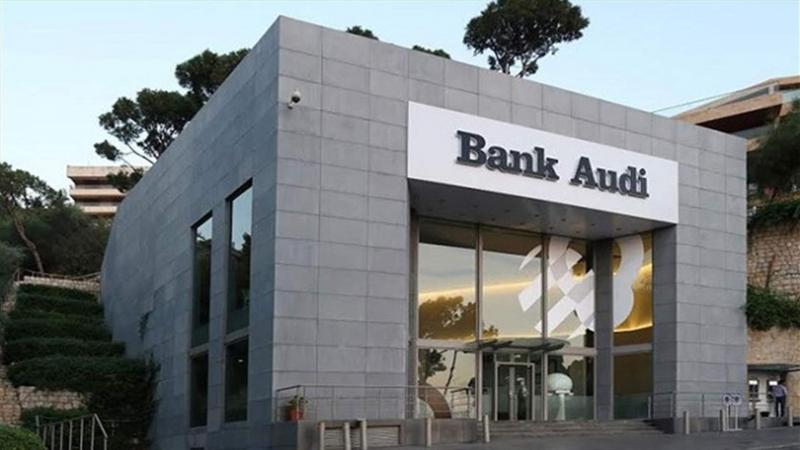
Bank Audi's Research Department released the "Real Estate Sector Report for 2026" today, highlighting that Lebanon's real estate market has shown remarkable price resilience throughout 2026, despite geopolitical and security shocks. Prices remained stable or experienced slight increases, mainly driven by a shortage of housing units and concentrated demand in regions considered safe.
According to the report, property prices in Beirut either stabilized or rose by 5% to 10% in 2026. This trend was driven primarily by decreased supply and increased construction costs due to global oil price hikes, narrowing the gap with post-crisis levels. Current residential valuations are now only 10% to 15% below pre-October 2019 levels. Conversely, property prices collapsed in areas affected by bombardment, such as the southern suburbs and southern Lebanon.
The report noted that real estate activity in Lebanon reflected stagnant macroeconomic conditions during the first seven months of 2026, with registered transactions declining compared to the high levels of the previous year. There were 29,404 sales transactions in the first seven months of 2026, a 25.5% year-on-year decrease, while the total number of transactions fell by 23.2% to 70,924.
This decline partly reflects the high comparison base recorded in 2025 when the reopening of several real estate registry offices cleared a significant backlog of previously pending transactions. The overall value of real estate sales dropped from $3.43 billion in the first seven months of 2025 to $3.25 billion in the same period of 2026, a 5.4% year-on-year decrease.
On the other hand, real estate supply in Lebanon faced conflicting forces in the early months of 2026. Significant reconstruction needs and the gradual return of some developers created potential for renewed building activity. However, security uncertainties, limited banking finance, and weak investor confidence continued to delay project implementation, making the recovery in new supply gradual and unequal.
Building permits issued by the Beirut Order of Engineers reached 1.53 million square meters in Q1 2026, a 25.5% increase from 1.22 million square meters in Q1 2025. This follows a 30.3% increase in 2025 when the buildable area rose from 4.60 million sqm to 5.99 million sqm. The continued increase suggests improvement in planned construction and reconstruction projects, although permits do not necessarily translate immediately into executed activity.
The report outlines three potential scenarios for the next 12 to 18 months:
Base Scenario – 45% Likelihood: Relatively steady prices for completed "fresh dollar" assets in prime locations, weaker prices for non-prime inventory, and transaction volumes below 2025 levels until security clarity improves. In this scenario, property prices may stabilize at current levels over 12 to 18 months.
Positive Scenario – 35% Likelihood: Relies on sustained security calming, reforms implementation, progress in resolving the banking crisis, and clear reconstruction activity. Prices could rise by 20% over 12 to 18 months under this scenario.
Negative Scenario – 20% Likelihood: Depends on continued conflict, displacement, exchange rate pressure, and stalled reforms, potentially leading to a new liquidity shock and widening the real estate supply-demand gap. Prices could drop by 10% over 12 to 18 months in this scenario.
In the long term, Lebanese real estate investment remains viable for patient and selective investors, according to Bank Audi's report. The scarcity of prime land, enduring diaspora purchasing power, real estate's tangible role as a value store, and reconstruction and economic normalization prospects provide strong long-term support for current "fresh dollar" valuations. These remain attractive compared to historical levels, creating room for capital gains as confidence, funding channels, and institutional stability gradually return.
However, this condition is not uniform across the market, remaining strongest for completed, well-located, legally sound assets purchased at disciplined prices, especially as investors maintain a diversified portfolio and sufficiently long investment horizon.