


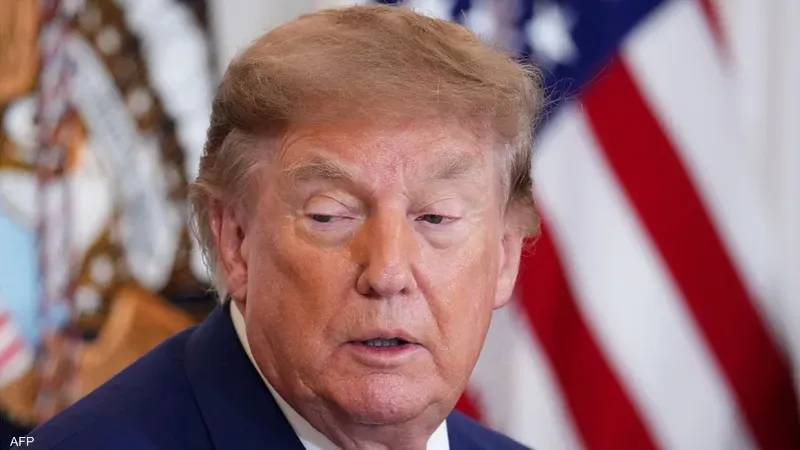
The administration of U.S. President Donald Trump is gearing up to intensify economic pressure on Iran with a new wave of sanctions that may target countries, companies, and financial institutions continuing to do business with Tehran. This push aims to break the stalemate in the ongoing conflict between the two nations, which has persisted for about six months despite Trump's promise of swift victory.
Trump has warned of a 'decisive economic day,' cautioning that any nation maintaining ties with Iran will face 'severe' economic repercussions, at a time when the prospects for military resolution or negotiated settlement appear dim.
While Washington has yet to disclose the specifics of these new measures, U.S. Treasury Secretary Scott Bissell indicated that an announcement is forthcoming at a press conference scheduled for August 24.
Speaking in an interview with CNBC, Bissell stated that the U.S. is prepared to take action against any country, whether ally or adversary, that economically supports Iran.
He added that the actions might target money transfers, Iranian oil purchases, and maritime activities related to Tehran, affirming Washington's commitment to fully enforce the sanctions.
U.S. Vice President J.D. Vance described the sanctions as a 'new phase' of the conflict, emphasizing that economic pressure is the most effective tool available to Washington to achieve its objectives.
Iran has been subject to U.S. sanctions for decades, and economic pressures have heightened since Trump’s first administration withdrew from the 2015 nuclear deal in 2018.
During the current conflict, Washington has also launched 'Operation Economic Fury,' combining sanctions aimed at Iranian financial flows with a maritime blockade of Iranian ports.
Experts expect the new sanctions to rely more heavily on secondary sanctions, targeting nations and financial institutions that continue to deal with Iran while relying on the U.S. dollar and financial system.
Former U.S. Treasury Office of Foreign Assets Control official Michael Parker told the BBC that the new strategy could aim to 'expand the economic impact' of the sanctions to include third parties aiding Tehran in accessing financial systems or transferring funds.
However, experts note that Iran has developed extensive experience in evading sanctions by using unconventional financial and trade channels and a 'shadow fleet' for oil transport, as well as establishing new business fronts.
Mohamed Hamouda, Director of Export Controls and Sanctions at the London Stock Exchange, told the BBC that Iran quickly adapts to imposed restrictions and consistently seeks new ways to bypass them.
The effectiveness of the new U.S. campaign may largely depend on the stance of countries continuing to engage with Iran, including China and U.S. allies.
Geostrategic affairs expert Imran Beyoumi of the Atlantic Council stated that the move reflects a renewed U.S. attempt to leverage economic pressure after other options have failed to yield the desired outcomes.
He told the BBC that 'the fundamental question still revolves around the U.S. strategy and its ultimate goals,' doubting the ability of new sanctions to bring lasting change unless they are part of a more coherent strategy.