


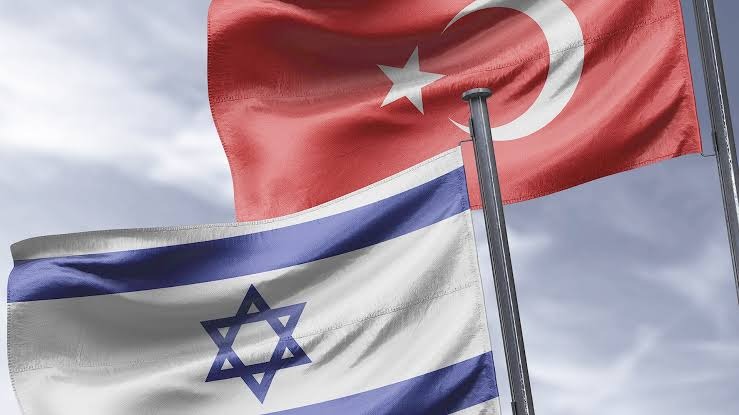
Turkey has intensified its response to Israeli Prime Minister Benjamin Netanyahu following sharp remarks aimed at President Recep Tayyip Erdoğan. The Turkish presidency labeled the Israeli accusations as "outrageous and baseless," coinciding with Ankara's announcement of requesting Interpol to issue an international arrest warrant for Netanyahu on charges of genocide.
In a statement shared on the platform 'X,' the Turkish presidency's communication department stated that Netanyahu's office remarks about Erdoğan were "devoid of historical facts and political seriousness." It described these comments as reflective of a government struggling with allegations of war crimes and crimes against humanity.
The Turkish presidency linked the Israeli attack to electoral motives, suggesting that rhetoric from Netanyahu's office is an effort to gain domestic political mileage by escalating tensions with Ankara.
Warned that "irresponsible security populism and threat policies" are influencing Israel's electoral campaign, it cautioned about the impact of this rhetoric on regional stability.
Furthermore, Ankara argued that Netanyahu's attempt to paint Turkey as a "new threat" is part of domestic political rivalry, asserting that escalating tensions for electoral gain poses risks that extend beyond Israel to the wider region.
Turkey emphasized its commitment to its stance on regional issues, affirming support for peace, justice, and stability.
The ruling 'Justice and Development Party' also joined the fray, with its spokesperson, Ömer Çelik, launching a scathing attack on Netanyahu, declaring that "genocide and crimes against humanity have become Netanyahu's identifying traits."
Çelik claimed Erdoğan is repeatedly targeted due to his opposition to Israeli policies, especially military operations in Gaza.
Turkey's escalation came in response to a harsh statement from Netanyahu's office, which described Erdoğan as an "anti-Semitic dictator" and leveled a series of accusations related to Turkey's internal and regional policies.
Netanyahu's office accused Erdoğan of committing "massacres against the Kurds," harboring members of Hamas, "occupying half of Cyprus," and imprisoning journalists and political opponents.
The statement also accused the Turkish president of attempting to expand his "aggression against Israel" to include Syria, with Tel Aviv affirming it "will not tolerate" such actions.
This exchange of accusations occurs amid growing tensions in Turkish-Israeli relations, particularly following recent Israeli airstrikes on the Abu Zuhour airbase in Syria.
Despite Israeli security officials reportedly advising against opening a new front with Turkey and advocating for de-escalation, the political spat between the two countries has taken a sharper turn in recent hours.
This development coincided with Ankara's legal move against Netanyahu, as Turkish Justice Minister Akin Gürlek announced that Turkey officially requested the international police organization "Interpol" to issue an arrest warrant for the Israeli Prime Minister on charges of genocide.
This Turkish initiative adds a legal dimension to the escalating political confrontation. However, submitting a request to Interpol does not guarantee the issuance of an arrest warrant or "red notice," as each request undergoes the organization's procedures and rules before a decision is made.
Thus, the tension between Ankara and Tel Aviv extends beyond disputes over Gaza and Syria, evolving into a broader political and legal confrontation as Israeli security voices warn of the risks of sliding into a conflict with Turkey and adding a new front to regional crises.