


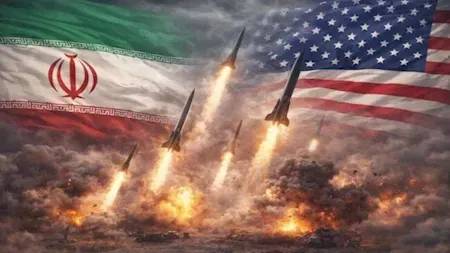
The head of Iran's National Security and Foreign Policy Committee in Parliament, Ibrahim Azizi, intensified his rhetoric against the United States, stating that Tehran is no longer relying solely on diplomatic measures. He suggests that the 'language of power' will eventually compel Washington to lift sanctions, release Iranian funds, and exit the region.
Azizi, in statements reported by Iranian media, claimed that the United States has 'proven it does not understand the language of diplomacy.' He accused Washington of being unwilling to lift sanctions or release Iranian resources, while continuing what he termed as 'maritime piracy.'
He added that history will show, in his words, that the 'language of power' will not only force the United States to meet these demands but also 'apologize to the Iranian nation' and permanently leave the region.
The Iranian official's statements represent a new escalation in rhetoric from Tehran, coinciding with stalled diplomatic efforts and ongoing US economic and military pressure.
Currently, Iran faces an increasing US pressure campaign combining economic sanctions and a maritime blockade, as Washington is poised to introduce additional measures aimed at isolating the Iranian economy and limiting its access to international financial and trade systems.
The US administration had announced its intention to intensify its 'maximum economic pressure' policy, threatening action against countries, firms, and financial institutions that continue dealings with Iran or purchase its oil.
The effects of these pressures are particularly evident in the energy sector, with Central Bank Governor Abdolnaser Hemmati stating that Iranian oil exports have nearly stopped due to the blockade and sanctions imposed on the country.
This decline in oil exports poses a significant challenge for Tehran, given the importance of energy revenues in providing foreign currency and funding government expenditure, while citizens face increasing pressure as purchasing power declines.
The escalation in Iranian rhetoric coincided with the expiration of a 60-day deadline on August 17, set within a memorandum of understanding between Washington and Tehran, without progress toward a final agreement.
The memorandum aimed to provide a framework for resolving various disputes between the two countries, but differences over sanctions, the blockade, and free navigation in the Strait of Hormuz have led to stalled discussions.
Iran insists on lifting sanctions, releasing its frozen assets, and ending the maritime blockade, linking navigation arrangements in the Strait of Hormuz to US commitments that Tehran claims were previously agreed upon.
In contrast, US President Donald Trump has also ramped up his rhetoric against Iran, stating that it is in 'big trouble' and asserting that its military capabilities have suffered significant losses.
Washington is betting in the new phase on combining a maritime blockade with extensive economic sanctions, as part of a strategy to increase pressure on the Iranian leadership without quickly reverting to broad military operations.
However, Azizi's statements indicate a different Iranian reading, suggesting that increased US pressure will not lead Tehran to make concessions, but rather to adopt a more hardline stance and prepare to continue the confrontation.
Amidst the US 'economic strangulation' strategy and Tehran's talk of the 'language of power,' the space for diplomacy between the two sides is shrinking, as the Strait of Hormuz, sanctions, and oil exports become central arenas for a protracted confrontation intertwining military, economic, and political tools.