


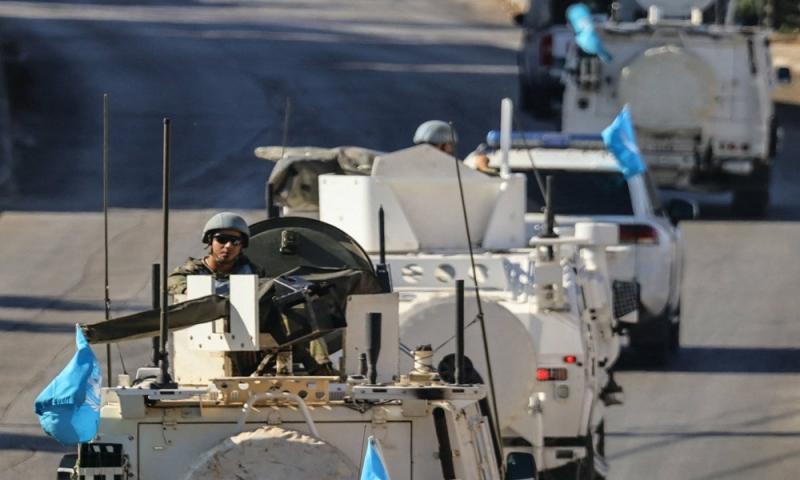
The Arab Center for Research and Policy Studies in Beirut released a perspective titled 'From UN Umbrella to European Role: What is the Future of Peacekeeping in South Lebanon After UNIFIL's Mandate Ends?' The assessment concludes that the most likely scenario for the international presence in South Lebanon after the UN's Interim Force in Lebanon (UNIFIL) mandate ends on December 31, 2026, involves a coordinated transition to a mission led by the 'European Union'.
The assessment clarifies that this proposed mission would continue the tasks of maintaining stability and supporting the Lebanese Army, contingent on Lebanese and international consensus regarding its mandate and powers. It emphasizes that UNIFIL's mandate ending is not just a conclusion of a decades-long UN mission, but an opening to reframe the security system in South Lebanon amid rapid regional and global changes.
UN Mandate Shifts and Resolution 2790
The assessment notes that UNIFIL—established in 1978 by Resolutions 425 and 426, and expanded following the July 2006 war under Resolution 1701 to monitor ceasefire and support Lebanese Army deployment south of the Litani River—has faced core questions after the Gaza War of 2023 and escalating clashes between Israel and Hezbollah, coupled with ongoing Israeli occupation in the south.
The assessment highlights that UN Security Council Resolution 2790, issued in August 2025, extended UNIFIL's mandate one last time until the end of 2026, with a gradual reduction in personnel and phased withdrawal in coordination with the Lebanese government, alongside increased international support for the Lebanese Army and urging Israeli withdrawal from occupied sites.
European Proposal and Regional-International Stances
The assessment points to a recent German proposal for a European mission to succeed UNIFIL, preventing any security vacuums in the south. This is backed by a trilateral desire from Germany, France, and Italy to maintain a direct presence in the Lebanese dossier, alongside the Franco-Italian suggestion for a European force to oversee security arrangements.
The assessment sheds light on varying power balances and stances regarding the new mission:
- Israel and the United States: Tel Aviv demands stricter arrangements to meet its security requirements, while Washington tends towards supporting firmer mechanisms for implementing Resolution 1701.
- Official Lebanese Position: Insists that the Lebanese Army should be the sole authority responsible for security in the south, with any international presence confined to support within the framework of Resolution 1701 without substitution.
- Hezbollah Position: The assessment suggests Hezbollah would oppose any force aiming at disarming it or imposing targeted arrangements, although it may positively engage with a mission focused on stabilizing the ceasefire, supporting the state, and reducing tensions, provided it does not become a tool for military or political pressure.
Legal and Security Challenges
The assessment mentions several hurdles in transitioning from the UN umbrella to a European framework, mainly:
1. Securing international legitimacy and precisely defining the mandate.
2. Ensuring full coordination with the Lebanese Army and preventing role duplication.
3. Avoiding internal Lebanese disparities and external pressures.
The center warns that any expansion of the new force's powers could elevate risks of direct conflict involvement, underscoring that the mission's success hinges on gaining Lebanese and international acceptance, not just military capabilities.
Three Potential Scenarios for the Next Phase
The assessment outlines three scenarios depicting South Lebanon's future post-2026:
- First scenario (most probable): Organized transition to a European mission overseeing the ceasefire, supporting the Lebanese Army, and contributing to implementing Resolution 1701.
- Second scenario: UNIFIL's mission ends without a European or international substitute, increasing the chances of escalation and heightened field security fragility.
- Third scenario (most sensitive): Granting wide-ranging direct powers to a European force regarding Hezbollah's armaments, a choice facing sharp internal opposition and significant resistance risk.