


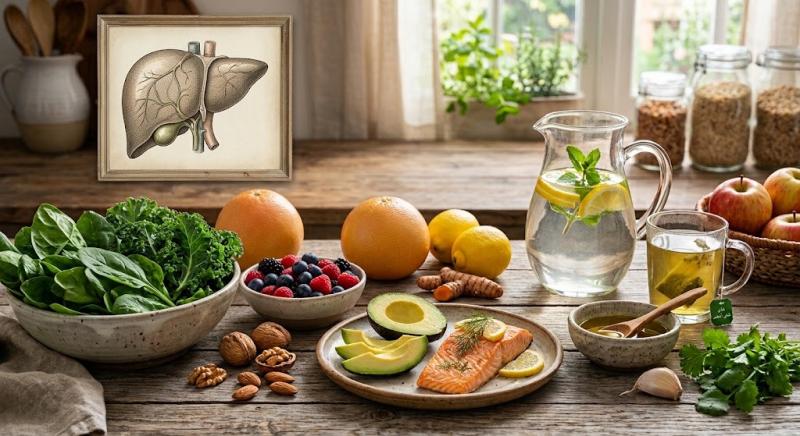
The liver plays a crucial role in the body, participating in nutrient processing, eliminating harmful substances, and producing essential compounds for various bodily functions.
Maintaining its health is linked to daily habits, particularly a balanced diet rich in vegetables, fruits, whole grains, and healthy protein sources.
While no single food can cleanse or cure liver diseases, choosing foods rich in fiber, healthy fats, and nutrients is vital for a lifestyle that supports liver health. So, what are the best foods to incorporate into your diet?
Best Foods for Liver Health:

1. Leafy Greens
Leafy greens like spinach, arugula, lettuce, and kale are beneficial for liver health.
These veggies are full of fiber, vitamins, minerals, and antioxidant plant compounds. Adding them to your diet increases overall vegetable intake.
Incorporate them into salads or main dishes, avoiding overly fatty or salty dressings.
2. Broccoli and Cruciferous Vegetables
Broccoli, cauliflower, cabbage, and Brussels sprouts are cruciferous vegetables that deserve a regular spot in your diet.
Rich in various plant compounds, fiber, and vitamins, these can be part of a balanced diet supporting overall health.
Cook them in ways that retain their nutritional value, such as steaming, grilling, or adding to diverse dishes.
3. Fatty Fish
Fatty fish like salmon, sardines, and mackerel are top sources of omega-3 fatty acids.
Omega-3s support heart and vascular health and improve the fat quality in your diet.
They make a good substitute for fatty meats, especially when grilled or baked instead of fried.
4. Oatmeal and Whole Grains
Oats and whole grains are high in fiber, and swapping refined grains for whole grains improves diet quality.
Good choices include oats, bulgur, brown rice, and whole grain bread.
Fiber-rich foods help you feel full longer, important for healthy weight maintenance, as being overweight increases risk of fatty liver disease.
5. Nuts
Nuts like almonds, walnuts, and pistachios offer unsaturated fats, fiber, and numerous nutrients.
Eat a small portion as a snack or add to salads and oatmeal.
Be mindful of the servings as nuts are calorie-dense. Opt for unsalted or low-salt varieties.

6. Olive Oil
Olive oil is a source of unsaturated fats, essential in a Mediterranean diet associated with various health benefits.
It can replace butter and solid fats in cooking or dressing salads.
Avoid excessive consumption, as fat and calorie counts remain crucial when managing your diet.
7. Avocado
Avocados contain unsaturated fats, fiber, and several nutrients.
Use them in salads, whole grain bread, or with vegetables.
Replacing saturated fat sources with unsaturated options like avocados is a wise choice for a balanced diet.
8. Berries and High-Fiber Fruits
Strawberries, blueberries, blackberries, and other fiber-rich fruits are a good dietary addition.
These fruits offer antioxidants and nutrients, serving as a great alternative to sugary desserts.
It's best to consume whole fruits over juices as they contain fiber and aid fullness.
9. Legumes
Lentils, chickpeas, beans, and peas are excellent fiber and plant protein sources.
Legumes can partly replace meat in your diet, reducing saturated fat intake when opting for low-fat plant sources.
Add them to salads, soups, or main meals.
10. Garlic
Garlic contains sulfur plant compounds and antioxidants, adding flavor without needing much salt or fat.
It's a part of healthy eating but isn't a cure for liver diseases or a 'cleanse' for the liver.
Beneficial Drinks for Liver Health
Besides foods, choosing the right drinks is pivotal in your diet.
Water
Water remains the primary choice for hydration, helping replace sugary beverages high in sugar.
Coffee
Moderate coffee consumption links to some liver health benefits, including reduced risk of certain liver diseases.
Be cautious with additions; excessive sugar, cream, and high-calorie drinks can diminish the overall nutritional value.
Foods to Limit for Liver Health
Protecting your liver isn't just about adding healthy foods; it involves limiting certain dietary choices that may negatively affect health if over-consumed.
Saturated Fat-Rich Foods
Minimize fatty meats, butter, margarine, and processed foods high in saturated fats.
Added Sugars
Overindulgence in sugary drinks, desserts, and high-sugar foods increases calorie intake and links to higher liver fat accumulation risk.
Ultra-Processed Foods
Reduce intake of processed foods high in salt, sugar, or fat, opting for whole or minimally processed alternatives.
Fried Foods
Consuming fried foods spikes dietary fat and calories. Opt for grilling, baking, or steaming methods instead.
Related:
How to Get Iron in Your Diet?
Best Foods for Fatty Liver Patients
What Does Right Side Pain Mean?