


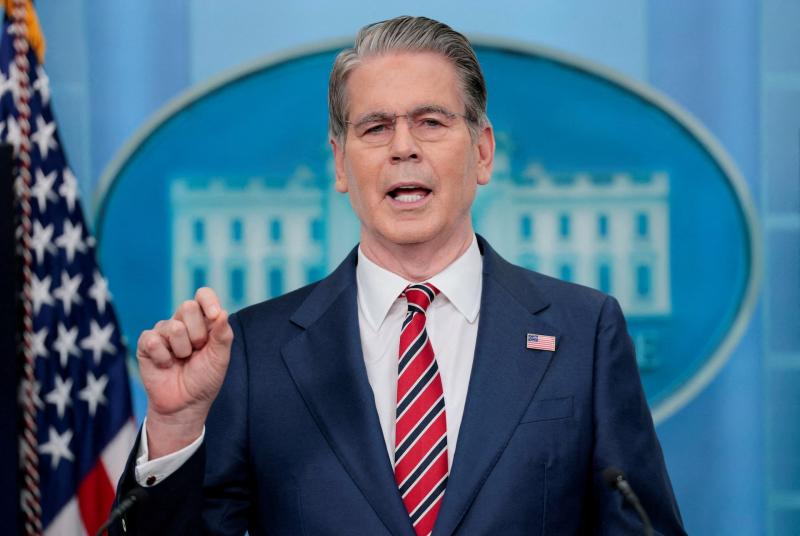
U.S. Treasury Secretary Scott Pessant has intensified warnings to global financial institutions, asserting that any bank aiding Iran in converting oil revenue into usable funds will face American sanctions. This indicates the expansion of the 'maximum pressure' campaign targeting the financial network Tehran relies on after selling crude.
Pessant stated on Monday, "No one is outside the reach of U.S. sanctions," responding to queries on the possibility of secondary sanctions on Chinese banks facilitating Iran-related transactions. However, he avoided confirming whether Washington is preparing to sanction major Chinese banks.
Pessant's comments are significant as the Treasury prepares to broaden secondary sanctions on entities and nations dealing with Iran, specifically targeting oil, finance, shipping, and networks circumventing American restrictions.
A critical focus of U.S. pressure targets institutions responsible for converting Iranian oil sales revenue into funds usable for trade and government spending by Tehran.
This strategy doesn't merely aim to prevent Iran from selling oil but also makes obtaining payment for crude more challenging by targeting banks, currency exchange firms, brokers, and entities involved in payment settlements.
Pessant mentioned that the Treasury is aware of entities supporting Iran's oil-linked financial system, emphasizing those parties understand they are under U.S. scrutiny.
He warned institutions continuing these transactions of potential punitive measures, using strong language that they "will only have themselves to blame when the hammer of U.S. Treasury actions falls."
Despite the stern warning, Pessant noted that Washington currently prefers what he described as "quiet diplomacy," informing countries of its expectations on economic and financial dealings with Iran.
This places foreign financial institutions in a delicate position since U.S. secondary sanctions could make continuing dealings with Iran costly if they threaten access to the dollar, markets, and the American financial system.
China emerges as the biggest test for this strategy due to its key role in purchasing Iranian oil. Washington has already sanctioned independent Chinese refineries, but targeting major Chinese banks remains a more sensitive step due to potential impacts on Sino-American relations.
This explains Pessant's evasive response on Chinese banks, particularly amid a trade truce between Washington and Beijing, and the sensitivity of expanding economic confrontation between the two largest economies.
Recent actions suggest Washington seeks to transition from punishing individual Iranian companies, ships, and brokers to increasing the costs for any foreign entity helping Tehran access export revenues.
This policy is part of a broader American campaign targeting various stages of the Iranian oil chain—from production and sales to shipping and financial settlements—a course previously announced by the Treasury.
With the expansion of secondary sanctions, the key question is Washington's readiness to target major financial institutions in China or other countries, a move that could increase pressure on Tehran but also risks opening economic and diplomatic conflicts with major trading partners.