


This summer marked the first time my family decided to spend two days in West Bekaa. While this might seem ordinary to many, for me, it was like discovering a place I’ve studied on the map but never actually visited. Being from Baalbek, I had never stepped foot in West Bekaa despite often wondering: What does this region look like? What lies behind the roads we view from afar?
The first day was all about amazement. Lush greenery, orderly villages, and towns that at times seemed as if they weren’t in the Bekaa I knew. The cleanliness, organization, and small details rendered the place more serene and beautiful than expected.
However, the biggest surprise was the pricing. Living in Beirut, we’ve begrudgingly become accustomed to high costs. In the capital, steep prices are practically normal, with numerous reports discussing how living costs there have rivaled some of the world’s most expensive cities, even drawing comparisons that pit Beirut against Paris.
The lower prices in West Bekaa were a different kind of shock, revealing that what’s considered normal in Beirut isn’t necessarily so in other parts of Lebanon. I initially thought this would be the trip's main surprise.
But I was mistaken.
*'Ya Qamar Machghara'*
On the second day, after our visit to the waterfalls in Mashghara, we began our return south. Mashghara, the town celebrated by Fairouz’s song 'Ya Qamar Mashghara.' Another of those Lebanese towns encapsulating the image of Lebanon we love to share about ourselves.
While on the road, I wasn’t surprised to see the cross next to a mosque. I didn’t dwell on the scene. This is Lebanon. This is how we were raised.
After a delightful day, my brother suggested a very logical idea: “Why don’t we go to Sidon via the Jezzine road?”
For those familiar with Lebanon’s geography, this was thought to be a time-saving route. West Bekaa is closer to the south, allowing us to reach Sidon in roughly an hour, avoiding the longer 2.5-hour journey via Dahr El-Baydar.
We agreed and set off, unaware that the road we chose would drastically alter our trip's emotions.
*Remembering the War*
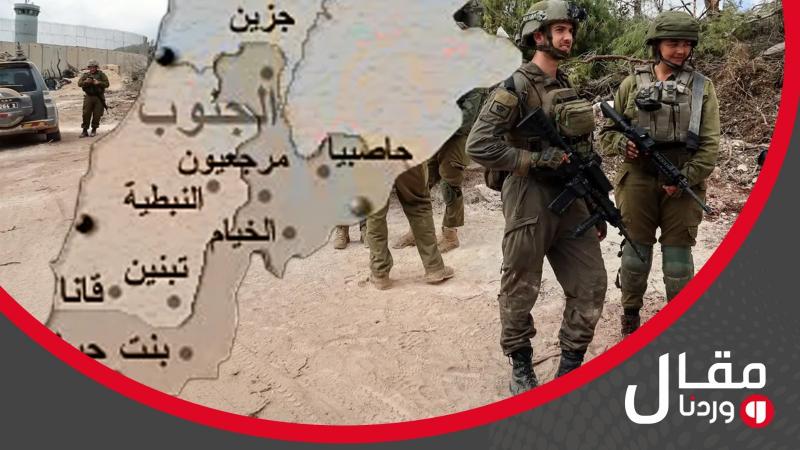
Midway, my brother's expression changed. He voiced a realization that made us all remember what we were trying to ignore: the Jezzine road faces the heights of Ali Taha.
Everything shifted. Those heights, frequently mentioned in the news for Israeli raids, shelling, and drone activities, were now in sight. The chosen route to Sidon ran near an area that could escalate at any moment.
The question wasn’t about arrival time anymore. Instead, it became about whether a drone would shadow our journey.
Verbalizing this concern might sound naïve, but not in Lebanon. Drones, a common sight in the sky, aren’t just fleeting observations—they’re weapons capable of transforming a civilian vehicle into a target.
In the car were children and elderly individuals, people uninvolved in any conflict, simply trying to return home. This precise fear was most distressing because we didn’t know what action to take should conflict intercept our path.
*An Hour of Anxiety*
Mid-route, my brother paused to wait for another sibling's car, ensuring it hadn’t veered off course. That brother, unfamiliar with Lebanese roads, lived abroad. Our concern wasn’t just reaching safely but also ensuring he didn't stray, nor that the GPS misdirected him towards Nabatieh, closer to potential shellfire.
Suddenly, what was a simple family trip morphed into a meticulous calculation of routes, regions, and directions. Which path should we take? Our current location? What’s across the horizon? Should we continue or retreat?
A single hour passed, feeling infinitely longer. An hour filled with contrasting emotions rarely coexisting: road anxiety, anger at a reality we shouldn’t endure like this, and laughter.
Yes, laughter.
A hysterical laughter over a reality people cope with through sarcasm. We laughed in fear and joked because surrendering to worry was the only alternative.
Then came disillusionment.
A disillusionment with a country, still suffering after all these years, unable to conclude its distress.
That morning, I discovered Western Bekaa with awe—charming villages, enchanting landscapes, competitive prices, a cross beside a mosque.
In the evening, I was introduced to another Lebanon—a Lebanon where the shortest route can arouse fear, where direction queries translate to safety questions, where families travel thinking they might be shadowed by a drone.
This was perhaps the journey's most painful paradox: witnessing the country’s beauty, then realizing hours later how fear has become an ordinary aspect of life here.
Worst of all is our growing acceptance of this condition.