


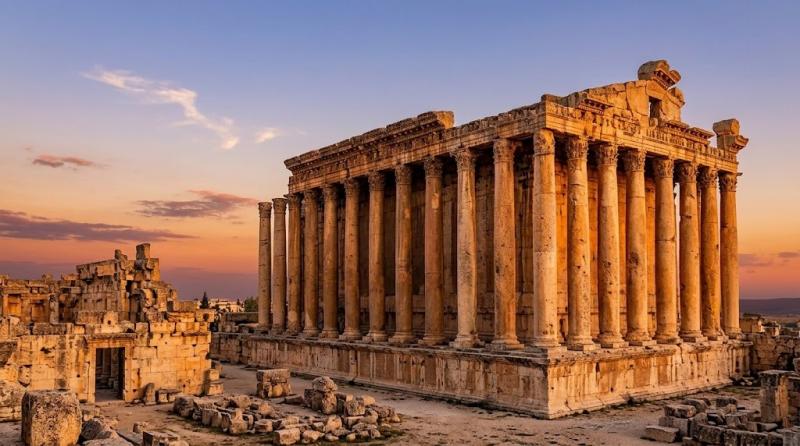
Baalbek holds a special place among Lebanon's historic cities, not only for its monumental Roman ruins but also for its rich history spanning multiple civilizations and eras.
Situated in the Beqaa Valley near the western slopes of the eastern Lebanese mountain range, Baalbek has long been associated with agriculture, trade, and the ancient routes connecting different parts of the Levant.
The name Sun City ties into Baalbek's religious and cultural history. During the Hellenistic period, it was known as 'Heliopolis,' a Greek term meaning 'City of the Sun,' a name that persisted through the Roman era.
This name wasn't merely a geographical descriptor; it was deeply connected to the beliefs and worship practices prevalent in the city’s vast religious complex.
Why is Baalbek Called the Sun City?
Origin of the Name Heliopolis
The designation Sun City comes from the Greek name 'Heliopolis,' literally meaning 'City of the Sun.' Historical sources indicate that this name was used during the Hellenistic period and continued into the Roman era.
The name highlights the significance of sun worship in the ancient region, with Baalbek being home to a large religious complex that blended local and Greek-Roman religious systems.
The Connection Between Baalbek and Ancient Worship
Before the Roman era, the area served as an important religious center. Archaeological evidence shows ancient religious traditions that predate the construction of the Roman temples.
Under Hellenistic rule, the city became known as Heliopolis, retaining its religious importance in the Roman era. The Temple of Jupiter Heliopolitanus emerged as a central feature of its religious complex.
What is the Origin of the Name Baalbek?
There is no scholarly consensus on the origins of the name 'Baalbek.' Various linguistic and historical interpretations exist.
One interpretation links the name to 'Baal,' an ancient Semitic term associated with a god worshipped in the Levant. Opinions differ on the latter part of the name, 'bek' or 'bak.' Some suggest connections to the Beqaa Valley or a water source.
This debate underscores that the city's history predates the name 'Heliopolis,' with 'Baalbek' having been subject to various interpretations over time.
History of Baalbek Through the Ages
Baalbek Before the Roman Era
Archaeological findings reveal human activity at Baalbek centuries before the Roman era, indicating that the city did not emerge suddenly with the Roman temples.
The site was part of the cultural landscape of the Beqaa Valley, renowned for its agricultural richness and strategic location near major trade routes.
The Hellenistic Period
Following Alexander the Great's conquests and the Hellenistic control over the Levant, Baalbek became known as Heliopolis.
This era saw a fusion of local beliefs with Greek cultural influences, laying the groundwork for its renowned religious character in the Roman period.
The Roman Period
Baalbek reached its architectural zenith under Roman rule, with grand structures dedicated to deities closely linked to the city.
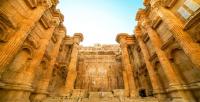
The temples of Jupiter and Bacchus stand as key relics from this period, showcasing a mix of Roman architectural grandeur and local influences.
The Temple of Jupiter Heliopolitanus was a major religious center, drawing many pilgrims, as noted by UNESCO, which lists Baalbek as a World Heritage Site for its outstanding Roman imperial architecture.
Famous Archaeological Landmarks in Baalbek
Temple of Jupiter
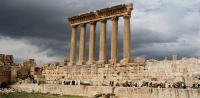
The Temple of Jupiter is a standout feature of Baalbek’s archaeological site, known for its colossal columns and surrounding structures.
Its ruins show exceptional Roman engineering, making Baalbek one of the world's paramount Roman archaeological sites.
Temple of Bacchus
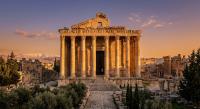
The Temple of Bacchus is one of the best-preserved Roman temples at Baalbek, noted for its intricate architectural decorations.
Though named after Bacchus, the worship at Baalbek was more complex, integrating local beliefs with Greek and Roman ideas.
Temple of Venus
The site also includes the Temple of Venus, illustrating further architectural and religious development during the Roman era.
Its distinct design adds diversity to Baalbek's archaeological landscape.
Why is Baalbek Historically Significant?
Baalbek's significance lies in its representation of several layered civilizations.
The city exhibits remnants of pre-Roman religious and cultural phases, transforming into Heliopolis during the Hellenistic era, before peaking architecturally under Roman dominion. This blend of local, Greek, and Roman elements grants Baalbek unique historical value.
Baalbek on the World Heritage List
UNESCO's inclusion of Baalbek underscores the global importance of its archaeological complex.
The site is celebrated for its outstanding Roman architecture, particularly due to the enduring grandeur of its monumental structures.
From Sun City to Tourist Destination
Today, Baalbek is not just an archaeological site but also a major historical attraction in Lebanon.
It draws visitors interested in history, archaeology, and architecture and hosts cultural festivals that add a contemporary dimension to its historic fame.
See also:
Best Family Spots in Baalbek: A Fun Day Out
Temple of Jupiter in Baalbek: Fascinating Facts About the Largest Roman Temples
What to Do in Baalbek? 10 Must-Experience Activities