


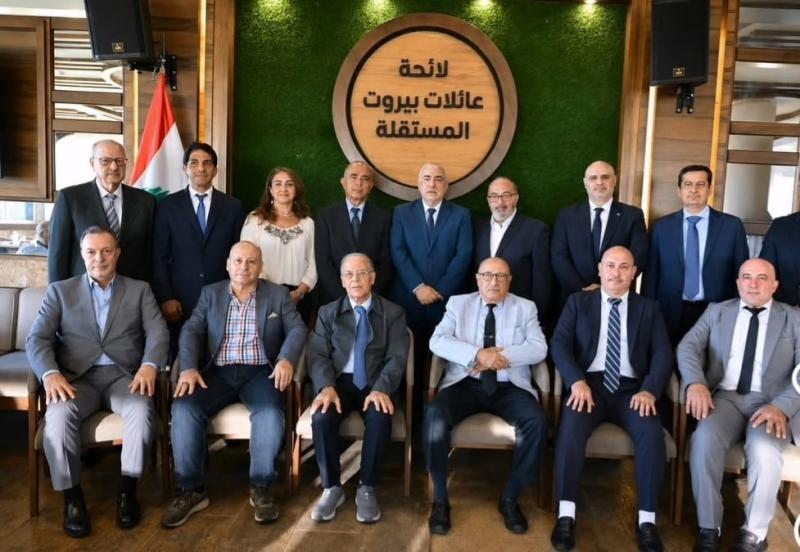
Beirut has always had a knack for sensing moments of change. The historic walls breathe through the heavy confines, and its alleys search for a breach in the familiar pathway to write its new story. The Beirut Family Associations Union elections were not merely another routine round of seat sharing or role distribution within a structure accustomed to a pre-written compass. This time, it was a deliberate and calculated break from the traditional scene that had settled for many years on a predictable pace even before a single vote was cast.
When the ballot boxes unveiled their contents, the reading of familiar names was not the same. The result sent a clear message: a strategic breach of the norm, and a significant victory for the “Independent Beirut Families” list, supported by MP Fouad Makhzoumi, seizing 11 out of the 18 seats that make up the union's administrative body.
Beirut's sessions did not foresee this calculation at the same speed. The pattern that governed families for decades faced another option, transcending the previous logic. Official details tell the story: Jamil Al-Hout led with 139 votes, followed by Nader Al-Shaar with 137 votes, then Ziad Dandan with 130 votes, and Bassam Naamani with 126 votes. All belong to the “Independent Beirut Families” block that led the quiet change within the union's corridors.
On the other side, the “Our Strength in Our Unity” list secured 7 seats, with their prime breakthrough led by media figure Mounir Al-Hafi with 125 votes, followed by Ramy Aytani with 121 votes.
Numbers weren't just about collecting votes. They represented a new socio-political classification within the capital's weight. The results map reveals a precise distribution: Haitham Yassin (121 votes), Abdel Razzaq Fayad (118 votes), Maria Afdhala (116 votes), and Naji Khayat (115 votes), with continued support from Walid Kabi (112 votes), Marwan Al-Safah (110 votes), and Khaled Al-Qarq (109 votes) favoring the independent option. Meanwhile, the other bloc retained votes for Hassan Barbour, Khader Lawand, Walid Damascus, Nada Yamut, and Sami Baleq.
In Beirut, nothing happens by chance when it pertains to the popular legitimacy of families. The upheaval witnessed by the union indicates that the Beirut sentiment is beginning to break conventional molds, withdrawing its open endorsement from past consensual frameworks, and moving towards options that reflect the era's aspirations, services, and emerging power balances.
The city, long subdued by familiar dominance, spoke through these boxes, insisting that families are not just stamps on old documents, but living communities seeking true representation far from unilateral decisions. Beirut has decisively concluded its administrative round, sending a harsh message to the traditional scene: times are changing, and those who do not decode the transformations will be left behind by the ballot boxes.