


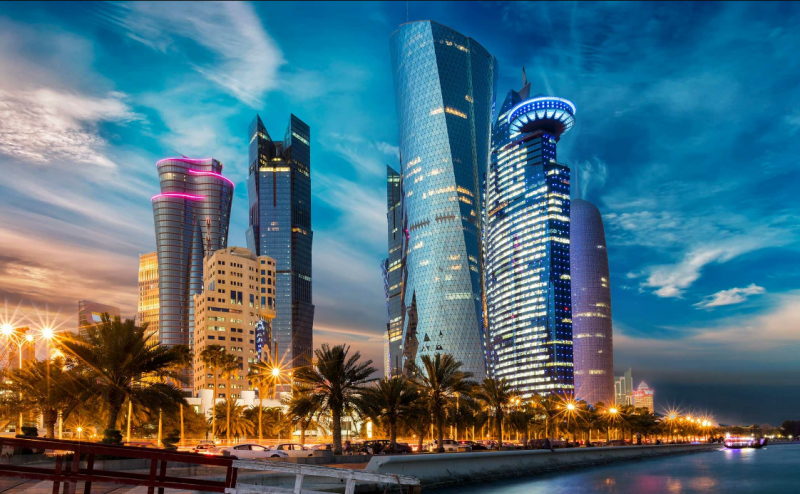
The ranking of Arab countries by wealth varies depending on the economic criteria used. Measuring total economic size favors nations with larger populations, while GDP per capita provides a different perspective on average economic output per person.
Purchasing power parity (PPP) is used to compare economies while considering differences in price levels, making it useful when discussing individual economic wealth.
According to International Monetary Fund data, Gulf countries dominate the top ranks in the Arab world, while Egypt, Algeria, Libya, and Iraq are among the leading Arab economies per capita under this measure.
Top 10 Richest Arab Countries:
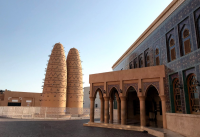
1. Qatar
Qatar leads the list of the richest Arab countries with a GDP per capita based on PPP estimated at $122,300 in 2025.
This high GDP per capita is primarily linked to the economy's size relative to its population, alongside the significant role of the natural gas sector and energy-related industries.
Qatar has also worked to expand its economy through investment in diverse sectors, reducing its reliance on a single income source in the long run.
2. United Arab Emirates
UAE ranks second in the Arab world, with GDP per capita reaching around $84,400 at PPP in 2025.
The UAE economy is relatively diversified compared to others that rely heavily on the energy sector, with trade, tourism, financial services, real estate, and transportation playing significant roles alongside oil and gas.
The UAE's status as a regional hub for business, investment, and tourism supports its economic activity.
3. Saudi Arabia
Saudi Arabia ranks third in the Arab world, with GDP per capita of approximately $74,700 at PPP.
Holding the largest economy in the Arab world by total size, Saudi Arabia is one of the top oil producers globally. The kingdom is also working to diversify its economy through investment in tourism, technology, industry, services, and entertainment sectors.
This large economic size enables Saudi Arabia to invest extensively in infrastructure and emerging sectors.
4. Bahrain
Bahrain ranks fourth in the Arab world, with GDP per capita of around $69,300 at the same scale.
Despite its small geographical size, Bahrain's economy relies on various sectors, including financial services, industry, tourism, and energy.
Bahrain also benefits from its location in the Gulf and proximity to major Gulf economies.

5. Kuwait
Kuwait ranks fifth in the Arab world, with GDP per capita of around $52,900 at PPP.
Oil is a crucial economic strength for Kuwait, with the country possessing substantial oil reserves and one of the largest sovereign wealth funds globally.
These resources support government spending and investment, despite ongoing efforts to diversify the economy and reduce oil dependency.
6. Oman
Oman ranks sixth in the Arab world, with GDP per capita of around $42,200 at PPP.
The Omani economy heavily relies on oil and gas, alongside other sectors the country aims to develop as part of its economic diversification plans.
These efforts include tourism, logistics, industry, fisheries, and mining sectors.
7. Egypt
Egypt ranks among the top ten Arab countries in GDP per capita at PPP, valued at around $21,800 in 2025.
The Egyptian economy is highly diverse with sectors including industry, tourism, services, agriculture, energy, and the Suez Canal.
Despite its large population providing substantial overall economic size, the per capita share is smaller than that of Gulf economies with lower population density.
8. Algeria

Algeria ranks eighth in the Arab world, with GDP per capita of around $18,500 at PPP.
The Algerian economy heavily relies on oil and gas, and it is one of the main gas producers in Africa.
In recent years, the country has focused on developing other sectors to reduce reliance on hydrocarbons and increase income diversity.
9. Libya
Libya ranks among the top ten in the Arab world, with GDP per capita estimated at around $17,900 at PPP.
The oil sector is a major contributor to the Libyan economy, given the country's substantial oil reserves.
However, Libya's economic performance is highly influenced by oil production levels and political and security conditions, resulting in significant annual economic variations.
10. Iraq
Iraq ranks tenth, with GDP per capita of around $15,400 at PPP.
Oil is the main driver of Iraq's economy, accounting for a significant portion of state revenues and exports.
Conversely, Iraq is working to develop other sectors like industry, agriculture, and services to diversify its economy and reduce oil dependence.
Why Do Gulf Countries Top the List?
The Gulf countries' leading positions are largely attributed to high economic output relative to population size, alongside significant oil and gas revenues.
Government investments, sovereign funds, infrastructure projects, and development of tourism and service sectors also support Gulf economies.
It's important to note that not all citizens receive the listed income directly, as GDP per capita is an economic indicator, not a direct salary or individual income average.
Is the Richest Arab Country Also the Largest Economy?
Not necessarily.
The GDP ranking differs from GDP per capita ranking, with Saudi Arabia having a prominent total economic size, while Qatar leads in GDP per capita.
This distinction illustrates the importance of setting criteria before using terms like "richest country."
Does GDP Per Capita Reflect Living Standards?
While GDP per capita is an important indicator, it alone doesn't measure living standards.
The indicator doesn't fully reflect wealth distribution, price levels, unemployment rates, public service quality, or income disparities among the population.
Hence, economic institutions use a broad range of indicators when assessing population welfare and economic performance.
See Also: