


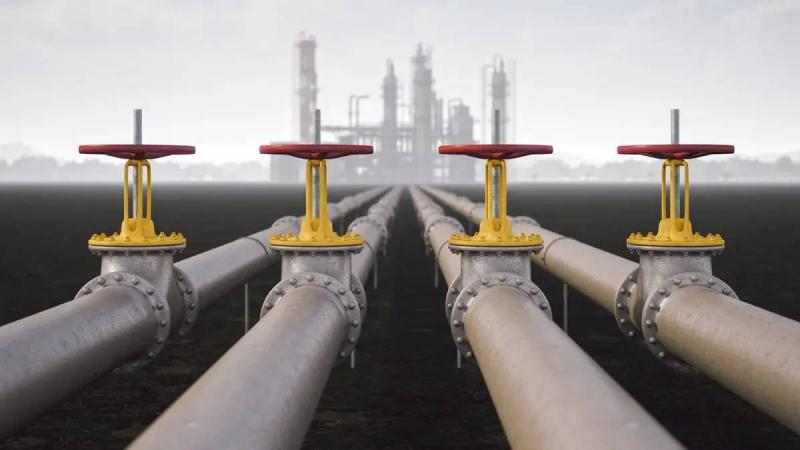
Holding vast reserves of natural gas is a significant factor in a country's standing in the global energy market. This is particularly true as gas continues to be used for electricity production, various industries, and fulfilling domestic consumption needs.
Moreover, large reserves offer producing countries enhanced export capabilities and the potential to leverage natural resources for revenue and diversification of income sources.
However, the size of reserves doesn't necessarily imply a nation is the largest producer or exporter of gas. Other factors play a role in the ability to exploit these resources effectively.
According to the latest widely available data, the majority of global natural gas reserves are concentrated in Russia, Iran, and Qatar. Other nations with substantial reserves are found in Asia, the Middle East, the Americas, and Africa.
Top 10 Countries with Largest Gas Reserves:
The following rankings are based on proven natural gas reserves, utilizing 2025 data drawn from the Energy Institute's global energy statistics review. Figures are measured in trillion cubic feet.
1. Russia
Russia leads with the largest natural gas reserves, approximately 1,320.5 trillion cubic feet according to 2025 data from the Energy Institute.
These reserves position Russia as a pivotal player in the global gas market, supported by an expansive network of production, transportation, and export infrastructure.
The importance of Russian gas is tied not only to the size of its reserves but also to the country's historical capacity to produce vast amounts of gas for both domestic and international markets.
2. Iran
Iran ranks second globally with reserves of about 1,133.6 trillion cubic feet.
The country boasts immense gas resources, with natural gas serving as a crucial component of its energy sector for domestic demand, as well as fueling power plants and various industries.
These reserves provide Iran with a substantial resource base for long-term exploitation, though production and export levels are influenced by economic, investment, infrastructure, and geopolitical factors.
3. Qatar
Qatar is third in the world with reserves estimated at 871.1 trillion cubic feet.
The nation has gained exceptional importance in the liquefied natural gas industry, having transformed its large reserves into a significant export sector. Much of this wealth is linked to the North Field, part of a massive gas reservoir shared with Iran.
Significant investments in gas production, liquefaction, and export infrastructure have secured Qatar's position among the foremost gas suppliers in global markets.
4. Turkmenistan
Turkmenistan holds about 480.3 trillion cubic feet of natural gas reserves, placing it fourth globally.
Gas is one of the most vital natural resources in Turkmenistan's economy, with the country relying on gas exports to international markets through pipeline networks.
This high ranking reflects Turkmenistan's substantial gas reserves, although its geographic location and infrastructure emphasize the importance of transportation routes and receiving markets in translating reserves into large-scale exports.
5. United States
The United States ranks fifth, with reserves nearing 445.6 trillion cubic feet as per Energy Institute data.
The US boasts a well-developed gas sector that combines substantial reserves with high production levels and extensive infrastructure. Advances in shale gas extraction have enhanced America's significance in the global gas market.
The US differs from some top-listed countries with its heavy reliance on domestic production, alongside growing capabilities to export liquefied natural gas.
6. China
China holds about 296.6 trillion cubic feet of natural gas reserves, ranking sixth globally.
Gas is increasingly important in China due to its large economy and energy demands, alongside its uses in electricity, industry, and domestic consumption.
Despite large reserves, China's domestic demand leads to a blend of local production and imports to meet its gas needs.
7. Venezuela
Venezuela stands in seventh place with reserves around 221.1 trillion cubic feet.
The country is renowned for its vast oil resources but also owns substantial natural gas reserves, positioning it among the top owners worldwide.
The development and utilization of its gas sector are linked to investments, infrastructure, and the state's capacity to boost production and reach global markets.
8. Saudi Arabia
Saudi Arabia ranks eighth globally with reserves close to 212.6 trillion cubic feet.
The Kingdom increasingly prioritizes the gas sector as part of its strategy to develop energy resources and diversify the energy mix used in power generation and industry.
Gas remains a crucial part of Saudi energy infrastructure alongside oil, with continued development of both conventional and unconventional gas resources to maximize economic benefits.
9. United Arab Emirates
The UAE holds about 209.7 trillion cubic feet of natural gas reserves, ranking ninth worldwide.
Gas is a significant part of the UAE's energy sector, fulfilling domestic demand and supporting industrial activities and power generation.
The country is working on enhancing its gas resources and optimizing their use in alignment with local economic needs and long-term energy strategies.
10. Nigeria
Nigeria rounds out the top 10 with reserves of about 193.3 trillion cubic feet.
The nation possesses one of Africa's largest gas reserve bases, offering the potential to support the Nigerian economy and expand export capabilities.
Nigeria's role in the gas market is underscored by its reserve size, geographical position, and potential in liquefied natural gas production, despite ongoing infrastructure and investment challenges.
Which Countries Hold Over Half of the World's Gas Reserves?
Data highlight the significant concentration of global gas wealth. Russia, Iran, and Qatar alone hold more than half of the proven global reserves. The Energy Institute data indicates that these three nations constitute the majority of the world's reserve base, positioning them as key long-term players in the gas market.
This explains some of the geopolitical importance of natural gas, especially when a country possesses substantial reserves along with production and export capabilities.
Does Having the Largest Gas Reserves Mean the Largest Production?
Not necessarily. There is a clear distinction between reserve size and production levels.
Reserves represent the quantity of gas estimated to be available for extraction under existing conditions and standards, whereas production reflects the actual amount extracted and utilized in a given period.
A nation could have large reserves but produce less than another with smaller reserves due to differing factors like investments, infrastructure, technology, domestic demand, and export markets.
What is the Importance of Gas Reserves to Nations?
Large natural gas reserves represent a strategic resource that can support a national economy in various ways.
Supporting the Energy Sector
Gas can be used for electricity generation and powering various industrial sectors, making it vital for energy security.
Enhancing Exports
Countries capable of developing liquefaction facilities and pipeline networks can convert their reserves into significant revenue sources through exports.
Supporting Industry
Natural gas plays a role in numerous industries and serves as a raw material in producing certain chemicals and fertilizers.
Enhancing Geopolitical Stature
Substantial gas reserves can bestow additional influence in economic and energy relations, especially when tied to export markets and international transportation networks.
Are Countries' Rankings Fixed?
Rankings may vary based on the source, data year, and method of reserve calculation. For instance, data from other sources might show different figures for certain countries, although the top-ranked nations remain relatively consistent, with Russia, Iran, and Qatar staying in the top three positions.
Therefore, when comparing gas reserves, it is crucial to specify the data year, source, and measurement unit instead of treating different datasets as representing the same timeframe.
Also See:
Top 10 Gold Producing Countries in the World
Top 10 Coal Producing Countries in the World
Countries with the Largest Mineral Reserves in the World