


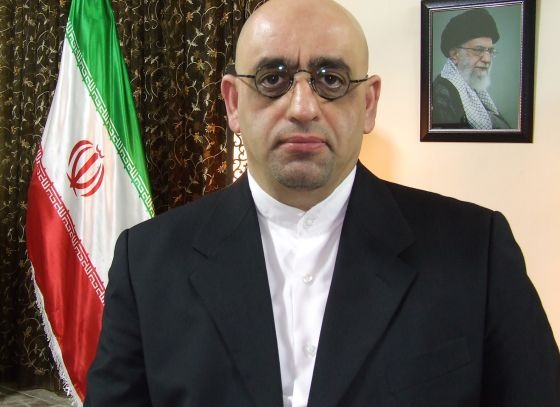
Dr. Hadi Dalloul has issued the following clarification in response to the media campaign accompanying my interview on 'Al-Jadeed' TV. With deliberate attempts to distort my words and take them out of context, I find it necessary to clarify what I actually said, not as a defense of myself, but out of respect for the public's right to know the full truth.
The specific situation unfolded when the interviewer asked me: why is the focus now on the southern suburbs while the south was left in negotiations?
My response was clear in the context of the destruction in the south when I stated that 'the south has fallen'. Here, 'fallen' refers to the extent of damage that rendered it largely uninhabitable due to the destruction of homes that residents were supposed to return to.
As for the southern suburbs, I clearly stated that they still have standing areas and neighborhoods, and without any deterrent against aircraft, the question becomes whether we should start reconstructing the south and allow its residents to return or let the Israeli enemy continue destroying the remaining parts of the suburbs.
This message is not open to the interpretation some attempted to fabricate.
I neither stated nor implied that the suburbs 'fell to the Zionists' or that the resistance or its supporters were defeated. I was discussing the reality of destruction, the priorities, and the necessity to rebuild the south while preventing the further destruction of the suburbs.
However, it seems some are used to searching for a phrase that fits a preconceived narrative, regardless of the interview's substance or context. It appears they required just a single word extracted from its place to present it as an entirely different stance.
So, have selective quotes become a substitute for truth? Have personal intentions become the criterion for interpreting positions?
Some, who are trying to smear my reputation for reasons beyond political dissent, turning it into personal grudges, have tried and will continue to try discrediting me. I welcome objective criticism, but not misleading campaigns targeting my positions and reputation based on personal hostility.
Regarding my relationship with Iran, I must clarify something known to both near and far: I have never worked for the Iranian embassy or been a part of the Iranian foreign ministry. I have never claimed so.
My interactions with Iranian universities and institutions arose due to my academic and professional expertise. I lectured in Iranian universities on my specialization, through which I developed scholarly relationships with Iranian officials and researchers.
As I mentioned in the interview, I hold a precise specialization in nuclear program matters, a rare expertise in the region. Hence, in media interactions with officials from the International Atomic Energy Agency or those tied to the U.S. nuclear program, it is natural for me to engage in these technical and scientific discussions, not just a political debate.
It is from this angle that I hoped the Iranian narrative regarding the nuclear program would be heard, as I understand this topic's details before the establishment of the Islamic Republic, possessing the scientific and historical background to discuss it away from superficial slogans.
I thank the Iranian foreign ministry for their clarification which put matters into perspective, recognizing the campaign some attempted through distorting my words and exploiting them out of context.
This clarification effectively undermined all attempts to manipulate the Iranian embassy's statement, preventing it from being used against me or questioning my professional and scientific stance. For those who attempted to construct a narrative against me from it, let it be known: your argument fell apart once the true context came to light, and the statement can no longer be used as a pretext for personal or political vendettas.
Interestingly, some proclaim themselves as staunch advocates for resistance and Iran, yet remained silent when others speculated that Iran possesses nuclear weaponry openly and directly.
This is no minor detail.
Claims of Iran possessing nuclear weapons can justify aggression against it, as similar pretexts have been used in political rhetoric preceding actions against Iran.
Why didn't we witness this same zealousness, or see these overt and clear claims pursued, while a statement spoken within a specific context sparked an entire campaign?
To me, the answer is clear: the issue was never truly about defending the resistance or Iran. Instead, it was about finding words that could be cut from their context to fabricate a narrative serving a personal grievance or preset agenda.
If the true goal was defending the resistance, then the battle should have been with those promoting narratives that legitimize attacks against it, not with a political analyst whose statement's meaning was distorted after being extracted from its context.
It's important to note that I have no need to redefine myself or my views to those who have followed me for years. My stances are well-known, and my articles, interviews, and statements are available, and my career attests to my beliefs.
I stand, and will continue to stand, in support of the resistance and defend its right to protect the land and every inch of it. This stance isn't a spontaneous reaction shaped by a political moment, nor does it change with media posturing.
I may differ in opinion, make misjudgments, and some may disagree with me politically and intellectually, which is a rightful disagreement I respect. Nevertheless, I will not compromise my conviction, sell my position, or allow disinformation to replace truth.
My voice will remain the voice of truth as I see and believe it, whether it pleases some or provokes others.
Finally, I extend my thanks and appreciation to my audience and everyone who has communicated their support and rejection of this campaign, and to all who revisited the full interview and read my words in context; the truth isn't built on a fragmented excerpt.
To those insisting on distorting my positions, I clearly say:
You won't turn selective quotes into truths, nor convert personal rivalries into political stances, nor change my position with a media campaign.
Positions should be understood in their context, individuals are known by their path, and the truth cannot be reduced to a sentence extracted from a complete interview.
History alone can distinguish between those who truly speak their beliefs and those seeking a word to fabricate a lie.