


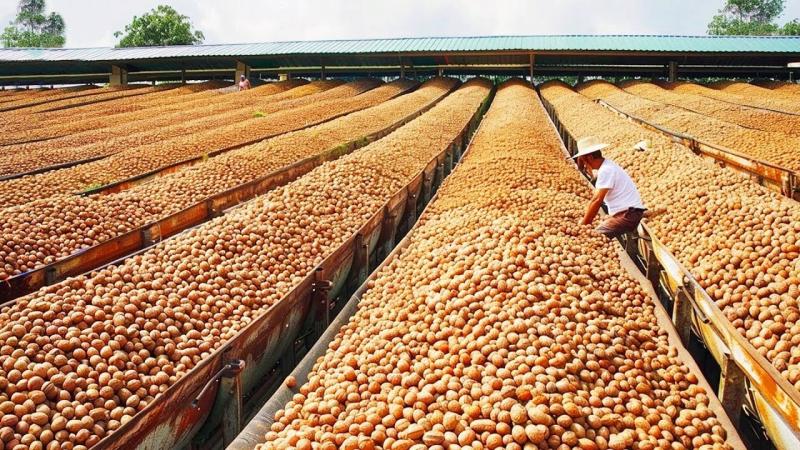
The municipality of Niha in Chouf has launched the 'First Annual Walnut Festival' to support local farmers and highlight the economic and cultural importance of walnut cultivation. This initiative aims to promote local production and stimulate economic activity and rural tourism in the area. The event was attended by Minister of Agriculture Nizar Hani, representatives of various political parties, local officials, cooperatives, and a large crowd of farmers and residents.
Mayor Ghassan Farhat welcomed the minister and attendees, praising the Ministry of Agriculture's support for the farming sector. He emphasized the importance of collaboration between the ministry and municipalities to initiate developmental projects that bolster the local economy and create job opportunities.
Minister Hani expressed his delight in participating in the festival, stating, 'I am pleased to be here among you in Niha, a town rich in natural beauty and agricultural heritage.' He underscored that agriculture forms a crucial part of Lebanon's identity and food security and is vital for the sustainability of rural areas.
Walnuts are a significant crop for mountainous regions, particularly in Chouf, due to its favorable climate and conditions. Hani noted that Lebanon's walnut production is approximately 3,000 tons annually, which still does not fully meet local demand.
In 2025, Lebanon imported 3,214 tons of walnuts in shell, valued at $8.744 million, and an additional 1,623 tons of shelled walnuts costing $7.597 million, bringing total imports to over $16 million.
These figures highlight not only the local demand but also the economic opportunity for Lebanese farmers to expand walnut cultivation, adopt improved varieties and modern agricultural techniques.
The goal is not merely to increase quantity but to enhance quality and reduce production costs. Improving post-harvest processes and marketing strategies will decrease import reliance, increase farmers' income, and create jobs in rural areas.
Hani also announced ongoing efforts to develop a farmer registry to accurately direct resources and assistance. As of now, 3,112 farmers are registered in Chouf, and more are encouraged to register to benefit from ministry programs.
These initiatives align with the national agricultural strategy for 2026–2035, focusing on recovery and resilience to enhance the sector's productive capability and competitiveness.
Concluding his speech, Hani thanked the municipality of Niha and all festival organizers and participants, hailing 'our farmers who sustain our land and national identity. This festival is a testament to rural Lebanon's potential and an invitation to turn its agricultural and cultural advantages into sustainable economic opportunities.'
Afterward, Hani and attendees visited a nearby field for a symbolic walnut harvesting activity, highlighting the festival's connection to agriculture and its role as a driver for economic development in Niha and Chouf.
Lebanon's Walnut Production Estimated at 3,000 Tons Annually!
Share