


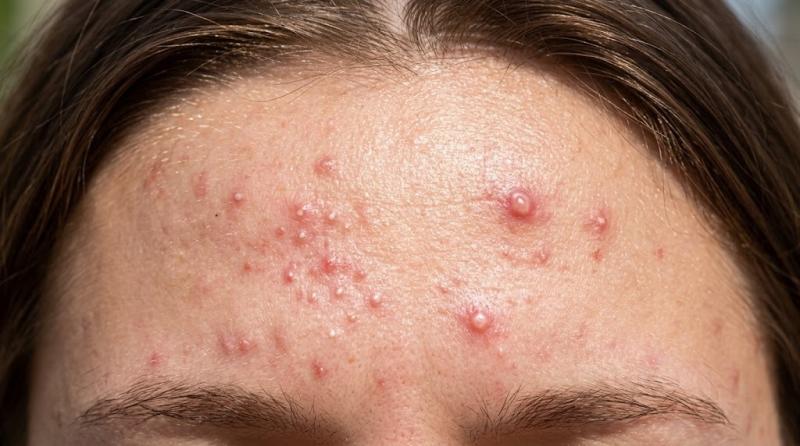
Forehead acne is a common skincare issue stemming from various factors. Frequently, it arises from excess oil secretion and clogged pores due to dead skin cells. Factors such as oily hair products and perspiration can exacerbate the issue.
The forehead is particularly prone to acne because of its dense concentration of sebaceous glands. Notably, acne appearance doesn't necessarily indicate poor skin hygiene. Addressing it involves identifying the likely causes and avoiding factors that lead to pore blockage or inflammation.
Causes of Forehead Acne
Excess Oil Secretion
Sebaceous glands produce sebum to moisturize the skin, but excessive secretion can block hair follicles when mixed with dead skin cells. This blockage can lead to whiteheads or blackheads, and potentially inflamed pimples.
People with oily skin are more prone to forehead acne, yet dry or combination skin types aren't immune. Issues can still arise from blocked pores or inappropriate skincare products.
Dead Skin Cells Accumulation
Constant skin cell renewal can result in some cells accumulating with oils, blocking hair follicles. If the blockage persists, whiteheads or blackheads may form, leading to inflammation and red pimples.
Hair Products
Hair products are often overlooked as a cause of forehead acne, particularly if small, clustered pimples appear along the hairline or upper forehead.
Oils from conditioners, creams, and styling products can transfer from hair to skin, clogging pores and causing bumps or pimples. The American Academy of Dermatology states that this issue can occur even in people who don't typically suffer from acne.
Sweating
Sweat can irritate skin, especially if it remains with oils and dead cells. Acne might worsen after exercise or in hot weather if the skin isn't cleansed post-sweat.
Sweat itself doesn't cause acne but can increase the risk of breakouts when combined with oils and friction.
Friction and Pressure on the Forehead
Repeated friction or pressure can heighten acne risk in susceptible individuals. This might occur from certain headgear or tight clothing, especially with sweat and oils.
Hormonal Changes
Hormones significantly impact acne. Hormonal shifts can heighten sebaceous gland activity, increasing sebum production.
Some women may experience breakouts around specific times in their menstrual cycle, with hormonal changes possibly affecting acne at various life stages.
Stress
Stress might amplify acne severity for some due to hormonal shifts triggering increased gland activity and skin inflammation. Hence, some notice more breakouts during stress and lack of rest periods.
Certain Medications
Some medications can raise acne likelihood, such as corticosteroids or drugs affecting hormones or gland activity. If acne appears after starting a new medication, consult a doctor before making any changes.
Does Forehead Acne Indicate Unclean Skin?
Not necessarily. Acne isn't a result of dirty skin. Over-cleansing or harsh soaps can irritate skin and worsen acne.
Gentle facial cleansing with suitable products is advisable. Avoid picking pimples to prevent inflammation and scars.
How to Treat Forehead Acne
Treatment depends on acne severity and the underlying cause, but some basic habits can help reduce pore blockages and skin irritation.
Gentle Skin Cleansing
Clean the face twice daily using a mild cleanser and lukewarm water. Avoid vigorous scrubbing or harsh exfoliants.
Choosing Non-Comedogenic Products
Select skincare, cosmetic, and hair products labeled non-comedogenic, especially if acne appears near the hairline.
Mindful Hair Product Use
If acne is concentrated on the upper forehead or hairline, review hair products, especially heavy oils and creams. Avoid oily hair contact with the forehead.
Post-Sweat Skin Cleansing
Cleansing and showering after intense exercise or sweating can help remove accumulated sweat and oils, reducing skin irritation.
Avoid Pimple Popping
Popping pimples might seem like a quick fix but can worsen inflammation, leading to infection or scars. It's best to use suitable treatments instead.
Effective Ingredients for Acne Treatment
Over-the-counter topical treatments like benzoyl peroxide and salicylic acid are effective for mild acne. Other treatments, such as adapalene, can be used based on skin suitability. Several weeks may be needed to notice improvement.
Using multiple strong acne treatments concurrently can cause dryness, redness, and irritation, particularly in sensitive skin types.
When to See a Dermatologist for Forehead Acne
Consult a dermatologist for severe, painful, or cystic acne, especially if scarring occurs or routine care yields no improvement.
Sudden, severe acne in someone previously not affected should be medically assessed, especially if accompanied by other symptoms suggesting hormonal or health issues.
Related Links:
Top 10 Ways to Eliminate Acne and Its ScarsCauses of Facial Acne and How to Treat It