


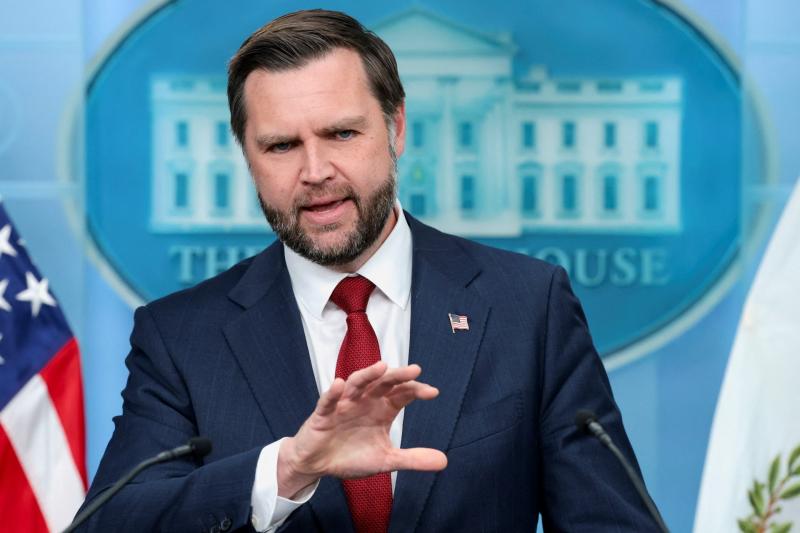
U.S. Vice President JD Vance expressed significant reservations on Tuesday regarding the growing calls for federal regulation of the artificial intelligence sector, questioning why leading companies in the field are urging the government to intervene and regulate.
In a press statement, Vice President Vance indicated his surprise at the behavior of tech companies regarding this issue.
He stated, "I find it somewhat strange that so many leading AI companies are coming to the government and practically begging it to regulate them."
Despite acknowledging the real risks and negative aspects associated with the rapid development of AI, Vance emphasized that Washington should exercise extreme caution when considering new restrictions on the sector.
China at the Center of Strategy
Vance linked his stance to maintaining the competitive edge of the United States, as the technological race with China intensifies around the development of AI models and related infrastructure.
The U.S. administration fears that overly strict regulatory rules could slow down domestic innovation and increase the cost of developing new technologies, potentially affecting the U.S.'s position in global competition.
Vance's stance emerges amidst Washington's ongoing debate about balancing the mitigation of risks from advanced AI technologies with maintaining the pace of innovation and investment in the sector.
Some in the tech industry call for a clearer federal framework to address the risks of advanced models, while opponents of excessive regulation warn that high compliance costs could favor large companies capable of bearing them, thereby making competition more difficult for startups.
"Begging Us to Regulate Them"
Vance's remarks highlight Administration doubts about the motivations of some major companies advocating for stringent regulations, especially if those regulations would impose high costs on smaller competitors.
This stance places competition with China at the heart of America's discussion on AI regulation, where Washington views technology not just as an economic issue but as an increasingly important component of technological, strategic, and military power.
Amidst calls to tighten safety measures and fears of stifling innovation, Vance's comments suggest that the Administration leans towards avoiding restrictions that could give international competitors an edge in the AI race.
This revives a fundamental question facing decision-makers in Washington: How can AI be regulated to mitigate its risks without sacrificing American technological superiority?