


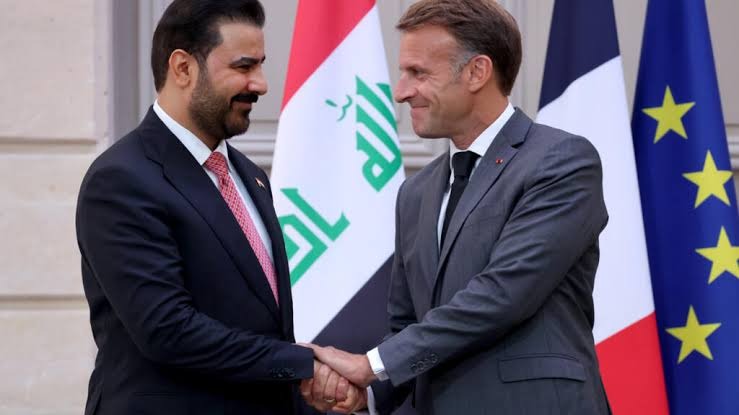
Iraqi Prime Minister Ali Faleh Al-Zaidi is embarking on a significant European tour, visiting France and Germany to forge stronger political, security, and economic partnerships. This effort focuses on enhancing cooperation in energy, security, transport, technology, and industry.
Al-Zaidi began this diplomatic mission on Sunday, leading a high-level Iraqi delegation on an official invitation from the French and German governments.
In France, discussions primarily target boosting the strategic partnership between Baghdad and Paris across political, security, military, economic, and cultural fields, while also addressing mutual international and regional concerns.
From Paris to Berlin
The Iraqi Prime Minister is scheduled to proceed to Germany, his second European destination, where he will hold talks with German Chancellor Friedrich Merz.
The agenda includes extensive discussions on bilateral relations, the development of economic and investment partnerships, along with evaluating regional and international developments.
According to the Iraqi Prime Minister's Office, the tour aims to open broader partnership avenues with Paris and Berlin, particularly in the sectors of energy, security, and transport.
Technology and Industry
Iraq also aims to enhance cooperation with Germany in industrial and technological sectors, intending to attract European expertise and investment, thus supporting economic sectors beyond traditional partnerships.
Al-Zaidi emphasized that Iraq will work with Germany on "knowledge, technology, and industry partnerships built on mutual interests."
This tour signifies Iraq's strategic shift towards expanding its international partnership network and diversifying collaboration fields with European powers. The focus spans from security and military matters to energy projects, transport, industry, and technology transfer.
The visit holds additional importance amid rapid regional developments, as Baghdad seeks to strengthen its international relations while tackling regional security, stability, and economic cooperation challenges.