


The Wall Street Journal has reported, citing American and regional officials, that Iranian attacks have grown increasingly sophisticated during the conflict, involving various types of missiles, trajectories, maneuvers, and warheads.
Officials noted that Iran has used warheads that separate into multiple projectiles as they approach their targets, presenting new challenges for interception efforts.
One official revealed that Iran was able to target fighter jets and other crafts at Jordan's Muwaffaq Salti Air Base during an attack last week.
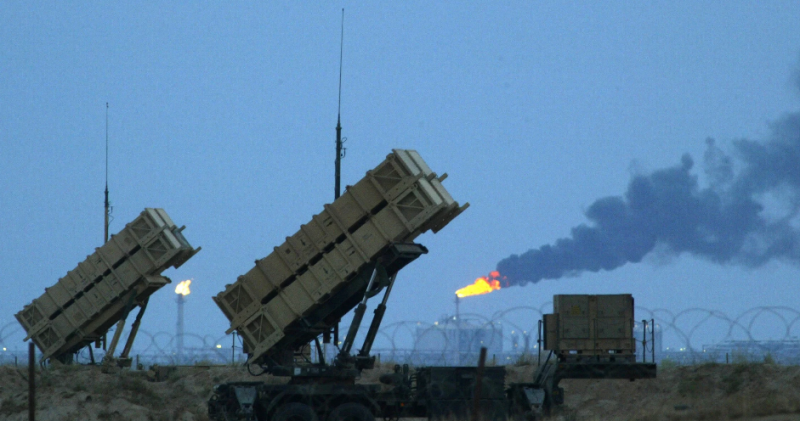
American and regional military sources confirmed that the U.S. military fired up to 70 advanced air defense interceptors, or potentially more, in response to a single Iranian missile attack last week.
Sources stated that U.S. forces launched between 60 and 70 Patriot interceptors to counter an assault involving approximately 20 ballistic missiles.
Additionally, the U.S. deployed over a dozen interceptors from the THAAD system, according to a source mentioned by the newspaper. Another official highlighted that this level of interceptor use was nearly equivalent to a week's worth of ammunition deployment in other phases of the war.
Since the conflict began, Iran has reportedly launched more than 1,500 ballistic missiles and 6,000 large drones, with U.S. air defense units destroying thousands of these projectiles to safeguard military bases, energy infrastructure, and residential areas.
In response, Pentagon spokesman Sean Parnell denied reports of ammunition shortages, labeling them as "entirely false" and affirming that the U.S. military remains "the world's most powerful and effective fighting force."
Parnell cautioned that reports of depleted ammunition could embolden U.S. adversaries to provoke or attack American forces.
The Wall Street Journal also mentioned sources saying some older "Tomahawk" missiles have been refurbished to bolster America's weapons stockpile.
Moreover, Arab and former U.S. officials warned that further economic sanctions on Iran might provoke military responses against infrastructure, placing additional strain on U.S. interceptor reserves.
This report emerges amid growing discussions about the decline in U.S. precision ammunition stockpiles due to the ongoing conflict with Iran.