



A key question often asked worldwide is: why do some countries succeed in achieving high wealth and prosperity while others remain poor despite having natural resources? The modern answer to this question goes beyond mere resources or geography. It extends to the very structure of the state and how power and the economy are managed.
Economists Daron Acemoglu and James A. Robinson provided a profound explanation through the "institutional theory," which explains that the fundamental difference between wealthy and poor nations lies in the nature of their political and economic institutions.
This idea is comprehensively summarized in the book Why Nations Fail, which has become a crucial modern reference for understanding the causes of poverty and prosperity among nations.
The Real Reasons Some Nations Are Extremely Wealthy and Others Poor

Inclusive vs. Extractive Institutions
Institutions are the crucial factor in determining countries' economic fate. They can be categorized into two main types:
Inclusive Institutions
They are based on:
- Protecting property rights
- Rule of law
- Equal opportunities
- Encouraging innovation and competition
In such countries, individuals feel their efforts will not go to waste and that success relies on work and production rather than relationships or influence. This stimulates investment and economic prosperity.
Extractive Institutions
Conversely, some nations rely on political and economic systems that allow elites to control wealth and resources.
Features include:
- Power monopoly
- Weak rule of law
- Widespread corruption and nepotism
- Unfair wealth distribution
In such environments, individuals lose the incentive to produce or innovate, leading to weak economic growth in the long term.
The Illusion of Natural Resources
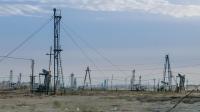
Many believe countries rich in oil or minerals should be the most prosperous, but reality often proves otherwise.
This phenomenon is known as the "resource curse," where natural resources result in:
- Excessive dependence on rent rather than production
- Weak economic diversification
- Corruption in resource management
- Neglect of education and industry
Conversely, nations with limited resources like:
- Japan
- Singapore
- Switzerland
Are among the wealthiest due to investment in human capital, education, and technology rather than raw resources.
Geography and Colonial History
Geography plays a partial role in the development of countries, but it is not the decisive factor. Colonial history significantly shaped institutions in many nations.
The Impact of Colonialism
In many areas, colonial powers established institutions primarily aimed at resource extraction to be transferred abroad, without building sustainable economic systems. Many countries inherited these weak structures after gaining independence.
Illustrative Example
The comparison between North and South Korea is a clear example:
- Almost the same geography
- Same historical culture
Yet there is a huge income disparity due to differences in political and economic systems.
Political Stability and Quality of Governance
One of the crucial factors influencing nations' wealth is political stability and the efficiency of public administration.
Rich countries are typically characterized by:
- Long-term political stability
- Effective regulatory institutions
- Transparency in managing public funds
- A safe investment environment
In contrast, poor countries often suffer from:
- Political disturbances
- Administrative corruption
- Constant changes in laws
- Lack of trust between the state and investors
Capital naturally seeks safety, so it flees unstable environments.
Education and Human Capital
Investing in human beings is one of the main reasons for national wealth. Developed countries focus on:
- Quality education
- Scientific research
- Vocational training
- Innovation
Weak education leads to:
- Low productivity
- High unemployment
- Weak innovation
No country can become wealthy without building a strong and educated human base.
Corruption and Its Impact on Development
Corruption is one of the biggest obstacles to economic development. When public funds are wasted or used unfairly, they impact:
- Infrastructure
- Education
- Healthcare
- Investments
The state loses its ability to build a sustainable economy, even if it has large resources.
Why Money Alone Is Not Enough?
Even the presence of huge investments or natural resources does not guarantee wealth if institutions are weak. Wealthy nations are not necessarily those with money, but those who know how to manage resources fairly and effectively.
In other words, the real wealth comes from:
- Fair legal system
- Strong institutions
- Competitive economy
- Advanced education
In conclusion, it is clear that the true reason behind some nations' wealth and others' poverty is not attributed to a single factor but a comprehensive system of political, economic, and social institutions. Countries that succeed in building inclusive and fair institutions can achieve growth and stability, while extractive institutions lead to poverty and underdevelopment even with available natural resources.
This modern understanding confirms that the future of nations is not determined by wealth alone but by how they manage human, societal, and economic aspects together.
See Also
The 10 Weakest Economies in the World