



Scientific theories are a crucial part of the history of human knowledge. Science progresses not only by new discoveries but also by revising old ideas and replacing them with more accurate interpretations.
These theories demonstrate that scientific skepticism, experimentation, and constant observation are the foundation of scientific advancement. Many concepts once taught as absolute truths are now famous examples of how human knowledge evolves.
How Does Science Prove Theories Wrong?
Science does not rely on authority or fame, but on testable evidence. When observations or experiments conflict with a particular theory, scientists begin to review, modify, or completely replace it.
Furthermore, advancements in technology and scientific tools allow for a more precise examination of natural phenomena, sometimes leading to the dismissal of theories accepted for decades or even centuries.
Famous Theories Science Has Debunked
1. Geocentric Model
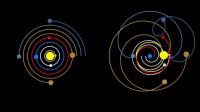
For over a thousand years, it was believed that Earth was the center of the universe, with the sun, moon, planets, and stars orbiting around it, a view endorsed by great scholars and philosophers of ancient times.
However, Nicolaus Copernicus later introduced a new model placing the sun at the center. Galileo Galilei's observations further confirmed this view, disproving the geocentric model.
2. Static Universe Theory
In the early 20th century, it was widely believed that the universe was static, neither expanding nor contracting. Even Albert Einstein initially supported this idea, before Edwin Hubble's astronomical observations showed galaxies moving away from each other, proving the universe is continually expanding and paving the way for the Big Bang Theory.
3. Luminiferous Aether
19th-century scientists hypothesized that light needed an invisible medium called "aether" to travel through space. However, the famous Michelson-Morley experiment of 1887 failed to find any evidence of this supposed medium, and Einstein's Special Theory of Relativity finally eradicated the aether concept.
4. Phlogiston Theory
This theory explained combustion as a release of an invisible substance known as "phlogiston" from burning objects. Chemist Antoine Lavoisier demonstrated that combustion occurs through reactions with oxygen, leading to the collapse of the theory and the foundation of modern chemistry.
5. Caloric Theory
Scientists believed that heat was an invisible fluid called "caloric" that flowed from hot to cold objects. In contrast, James Joule's research proved that heat is not an independent substance but a form of energy resulting from molecular motion, forming the basis of modern thermodynamics.
6. Absolute Newtonian Gravity
Isaac Newton provided a remarkable explanation of gravity that prevailed for centuries but was not the final word. When studying massive objects and speeds close to light, scientists discovered that Newton's laws were insufficient. Albert Einstein's General Theory of Relativity described gravity as a curvature of spacetime.
7. Spontaneous Generation Theory
This theory posited that microorganisms and insects could spontaneously arise from non-living materials, like worms from rotting meat without a living source. Louis Pasteur's famous experiments demonstrated that life only arises from pre-existing life, ending this idea.
8. Miasma Theory
For centuries, it was believed that epidemics were caused by foul-smelling vapors from waste and decay. However, with advances in microbiology, the germ theory of disease established that bacteria, viruses, and microorganisms are the true culprits of most infectious diseases.
9. Four Humors Theory
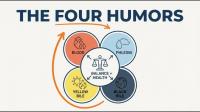
One of the most famous ancient medical theories suggested that human health depended on the balance of four fluids: blood, phlegm, yellow bile, and black bile.
Doctors believed that any disease resulted from an imbalance of these humors. Advances in anatomy, physiology, and modern medicine have shown this theory lacks scientific foundation.
10. Fixed Continent Theory
Before the 20th century, it was widely believed continents were static since Earth's creation. However, Alfred Wegener proposed Continental Drift Theory, initially rejected but later confirmed by modern geological studies and tectonic plate movements, showing continents indeed shift over geological time.
What Do These Theories Teach Us About Science?
These examples reveal that science isn't a collection of static facts but a continuous process of review and development. A scientific theory remains accepted as long as evidence supports it, but may be revised or replaced when more precise data emerges.
Moreover, the downfall of old theories isn't a sign of scientific failure but proof of its strength and ability to correct its mistakes.
Could Modern Theories Be Overturned?
Yes, science is inherently progressive. Although modern theories are based on robust evidence, future discoveries might lead to some being modified or expanded.
Meanwhile, many current theories have proven their success in thousands of experiments and observations, making them less likely to be entirely replaced compared to older theories.
In Conclusion, these debunked theories mark crucial milestones in the journey of human knowledge. They demonstrate that science's strength lies not in claiming to hold absolute truth but in its persistent ability to review itself and move closer to understanding reality.
See Also
Best Ways to Earn Online for Beginners in 2026