


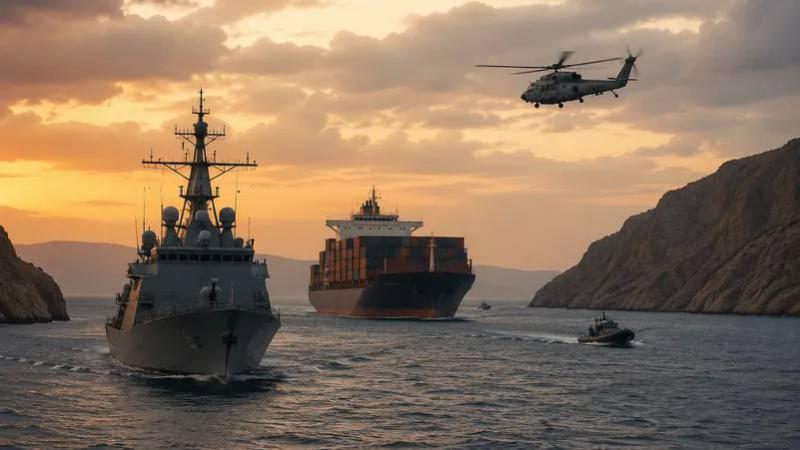
The U.S. Navy has released updated guidelines for ships preparing to resume navigation through the Straits of Hormuz, according to Fox News.
Marine intelligence company Windward noted that at least 23 supertankers are currently en route from distant regions to UAE ports of Khor Fakkan and Fujairah, joining 60 other tankers and over 550 ships already anchored in the area awaiting movement resumption.
Meanwhile, Iranian oil tankers have crossed the U.S. blockade around Iranian ports imposed about two months ago, reported maritime tracking site 'Tanker Trackers' on Wednesday, just before a pivotal agreement between Tehran and Washington set to be signed on Friday.
The site stated on the 'X' platform that "at least two Iranian supertankers, named Diona and Hero2, owned by the National Iranian Tanker Company, have crossed the U.S. Navy-imposed blockade, carrying a combined total of 3.8 million barrels of Iranian crude oil." A third Iranian oil tanker was reported to have crossed later.
The site pointed out that "these are the first exports of Iranian crude oil in two months."
However, sources in the shipping and maritime security sectors indicated that ensuring the Strait of Hormuz is free of mines might delay a return to normal shipping operations for weeks, following the agreement to reopen the strategic waterway.
Security assessments from five Western maritime sources suggest that mine-clearing operations using conventional minesweepers and advanced unmanned submarines could take between 40 and 50 days, before insurance, shipping, and oil companies have sufficient confidence to navigate through the area.
Iranian Deputy Foreign Minister Majid Takht-Ravanchi announced on Tuesday that the U.S. has lifted its two-month naval blockade on Iranian ports, ahead of a deal between the two countries that aims to end the Middle East conflict.
Takht-Ravanchi stated, as reported by the government site, that "lifting the blockade was something we insisted on from the start. It has begun, lifted before the official signing" of the agreement scheduled for Friday in central Switzerland.
Meanwhile, official Iranian media reported that several Iranian ships passed through the U.S.-imposed naval prohibition zone in the Gulf of Oman, following the preliminary agreement between the U.S. and Iran.
A draft agreement between the U.S. and Iran reveals a comprehensive package of economic and financial incentives for Tehran, including the immediate sale of oil and fuel, a financing and development plan worth no less than $300 billion, and the eventual release of frozen Iranian assets, in exchange for commitments regarding Iran’s nuclear program and safe navigation through the Strait of Hormuz.
Bloomberg, which claimed to have seen a near-final draft of the agreement, reported that the document provides the clearest insight yet into the economic benefits Iran might receive for ending navigation restrictions through the Strait of Hormuz and renewing its commitment not to pursue nuclear weapons.
The two nations are set to officially sign the agreement in Switzerland on Friday, paving the way for a 60-day negotiation period aiming for a final agreement to end the conflict and impose new restrictions on Iran's nuclear program.